
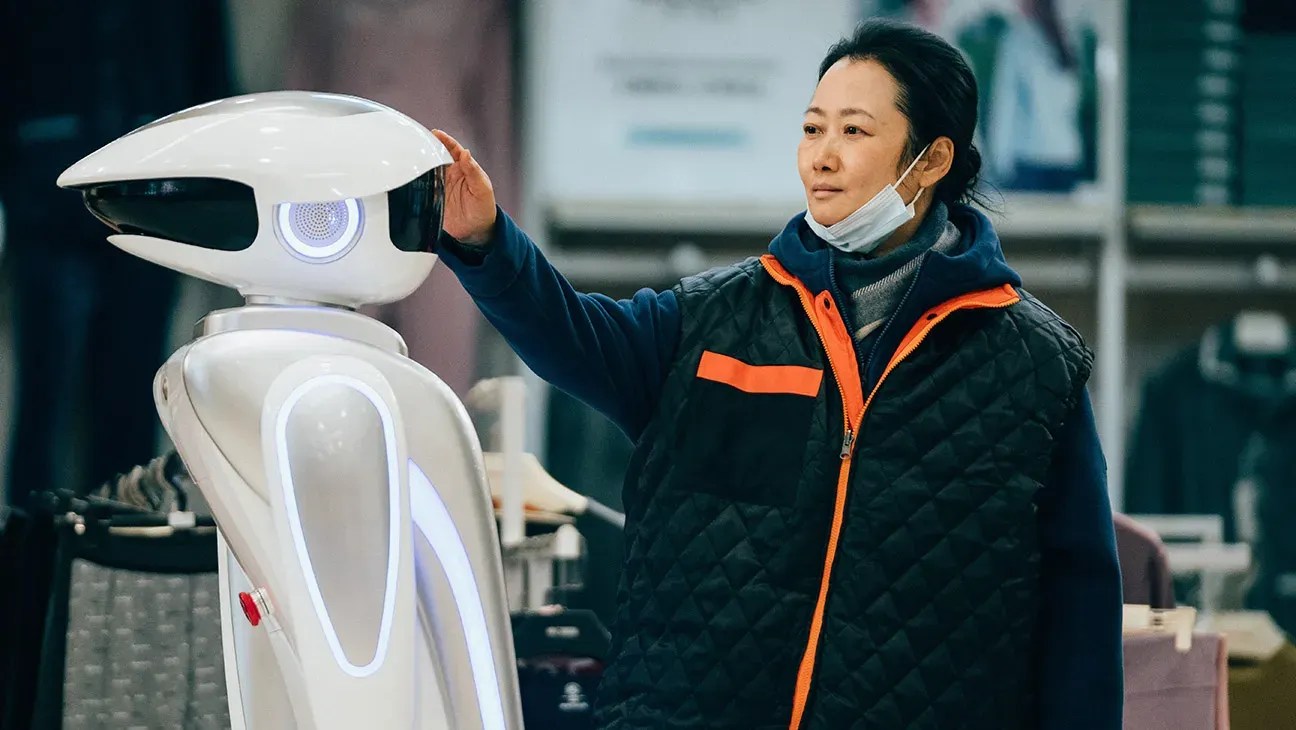
Not all memories hold you together. Some simply wear you down.

Caught by the Tides | 風流一代 | Jia Zhangke | China | 2024 | 111 mins | Mandarin
Synopsis
Caught by the Tides follows Qiaoqiao over a span of twenty years, tracing her relationship with Bin, a man she once loved and lost amid China’s rapid modernization. Composed largely of footage shot over the past two decades — including archival material, deleted scenes from earlier Jia Zhangke films, and newly shot segments — the film blends fiction with documentary impulses. It’s less a narrative than a mosaic, chronicling emotional fatigue and cultural flux. What begins as a love story becomes a meditation on time, distance, and dislocation.
Watching a Ghost Reassemble Itself
I watched Caught by the Tides not for the plot, but for the residue. Watching it is like revisiting a version of your life you’ve never lived but somehow remember. Familiar faces (Zhao Tao, of course), familiar settings (a train station, a provincial street, a half-finished building) — but the stitching feels loose, deliberate. It’s a film made of things left behind. And you feel it.
What struck me most wasn’t the melancholy, but the fatigue. Not in the pacing, but in the images themselves. Caught by the Tides isn’t about being swept away. It’s about standing still as time refuses to pause.
A Collage That Forgets It’s Being Watched
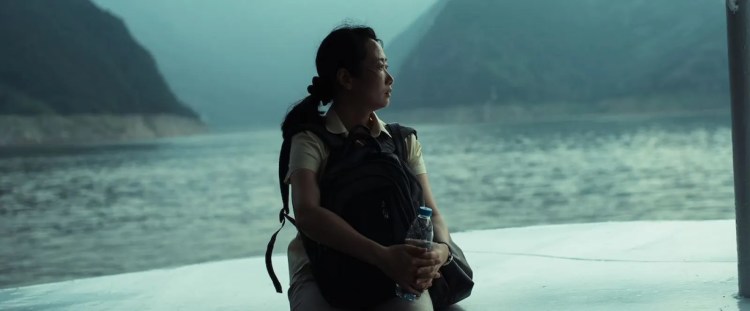
Much of the film’s footage is lifted from Jia Zhangke’s older projects, unused or re-contextualized. In lesser hands, this could feel indulgent. Here, it oscillates between reverence and repetition. The aesthetics — static compositions, desaturated hues, ambient soundscapes — are familiar. But the effect is unstable.
We aren’t watching a story unfold. We’re watching an archive try to convince us it’s still alive. And occasionally, that illusion holds. Other times, it feels like the film itself is dozing off, slipping into its own past. There’s a kind of courage in that, even if it risks inertia.
Specters of Intimacy
Zhao Tao’s Qiaoqiao doesn’t so much evolve as evaporate. Her body moves through landscapes, but her emotional register remains hazy, fractured. The love story at the center is never really rekindled — it just hovers, like a fog that won’t lift.
Bin, too, isn’t a person so much as a placeholder for lost potential. Their dynamic feels hollow not because it lacks tension, but because it’s built on echoes. The more they meet, the less they seem to recognize each other. The romance here is not rekindled; it’s ritualized.
Time as Wound, Not Window
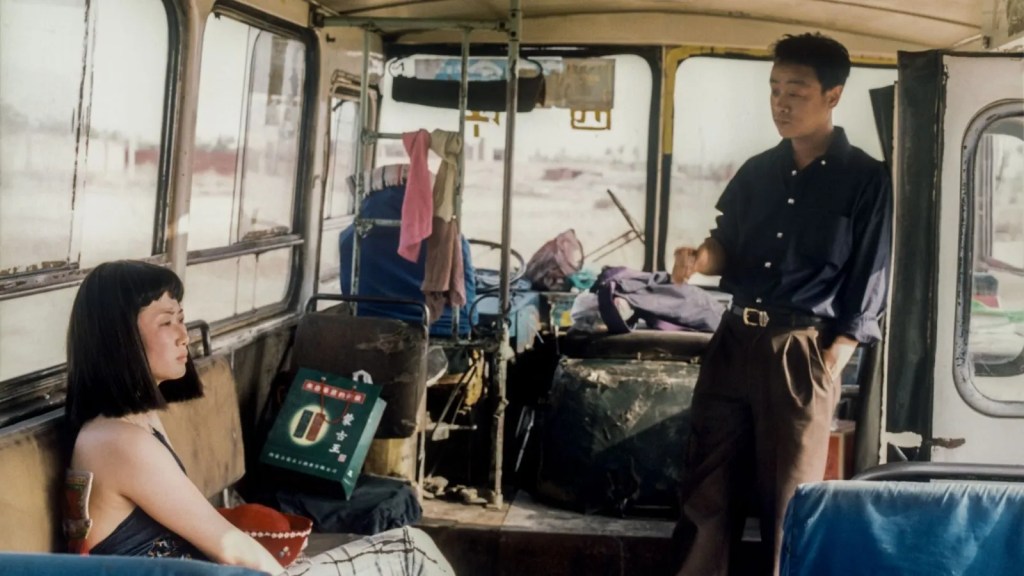
Jia Zhangke is no longer asking what modernization does to people. He’s showing us what remains after the question has exhausted itself. Caught by the Tides isn’t angry, nor elegiac. It’s weary.
The film flirts with emotional depth but rarely commits. Scenes fade before they form. Conversations happen offscreen. What we’re left with is drift: a life assembled from leftovers. There’s power in that, but also stagnation. The film seems aware of both.
The Romance of Running Out of Time
I wanted to love this film more than I did. I still believe Jia Zhangke has a singular eye for dislocation, for the quiet wounds of a country chasing itself. But here, I saw less of that urgency.
Instead, I saw a filmmaker revisiting his ghosts — not to exorcise them, but to gently remind us they never really left. Caught by the Tides is not a return to form. It’s a soft retreat.
*Text republished from Offscreen Rites: https://medium.com/@phillkatinkamus/caught-by-the-tides-2024-jia-zhangkes-nostalgia-isn-t-memory-it-s-exhaustion-1d7dcaa715cd
 sailuluo 赛璐珞