
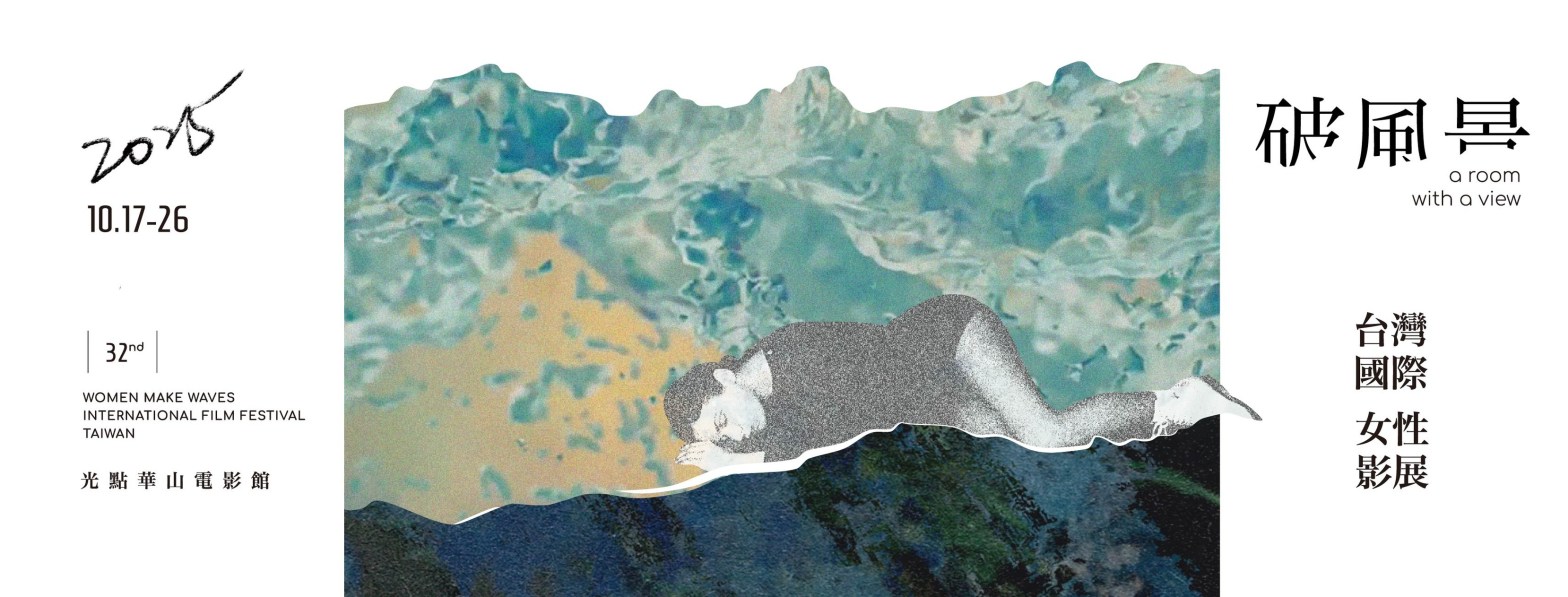
From October 17 to 26, 2025, the Women Make Waves International Film Festival (WMWIFF) celebrates its 32nd edition, presenting a diverse selection of films in the programme shaped by strong curatorial concepts. This year’s thematic sections include Sci-fi Reimagined: The Body as an Alien World, Seeing in the Dark (addressing social issues), The Way Things Go: Notes on Existence (exploring personal experience), Distilled Landscape (looking at history through the lens of landscape), Queering Voices, as well as two short film programs—Unruly Desires (XPOSED) and Cinemini. The festival will also feature a documentary retrospective section titled Special Screening: Salute to Trailblazers!, dedicated to the history of women in cinema, along with a retrospective of Chantal Akerman.
Since attending several screenings at the Women Make Waves in Taipei in 2017, I have continued to follow its curatorial direction with great interest. The festival’s programming has consistently been impressive—its team maintains a delicate balance between experimentation, openness, and intersectionality, holding firm to its principles while avoiding elitism. Women Make Waves is also among the few festivals that have managed to achieve a thoughtful form of commercialization, maintaining coherence between its brand image and core values. Its spirit extends beyond the films and audience engagement to include practical festival merchandise that embodies the festival’s philosophy.
In addition, WMWIFF continues to advance the documentation and re-examination of women’s filmmaking and the history of Taiwan’s feminist movement, furthering these discussions through book publications. As a festival with a strong sense of social awareness and responsibility, WMWIFF does not participate in the prestige competition of the festival circuit; rather, it remains steadfastly committed to its own goals and mission—premieres have never been its sole measure of success.
I first met Chen Huei-Yin, the festival’s chief curator, in Taipei in 2022, when she invited me to visit the festival office, which also serves as an archive. Over the past three years, Chen has frequently travelled in search of films suitable for the festival, and we have crossed paths many times at different film festivals and in various cities. This interview emerged naturally from our ongoing conversations. In it, Chen reflects on the founding of Women Make Waves IFF, the transformations it has undergone, and how every step of its development has remained closely intertwined with the social dynamics of Taiwan.

Maja Korbecka (MK): How did the Women Make Waves International Film Festival begin?
Chen Huei-Yin (CHY): Our festival was founded in 1993, closely tied to the social atmosphere in Taiwan at the time. The country had just lifted martial law, and movements concerning gender and minority rights were gaining momentum. The key figure behind the festival’s founding was filmmaker Huang Yu-Shan (黄玉珊), who then ran a film production studio called Black & White Studio (黑白屋電影工作室). The studio not only produced films but also participated in organizing a variety of cultural events and festivals.
The creation of the festival can be traced back to the collaboration between Huang Yu-Shan, a group of activists and scholars (including Li Yuan-Zhen [李元貞], Wang Ping [王蘋], Chang Hsiao-Hung [張小虹], and Ting Nai-Fei [丁乃非]), and the women’s organization Awakening Foundation (婦女新知). The first edition took place at the Hoke Art Gallery in Taipei (台北霍克藝術會館), and this choice of a non-cinematic venue reflected the experimental nature of the festival’s early days. In addition to film screenings, the event included forums, photography and painting exhibitions, and other hybrid formats. The second edition was held at the Crown Theater on Guling Street, an experimental performance space. Starting from the third edition, the festival collaborated with the Dimen Art Education Foundation and was held at the Dimen Art Center—still outside a traditional theater setting. From the fourth edition onward, the festival became more stable and was hosted for three consecutive years at the audio-visual room of Eslite Bookstore’s Dunnan branch.
It wasn’t until the year 2000 that the festival formally entered the cinema space, expanding its scale and beginning to use 35mm film projection. In the early years, the festival had a kind of guerrilla character—films were screened in non-theatrical spaces, often with audiences gathered before a simple projection screen. Once it moved into theaters, the festival gradually came to be recognized as an official film festival and began to acquire more commercial characteristics.
MK: So in the beginning, did the festival screen films on VHS or 16mm?
CHY: In the early years, we mainly used home video formats such as VHS. This only changed after the festival entered theaters, when we gradually transitioned to professional formats like Betacam and 35mm. The early editions were deeply intertwined with the broader social atmosphere of the time. “Women Make Waves” was one of the earliest film festivals to emerge in Taiwan—before our founding, the only existing festival was the Golden Horse Film Festival. We were also the first issue-oriented festival in Taiwan to focus specifically on gender.
Two years before our establishment, in 1991, the Golden Horse Film Festival had already begun to pay attention to women directors, presenting a special program of works by renowned filmmakers such as Chantal Akerman and Agnès Varda. These programs, titled Special Focus on Women Directors, reflected a growing social awareness of women’s filmmaking.
This trend wasn’t limited to the film world. Other major art institutions also began organizing group exhibitions of women artists, signalling a rise in gender consciousness in early 1990s Taiwan. Therefore, the birth of our festival was by no means coincidental—it was a product of that social climate, providing a platform devoted to women filmmakers.
MK: There didn’t seem to be many women filmmakers during Taiwan’s New Wave of the 1980s, but by the 1990s, filmmakers such as Wang Shaudi and Huang Yu-Shan began to work in the film industry. Does director Huang still participate in the festival today?
CHY: She usually attends whenever she can. Although she has long lived in Tainan, she makes a special effort to come support the festival during its run. She also co-founded the South Taiwan Film Festival, which celebrated its 20th anniversary in 2022. It’s quite remarkable that both festivals have continued to this day.
MK: I’ve recently been reading a lot about Huang Yu-Shan and really loved her 1990 film The Peony Birds (牡丹鳥). It’s a pity that the film isn’t better known internationally. I also noticed that she places great emphasis on using film festivals and education to reshape audiences’ viewing habits and ways of thinking.
CHY: That’s right. One of the defining features of the Women Make Waves is that, from the very beginning, we not only showcased works by women directors but also made special efforts to introduce important international films about women. In its early years, the festival focused on landmark works in gender and feminist cinema, aiming through this curatorial strategy to expose Taiwanese audiences to global discussions of gender representation.
At the time, our team couldn’t travel abroad for film selection, so we relied on Taiwanese friends studying overseas to help choose films locally and recommend them for screening in Taiwan. This combination of global vision and local initiative has been a key characteristic of the Women Make Waves.
MK: Balancing the global and the local seems to be crucial factor in the success of any film festival.
CHY: In its early years, Women Make Waves not only highlighted women directors’ works but also sought to uncover the histories of women in Taiwan. The organizing team, board members, and participants included not only filmmakers but also creators producing works from a female perspective—such as films about Taiwan’s first female painter or first female doctor. By screening these works, the festival re-recorded and re-presented women’s histories through moving images. This approach was not merely about screening existing works but emphasized re-creation and the cinematic reimagining of history.
The festival was founded during a time when Taiwan’s gender movement was rapidly evolving. For instance, in 1994, Taiwan’s first feminist bookstore, Fembooks (女書店), opened in the Gongguan area of Taipei. Around the same time, gender studies programs began to appear in academic institutions, such as the establishment of the first Gender Studies Center at National Central University (中央大學) in the early 1990s. These developments were closely linked to feminist discourse in academia. Professor Josephine Ho (何春蕤), a prominent activist and scholar, was leading the gender movement with her well-known slogan, “I want orgasm, not sexual harassment.” That slogan captures the vibrant and radical spirit of the 1990s feminist wave. In short, the founding of the Women Make Waves can be seen as a natural extension of Taiwan’s gender movement and its broader social context.
MK: Do you follow a fixed format when designing the festival programme?
CHY: Each year, we redesign the program sections according to the main theme rather than keeping a fixed format. The theme usually relates to current social issues or to certain perspectives we wish to explore. Sometimes, it focuses on areas that tend to be overlooked. For example, one year we curated a section about reproduction, which ranged from the choice not to give birth to transgender experiences of reproduction. Through the way we structure our programs, we also ask whether another perspective is possible—whether we can step outside mainstream attention and present the world as it is unfolding.
MK: I’m curious—have you noticed changes in the audience demographics in recent years?
CHY: From my observation, the festival has built up a loyal audience base—people who have a particular interest in women’s and gender issues. At the same time, many of these viewers also attend other film festivals, such as the Golden Horse Film Festival. I’ve noticed an increase in younger audiences, while the proportion of older viewers has somewhat declined. In addition, the number of male audience members has grown significantly compared to the past.
MK: In recent years, a relatively large commercial women’s film festival called “Shanyi” has been established in China. Their programming approach doesn’t restrict directors by gender—they include male directors as long as the films relate to women’s issues. What’s your view on the role of male directors in a women’s film festival?
CHY: In terms of programming, we still primarily showcase works by women or creators who self-identify as women. The goal is to ensure a creative platform for women filmmakers, which has always been one of our festival’s core intentions. However, for sections such as the queer cinema program, we have gradually become more open over the past decade, no longer dividing films by the gender of the director. Similarly, in research-based or thematic retrospectives, the director’s gender is not a limitation—the focus is instead on a gendered reading of cinema. For instance, our 2018 program Women’s Revenge included many exploitation films directed by men.
Women’s film festivals around the world face similar questions: should they focus on women’s issues, on women directors, or on feminism itself? Each festival defines its own position. Our approach is to remain open and expansive in terms of gender, while still maintaining a commitment to feminist perspectives. I believe this flexibility is one of feminism’s most vital characteristics—it allows for greater possibilities in the festival’s future development.
MK: I’ve always felt that one of the biggest challenges for feminism is how to focus on women without treating them as an exception.
CHY: In Taiwan, film festivals dealing with gender issues are often questioned. For instance, people might ask, “Now that Taiwan has legalized same-sex marriage, why do we still need a women’s film festival?” Such questions are quite common. But when you look deeper, you realize that women still rarely occupy leading positions in Taiwan’s film and television industries. Gender awareness may exist, but it hasn’t yet become an everyday social practice. That’s why the Women Make Waves remains so crucial—it foregrounds women’s perspectives and opens up discussions about gender diversity. Ultimately, our goal is to continue expanding the scope of these conversations.
MK: How large is the organizing team?
CHY: We’re generally a small team, operating year-round as a nonprofit association under the name Taiwan Women’s Film Association. The association organizes various regular activities throughout the year. However, from around June or July to November, we enter the festival’s intensive preparation period, during which the workload and pace increase dramatically. Even so, our core team remains relatively small—usually no more than a dozen people—which is considerably fewer than most other film festivals.
Our funding comes from multiple sources: government grants, ticket sales, sponsorships, and other small-scale income streams. Since we operate as an NGO (a non-profit organization), our financial structure is quite different from that of larger festivals.
MK: What about volunteer participation?
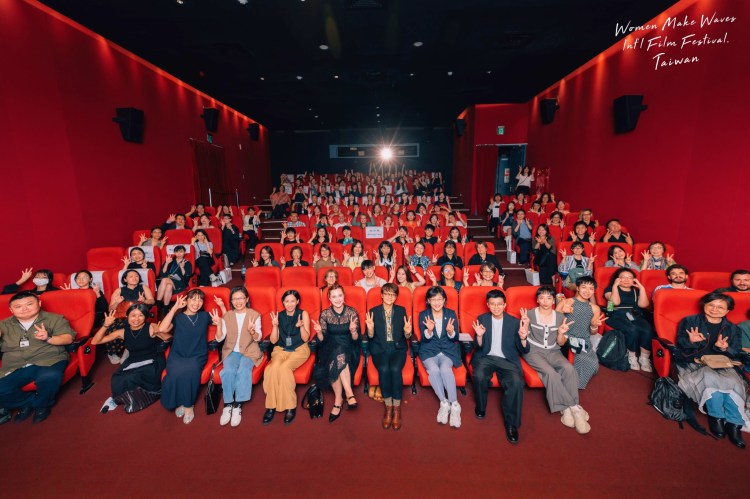
CHY: Each year, we recruit between 30 and 50 volunteers. During the festival, the total number involved—including those working in various shifts and departments—can exceed 80 people. Volunteers usually work in the office from noon to evening during the preparation period, and on a shift basis during the festival. They participate in all aspects of festival operations—not only office duties but also tasks like campus outreach and promotional events.
Source: https://www.facebook.com/wmwff
MK: Do you plan to collaborate with Taiwanese streaming platforms like Giloo?
CHY: Yes, we’ve considered collaborations in various forms, such as media partnerships or licensing arrangements. For instance, Giloo might acquire streaming rights to certain films screened at our festival, while we would provide subtitles. This is different from the South Taiwan Film Festival’s 2020 collaboration with Giloo, which converted the festival into a fully online format. For now, we still focus primarily on in-person screenings—including touring programs—because of their time- and place-specific character. We did consider online options during the pandemic, but the costs of online screenings are relatively high.
MK: I’m also intrigued by your festival merchandise—it feels quite distinct from other festivals’. How do you decide which items to make?
CHY: We usually start by brainstorming ideas with our team and interns. While we may have certain concepts in mind, whether we can actually produce them depends on whether a manufacturer is willing to collaborate. Some products come about unexpectedly—for example, a cocktail was a partner’s idea, and we decided to give it a try. On the other hand, there are items we’ve long wanted to make but haven’t been able to due to cost—such as an eternal pen, which we had to postpone. This year, instead of our usual folders, we opted for more practical items like tissue packs. The inspiration came from promotional giveaways commonly used during Taiwanese elections—and, since tissues are always useful in the office, we thought it was a fun and down-to-earth choice.
Festival merchandise in Taiwan is quite distinctive—each year brings new creative products. By contrast, merchandise at foreign festivals tends to follow a fixed pattern.
MK: I think an eternal pen has a deep connection with feminism—it symbolizes women writing their own stories, ensuring they’re not erased or forgotten.
CHY: Exactly. We have to be especially thoughtful in designing our products. We avoid any advertising or design that might objectify women, which is something we pay particular attention to—perhaps more so than many other festivals.
MK: That’s fascinating—the merchandise design not only expresses creativity but also extends the festival’s influence. Which items sell the best?
CHY: The tote bag still sells the best. This year, we’ve received some feedback about it, so we’re considering adjusting or replacing it with other products.
 sailuluo 赛璐珞