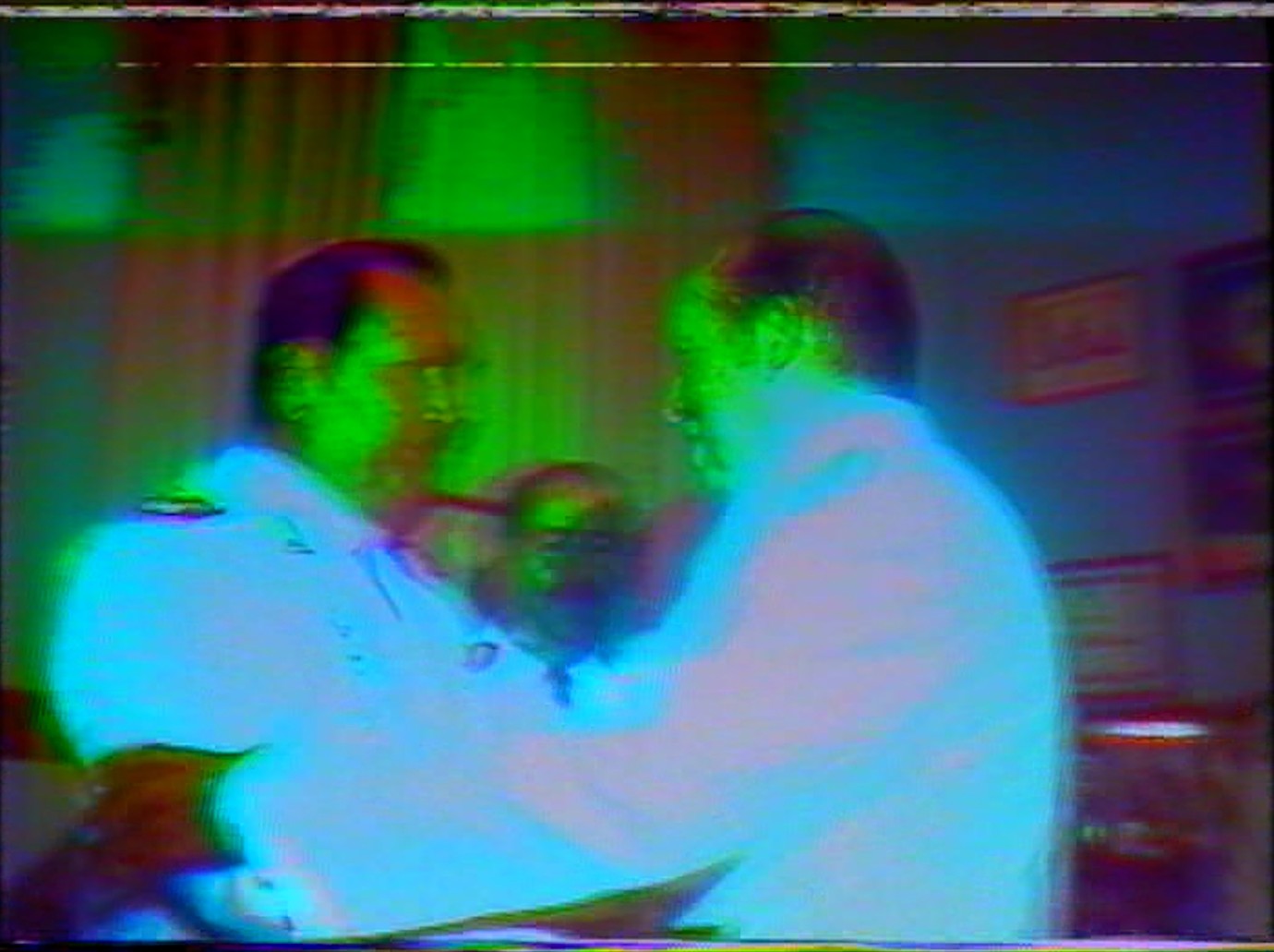
In late February 2025, I talked with filmmaker Manuel Embalse about the film he edited, Under the Flags, the Sun (Bajo las banderas, el sol), which premiered in the Panorama section at the 75th Berlinale. We first met at the DMZ International Documentary Film Festival in Seoul, South Korea, where his film The New Ruins (Las ruinas nuevas) was screened in the Frontier Competition, and we have kept in contact since then. I did not know that we would be lucky enough to meet again so soon.
On a sunny morning in Berlin, we sat down at a cafe to exchange experiences after the festival and talk about the project that became Under the Flags, the Sun. The conversation soon shifted to the film industry, history, and politics at large.
Maja Korbecka: How was the festival experience for you?
Manuel Embalse: It was a very particular experience. Being editor of a found footage film directed by a close friend, a project in which editing is so important, having worked a lot and having it premiering at a polemic film festival, it all made me wonder if to go to the Berlinale or not. Even so, the experience was valuable. I chose to participate. I had a lot of conflicting feelings about being there because of the attitude of Berlinale since 7th October 2023. I work as editor and sound designer, but I also recognize myself as a Jew pro-Palestinian filmmaker—during 2024, I was present at festivals as a director, speaking openly about Gaza, reading poems of Mahmoud Darwish. I’m conscious of what’s happening in Palestine and it affects me everyday.
In December, when I found out that Under the Flags, the Sun had been accepted into the Panorama section, I started wondering what it would mean to attend the festival, especially in the current political context. I also found out that the film’s distributor is from Israel. So, here we were with a film from Paraguay, coproduced by Argentina, United States, Germany and France, countries whose governments—not their people, but their governments—are complicit also in the genocide in Palestine. Also, when I saw the dates of the festival, I didn’t realize at the time that the festival would end just as the German elections began.
With all this information, for me, as a Jew and a Latin American editor, I started to have a lot of contradictions, and I thought: “If I go to the festival, I can’t be silent and I must make a speech.” After speaking with the director, Juanjo Pereira, my friends and colleagues, I decided to go, but was convinced that I have to speak at the premiere. Juanjo supported me and other filmworkers too. Before flying to Berlin, I talked with friends attending the Berlinale Talents about what we were planning to do. When we arrived, we got together with Talents from different countries and with other filmworkers for Palestine that were participating in the festival. We organized to be brave and supported each other. We were few compared to this giant festival.
But, luckily, the first person who spoke out at the Berlinale 2025 was Hong Kong director Jun Li. He did that the night before the premiere of our film. During the Q&A after his film Queer Panorama (眾生相), he read a statement written by his Iranian actor. Because he used the phrase “From the river to the sea,” he was investigated by the German police, and before going to sleep I read a lot of news on social media about him. So we can’t say there was no censorship. There was censorship. It felt like an “updated Cold War”—being watched. But I also feel calm that I wasn’t the first to speak.
Before the first screening of Under the Flags, the Sun, I was anxious. It was the first time I ever doubted whether I could speak freely at a film festival, I mentioned that in my speech. I said that I’m not calm in this country and in this film environment. I wrote different versions of my speech, and I decided to quote Sebald, German writer with some excerpts from his book Natural History of Destruction. In Paraguay, Argentina and across Latin America, Under the Flags, the Sun has drawn a lot of attention, as a work-in-progress project taking part in industry events at international film festivals in recent years, it was an “expected film”. Everyone in the documentary world was asking: “When will it premiere?” Once it premiered in Berlin, I knew that whatever I said would spread widely. So I felt pressure. After my speech, I felt calm. I had chosen to be there.
By the end of the festival, I counted maybe seven or eight films that explicitly addressed Palestine. I’m flying back on Monday, and I admit I’m a little paranoid. Of course, nothing will happen—it would look bad if they retaliated against people who spoke out from Latin American Countries. But the atmosphere shaped my entire experience. I still believe I did the right thing. I’ve received a lot of support and probably a lot of people hated me. I had courage that day, but now I’m scared. The festival unfolded smoothly, but under a psychological cloud.
Maja: It’s telling that two of the competition films were titled Dreams. It’s as if the whole industry is dreaming— just not awake to the big changes happening now and those still to come.
Manuel: There was also After Dreaming in Panorama. That’s a good observation. The programming was political in some ways. Our film from Paraguay directly addresses Germany’s complicity in Nazism. So yes, there are political films. But there was also a silence on stage—a hesitance to speak politically. It made me wonder: are they dreaming of the future, as if to say, “Let’s move past this”? In my speech, I quoted postwar Germany: “Don’t look back. Rebuild the city. Silence the past.” And it’s eerie. It’s election day, yet nothing is happening in the city. In Argentina, there would be energy, tension, and political conversation.

Maja: Today is so quiet.
Manuel: Just a normal Sunday here. When I was deciding whether to come, I thought—maybe this is the perfect moment to say something. Even if you go to bed a little afraid, at least you’ve spoken.
Maja: I’ve been thinking about Berlinale’s origins. Did you know the festival’s first director, Alfred Bauer, was a Nazi?
Manuel: No, but I suspected.
Maja: Film festivals themselves were born from nationalism. Venice FF under Mussolini. Berlinale under the Cold War. This festival was established because the West needed a glamorous front to counter the Eastern Bloc.
Manuel: And now everything that happened this week is part of Berlinale’s history. The director of the festival said she wanted to persuade the Chinese director who spoke out first—that’s political. Even the screenshots from Instagram stories—they’re part of Berlinale’s archive now.
Maja: In the Chinese filmmaking community, there was also criticism of Berlinale programming. Have you heard?
Manuel: No, what happened?
Maja: Several Chinese film professionals criticized Berlinale for selecting What’s Next for the Forum section. The film was made using AI, and the filmmaker Cao Yiwen (曹译文) is known on Douban—the Chinese equivalent of IMDb—as a fake (野鸡导演), giving false information about claiming various awards.
Manuel: I can’t believe it.
Maja: The filmmaker claimed various awards and achievements on Douban, but they were fabricated. I think the programmers might not be aware of her reputation.
Manuel: I heard that some filmmakers after they spoke in solidarity with Palestine during their screenings were confronted by Berlinale organisers.
Maja: The festival is dependent on state funding, it is understandable the organisers are anxious and want to negotiate, it is a survival strategy. Everyone’s afraid of losing their jobs.
Manuel: True. In the Berlinale Shorts section, they could speak, but I also heard that filmmakers had a meaningful conversation with programmers, and they wanted to read the statements about Palestine. They got together and read their planned statements phrase by phrase, analyzing what they can say or not. It’s shocking.
Maja: Maybe filmmakers in Shorts were freer because their films aren’t as marketable. There’s less media pressure.
Manuel: That’s something for your book. In Argentina, the market for shorts is tiny, but it exists.
Maja Korbecka: How was Barlinale, the boycott festival?
Manuel Embalse: It was interesting, there were different boycotts. I think that’s part of the problem, because a lot of activities were happening at the same time in different places in the same city.
Maja: So they weren’t united.
Manuel: Exactly. Everyone wanted to have their own opinion, their own agenda, their own curation. It’s OK, but it distracts me a little bit. I attended one screening of the boycotts on Thursday, the 20th. The exhibition space had a very good atmosphere—like a living room, with people drinking beer. Inside, there were maybe thirty people. It was the first day of the public transport workers’ strike, but I don’t think that explains the low attendance. The program started with the world premiere of a British short about a Palestinian girl now living in Berlin—the story of her migration from Palestine to Germany. It felt very academic, like a film school thesis, but very sensitive. Then they showed an Argentine feature directed by a close friend, a beautiful film. The discussion afterward was short—fifteen minutes about how the director started working on the film and what inspired it. Then they had to close the event, I wanted more discussion.
Maja: Woche der Kritik has a similar format—pairing a short and a feature, then hosting a discussion. In that case, the short was shot by a filmmaker from the UK who had filmed in Kenya on 16mm. It focused on domestic workers. Someone in the audience pointed out that after these women spent all day working in people’s homes, he then asked them to appear in his film—essentially to continue working.
Manuel: Did they talk about colonization—or meta-colonization?
Maja: Yes, the film discussed how the domestic workers became part of the household space—how one of them couldn’t speak or see, her senses seemed paralyzed. It was framed as a commentary on colonization. But what the filmmaker didn’t do was to reflect on his own position as a tourist.
Manuel: Why? I don’t understand why white people go to Africa and don’t reflect on their own role. Start the film with that! Say anything!
Maja: The filmmaker actually appeared in the film himself. He was one of the guests staying at the bed-and-breakfast where the film was set, but he didn’t expand on it in the plotline. The house where he filmed had been turned into a homestay for tourists, so he positioned himself in the background. He acknowledged his presence, but what really struck me was what happened after the screening. When an audience member challenged him, he said, “We can discuss that further,” in an open and calm way. And the person who asked the question just replied, “I don’t want to discuss it. I’m not interested.” It was very aggressive.
Manuel: The audience member said that?
Maja: Yes. From their perspective, the issue was serious—and rightly so—but these discussions need to happen without accusations. Accusations don’t resolve anything.
Manuel: So the audience itself didn’t want to engage? That’s the real problem—both filmmakers and audiences.
Maja: Exactly. We’re all trying, but intermediaries like us can’t always act as peacemakers. Who are we to take that role? I don’t want that authority. I’m also taking a position, like everyone else.
Manuel: That’s the core issue—the politics of art and society in general. It’s not just about Palestine or Israel. The same thing happens with Russia and Ukraine, with the left and the right, even with the center positions. There’s so much anxiety around taking a position. People have forgotten how to have a conversation—to take time, to speak without hurry, to disagree peacefully. Instead, it becomes, “I’m not speaking to you. I don’t want conflict.”
Maja: It’s so childish.
Manuel: Yes. Look at our world leaders—they behave like children who never learned boundaries. Trump is a perfect example: a child who lacked love but had money.
Maja: Everything is transactional.
Manuel: He’s a businessman. Now he wants to negotiate with Putin, penalize Ukraine, and make them repay the U.S. for its military investment. It’s important to talk about all these overlapping realities. That’s why I’m an editor.
Maja: That’s so true.
Manuel: Editing itself—parallel montage, as taught by Pudovkin, Eisenstein, or Vertov—was the great lesson of the 20th century, before social media. It showed us that the contradictions of history and reality unfold simultaneously, everywhere, in everyone. We’re having this conversation right now, and probably in some hotel, the Berlinale committee is congratulating itself for giving awards to certain films. It’s all parallel. Do you know Adam Curtis? He’s a British documentarian who made HyperNormalisation.
Maja: Yes, it’s on YouTube—I watched parts of it.
Manuel: His recent work on post-1989 Russia, TraumaZone, is a big reference for me. That feeling of hypernormalization—it’s exactly what I sense now. His films show how politics became secondary once the internet reshaped global life. What we consume, what we hide, what we erase—all of it became part of a digital narrative.
He argues that after the 1990s, we started living in parallel realities: one visible, one hidden. And that’s where we are now. People in the cinema are afraid to speak out. In the past, you had Glauber Rocha in Locarno shouting that the jury was bought off. Or Godard interrupting Cannes in 1968, saying that the festival cannot go on while workers and students are protesting in the streets. Now, people dream of a reality where film festivals shouldn’t be political.
Maja: Berlinale used to brand itself as “the political festival.” That was its identity. And now everything feels so quiet.
I can imagine last year, under Chatrian, a lot of people working for the Berlinale were completely overwhelmed by the controversies surrounding Palestine and Israel. The emotional and psychological toll was huge because there is an identity conflict between individuals and the institution they work for. I think that kind of burnout—and the choice to stay silent—also comes from fragmentation. There’s no unity among like-minded people. Everyone’s isolated. And on top of that, the workload of festival organizers is absurd. So how is anything supposed to function? Bureaucracy dominates everything. This Berlinale felt strange for me too, because I didn’t have time to attend any public screenings with Q&As.
Manuel: Because as a juror, you can’t?
Maja: I could, but I was too busy—twenty-plus competition films, a regular job, festival coverage. Everyone’s so overworked that there’s no space left to think.
Manuel: Exactly. The next day just becomes about survival—coffee, deadlines, capitalism.
Maja: Right. It’s all about just getting through the day. That constant rush builds a kind of mental blockade.
Manuel: It’s all market logic now.
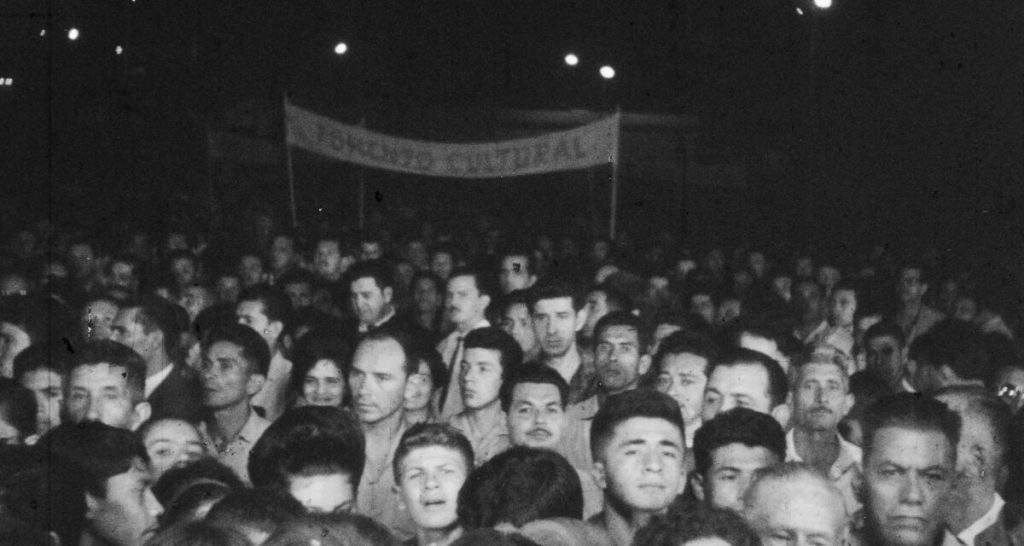
Maja: So I was also wondering — how was the audience feedback for Under the Flags, the Sun during the Q&As?
Manuel: The audience feedback — well, the premiere was amazing. There were a lot of Paraguayans and Latin American friends, which made the premiere very special. It was very important because many people who had supported the film — programmers, festivals — hadn’t seen the rough cut, only a trailer. Juanjo received a lot of positive feedback. As the editor, I received a different kind of feedback, of course, since I’m not the director. Not bad feedback — all of it was interesting and positive — but sometimes during the Q&A, people wanted more information than the film gave them.
You know, it’s Juanjo’s first feature, but it’s not a “shy” film, it has an interesting attitude. Some people praised me, because it’s a film made entirely from found footage, and I know the amount of work that went into the editing. Julián Galay too — he’s the sound designer. I think it was really special that people noticed and appreciated the editing and sound design. That doesn’t happen often. But with a footage film, the editing is always speaking — like, “hello, I’m here, I’m the editor” — and the sound is fully present all the time also.
What was also interesting is that almost no one knows anything about Paraguay — not even many Latin Americans. Paraguayan people said, “Wow, this film is so important.” Some cried during the Q&As — people who had migrated from Paraguay. The screening at Zoo Palast was the best I’ve ever been to. There was a Paraguayan girl in the audience who started crying, saying, “I can’t believe you did this. This speaks about why we migrate.” It was very emotional — about the history of Paraguay, the silence, the fear that still exists in society.
So, all the feedback — whether people liked or disliked certain scenes — was deeply meaningful. As an Argentinian who knows Paraguay’s history, I’m often the strange guy at dinner saying, “Did you know there was a 34-year dictatorship in Paraguay?” No one in Argentina knows that. So there was this strong reaction about how important the film is for Latin America in this context.
And I think also, as a filmmaker and someone who thinks about history and editing, there’s some part of the history that isn’t shown deeply: the film doesn’t show how the resistance existed during the dictatorship, but it was a director’s decision that I respected, not to develop the part about the movement that existed against Stroessner. Juanjo was very conscious about that: this film can’t include everything. For me, there were some subjects that the film explored that are so unique, such as the “Archivos del Terror / The Terror Archive — the only Latin American archive that keeps the dictatorship files.
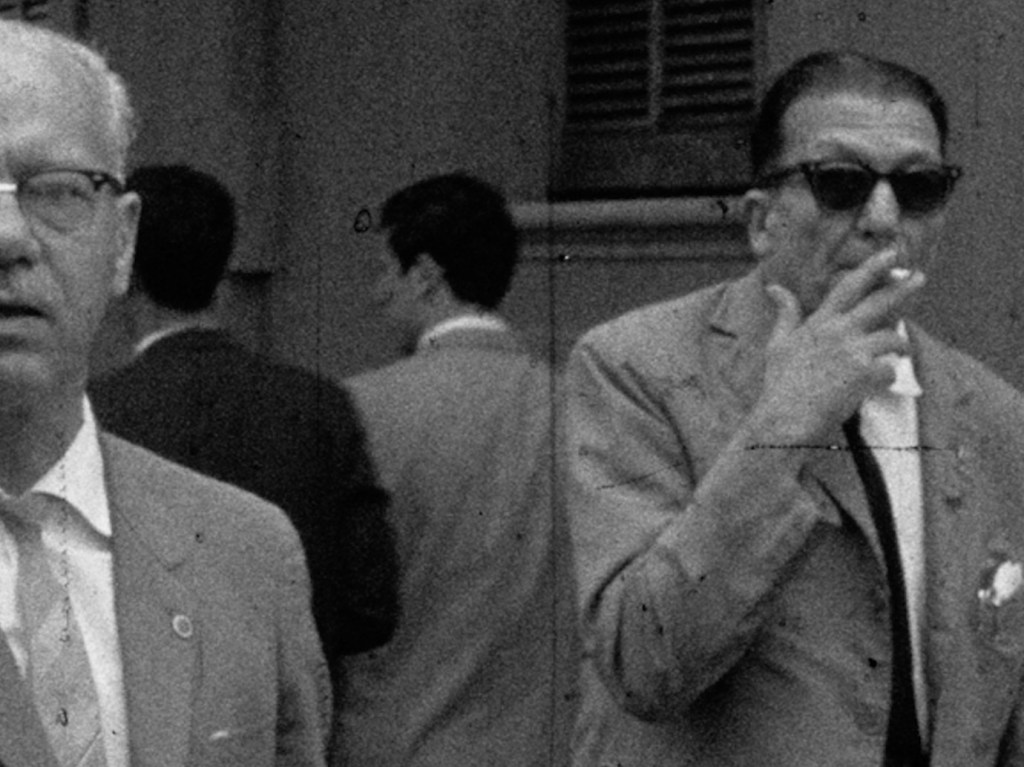
Maja: And where is it?
Manuel: In Paraguay. And the film doesn’t get so much into that.
Maja: I didn’t know exactly where the materials were from.
Manuel: It’s in the credits — “Archivos del Terror.”
Maja: Yes, there could have been more context.
Manuel: For Juanjo and I, the story of the film begins in 1880, with the War of the Triple Alliance — a war between Argentina, Brazil, and Uruguay, supported by Great Britain. It destroyed half of the population of Paraguay. After that, there were almost no men left. Then came the Partido Colorado, which ruled continuously. From the early 20th century until 1954, when Stroessner took power, there were about different coups — all from the same party. It was like a cycle. During the Second World War, there was also the Chaco War, financed by the U.S., between Paraguay and Bolivia over the Chaco region — rich in oil land.
So the film could have included more historical context — like an Errol Morris commentary. The War of the Triple Alliance was actually the first war photographed in Latin America, by a British photographer. There should have been more about how Paraguay arrived in 1954 and the dictatorship. But the production and Juanjo decided the film couldn’t be that long. People in Paraguay need to speak about Stroessner, not the Triple Alliance. I totally understood it. There is a 4 hours cut that includes the period before the dictatorship of Alfredo Stroessner, and the film continues until the Covid pandemic times in Paraguay and in the present. There are steel boots of Stroessner’s statue still left on the mountain near the capital city of Asunción. It isn’t a memorial site. People go jogging there. No one knows that the feet of the dictator’s statue are still there. (Now, ten months after our conversation, in October the feet disappeared and no one knows what happened).
Maja: It’s so interesting — why the feet were left there. Because there are so many parallels with what happens to other statues, like those of Stalin in Eastern Europe, or Chiang Kai-shek in Taiwan. In Taiwan, for example, there’s a park that gathers all the statues of Chiang Kai-shek.
Manuel: Yes! I’ve seen the same in Hungary — in Budapest, in “Memento Park”, near a highway. All the communist statues, with a giant hand over a wooden base, all the mountains of sculptures — amazing, but in the middle of nowhere.
Maja: In Poland, there’s only one small museum in a tiny town in the east — a Museum of Socialist Art in Kozłówka. And then there’s the DDR Museum, which is like a Luna Park.
Manuel: I went there last time I was in Berlin — and also to the Stasi Museum.
Maja: Yes, though the DDR Museum is different. It displays everyday objects from the DDR — as if it were a theme park. So these feet — how the past is still here, unresolved. It’s either ridiculed and turned into entertainment, or it just stands there, without context, but still present. It’s so Wagnerian — like a scene from a Wagner opera, at the top of the mountain.
Manuel: The director told me that no one knew the feet were still there — and now it will finally be public. No one is interested. I went to Paraguay only three times, I can’t speak as a Paraguayan, of course, but as an anthropologist-tourist, I can say Asunción feels a little bit abandoned and it’s so sad. There’s no visible political opposition. The city center is still from the Stroessner era, waiting to be demolished to make way for malls and new houses.
The idea of the statue — we never discussed ending the film there, but there’s a monument made from the statue’s remains. It’s an art piece by one of Paraguay’s most important artists, Carlos Colombino. In his work “Contramonumento / Countermonument”, he reassembled Stroessner’s parts — the head here, the hand there. In one moment, the film ends with that artwork, in the Square of the Disappeared, near the government house.
But well, we couldn’t include everything, there were only 2 shots filmed in the present and the entire project is based largely on archival materials. I think this is the problem with footage films. When you bureaucratize, when you start working with institutions—European, American, even Latin American—the only thing people want to talk about is the price: how much the archives cost, how you got the footage. For me, that was very difficult.
Maja: It’s so twisted that all these grants from European institutions end up going back to the EU. In the end, the money circulates back to the investors.
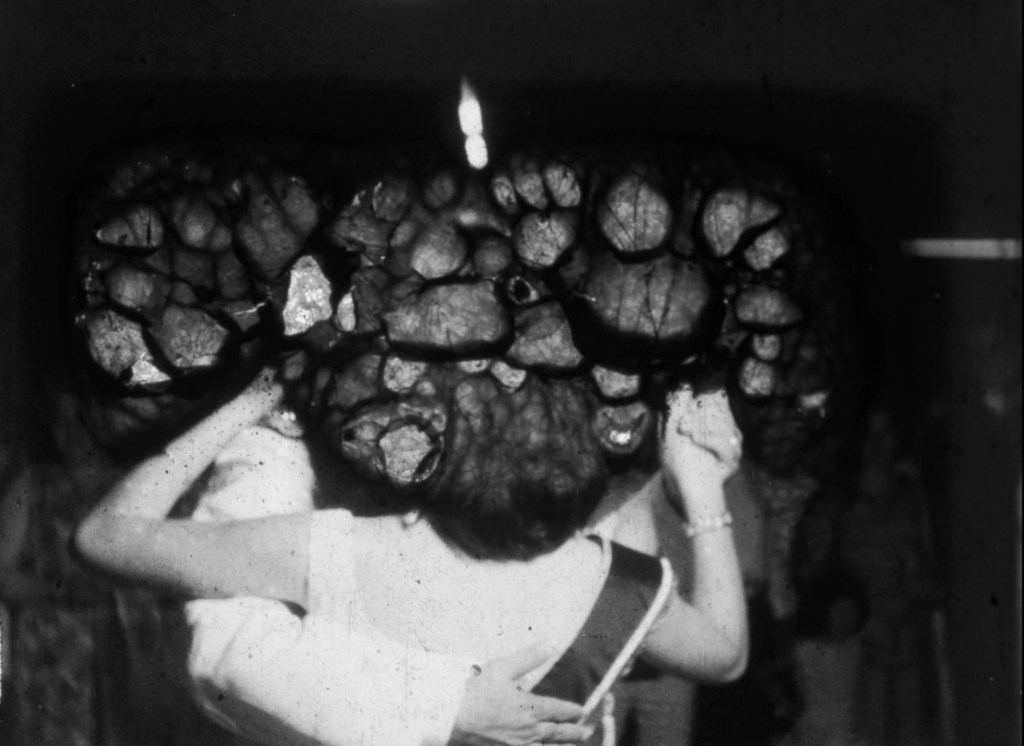
Manuel: Behind the flags, behind the curtains, there’s another story—the real process. In this case, the conditions of production affect the creation, because footage is money, too. In one moment of the process, after the co-production started and some work-in-progress prizes appeared, the director decided to do all the legal process to find the archives. Of course, it’s a pleasure to work with European funding. I was paid for every editing period. Without the funding, completing the film would have been a longer process and a cheaper film. So, little by little, we constructed the idea that film must tell the image of power, and we discarded a lot of scenes of other subjects because they were expensive.
Maja: It’s the same problem with academic research. You always have to choose a perspective—“from which point of view are you writing your thesis?” It doesn’t have to be the official one, but you have to choose one. And by choosing one, you’re already telling a subjective story, while research and science is supposedly objective – it is the idea it projects about itself.
Manuel: By telling one history, you silence others.
Maja: Exactly. You can write from the perspective of resistance, or from power, or from the media—but there is an assumption that you can’t tackle all of them. And if you want to tell a story that feels more true, you somehow have to try. Even though of course it’s impossible to tell the whole truth.
Manuel: Anyway, I know we could have made that film. Because in the last week of editing, there were two scenes. One showed the five political parties that opposed Stroessner—it appeared around minute ten. Remember those small red transitions separating scenes? That sequence used to last two minutes, just red, no images. After the part where Stroessner visits Germany, you hear about the Mengele connection. That whole section was once two minutes without image—just the sound of the forest, thinking of the disappeared people thrown from airplanes. The Archive of Terror, one of my favorite aspects of this project, holds the personal diaries of officers during the attacks, describing how they hunted the Resistance.
All of that happened in the forests, not the cities. In minute ten, the Resistance was introduced—visible. You saw still photos of rural and Indigenous fighters, people with guns, extraordinary images found in the archives. We had their names, the names of their parties, maps of Paraguay marking the locations of attacks. Then the film returned to the main thread. The resistance was present. Later, the film showed Margarita’s personal file—then her brother speaking in his own archives.
Maja: Because for me, as a viewer, that part came out of nowhere. It wasn’t properly introduced.
Manuel: Exactly. Suddenly you’re giving voice to the disappeared—through police investigation archives. But in an earlier version of the film, there was a ten-minute introduction preparing you for that. You understood there was Resistance. Later, in minute thirty, came the police diary describing gunshots and raids. It established that the Resistance was fighting back. And then you saw Margarita—kidnapped, her husband killed, her child lost. Those scenes were in the editing, but finally Juanjo decided to not include them and I didn’t insist.
Maja: I thought there simply weren’t any images of the Resistance—only official or foreign newsreels.
Manuel: They say there’s no audiovisual footage—no Super 8 films from the Resistance—but there are photographs. Many. If you work with the state archives, you find photos of soldiers raiding houses, of confiscated pamphlets, typewriters—evidence of people who gave their lives to resist.
Maja: It’s fascinating how photographs are treated as less valuable than film. As if one photo couldn’t contain more than a thousand frames.
Manuel: Half an hour at the beginning of the film was originally about the nineteenth-century war, the genocide, with nitrate scans of incredible quality. Those photos are in Uruguay now, not Paraguay—and Uruguay was one of the countries responsible for Paraguay’s destruction at the time. Juanjo was under immense pressure. He shifted focus—from searching within the archives to searching for archives. And I was the one inside the archives.
Maja: There’s such a difference between searched footage and found footage. When you find it, you’re listening to it. When you search for it, you’re imposing meaning.
Manuel: Exactly. I did my best and I learned a lot.
Maja: I think, for me, an even more perfect film would be to actually make it into a very, very long film, in parts—but edited together with footage of other, similar incidents from different parts of the world. For example, when I was watching the film, I immediately thought about the Manila Film Center. I don’t know if you’ve ever heard of this story. The Manila International Film Festival was actually established by Imelda Marcos, the wife of the dictator of the Philippines. And what happened during the building of the festival center was that more than 160 workers were buried under cement. The building still exists. The festival actually took place there in the early 1980s—the first edition was in 1981—and it was meant to be an international film festival. Many film professionals boycotted it, but programmers from Venice FF and several other major festivals were there.
But I know more about the festival from the perspective of Chinese filmmakers’ reports. And no one actually mentioned that tragedy. What they did mention was that, during the opening ceremony of the festival, there was an explosion—an attack by guerrillas—and how inconvenient for the festival participants it was.
Manuel: I love that information.
Maja: Yeah, and it’s interesting that in the Philippines, the Resistance also stationed in the forest. It wasn’t in the city. Anyway, often I feel as if history is repeating itself and we haven’t learned anything over the years. So, actually, what would be an even more powerful film would be to make this transnational film editing parallel events that seem to be echoing each other.
Manuel: 1989, the dictatorship falls…
Maja: And in so many places—South Korea, Taiwan…Everything, everything. In Poland too. And how, in that moment, everything that happened in the 1990s—it was like we lost the struggle. The politics, yeah, exactly. Eastern Germany was colonized by Western Germany, its lifestyle, ideology, economic system, everything it represented. In Poland, the whole industry was privatized. Many big companies and factories were sold to the West. And we were just poor. I don’t know—it’s a long story. My parents lost everything overnight because of the inflation. They got married in 1989, and I was born in 1992. When they got married, all the presents and money they received for their wedding—overnight, it was worth almost nothing.
Manuel: You have to see this footage series by Adam Curtis—TraumaZone. It’s about that period, about how inflation destroyed the Soviet Union.
Maja: It’s so interesting. For many people the early 1990s was a period full of dreams. The first thing my parents bought was a satellite dish to watch TV from Germany. We were so saturated by this media, trying to be the West, trying to be as…
Manuel: The American dream.
Maja: And everything was just lost in the 1990s, I think. Complicity came.
Manuel: The ’70s and ’80s showed us revolutions and struggles, but with the ’90s… We are that generation—we are the kids of the ’90s. Capitalism and hyper-normalization of life is what we got. “You have to have a Tesla car.” That dream destroyed all the other dreams—that you could change something, that you could…
Maja: That’s a lot about colonization too. How one dream is kind of colonized by another dream.
Manuel: Exactly. I don’t feel represented by that materialistic desire in life. But I know that many in our generation want another life—the one they’re supposed to have. And for me, well, I’m part of two collectives. I have proof that there are people resisting. But we’re such a minority.
For me, the problem is: how can those people get involved in politics if they work sixteen hours a day and then have to care for their children?
The international media say about the situation in Argentina: “How did Javier Milei win? How did he appear like that in society?” And you think—why don’t you talk to a worker? It’s the same in the U.S., of course. Talk to them about how they make it to the end of the month—with so little money. Political parties change, but the situation stays the same. The people who voted for Milei aren’t getting involved in politics. They continue to struggle to make ends meet and live a decent life as best they can. Argentina’s history is so complex, as every country.
For me, the global problem is how to make it possible for all classes—especially the working class—to have the time to get involved in politics, to go to the theater, to watch films, to read books. Techno-capitalism today creates more distraction. The less time you have, the less you want to get involved—because you’re tired, because you want to have time for your children. And if you don’t have children, you want to make your own films, like me.
Maja: That’s your child.
Manuel: Of course—my cat and my films. And I know, I’m very conscious that I’m part of that segment of society that gets involved—but I’m not changing the world. But what is to change the world now anyways?

 sailuluo 赛璐珞
