
Dear Eliana,
I hope you are settling well in Paris in the new apartment. At least I found renting my very own small studio in Berlin to be a big relief. Although my last film festivals of 2024 – Beijing International Short Film Festival (BISFF) and Hainan Island International Film Festival (HIIFF) – clearly proves that my days of floating from place to place are not yet over despite previous assurances. Yet I feel the peace and quiet settling in. Not from outside, but from within.
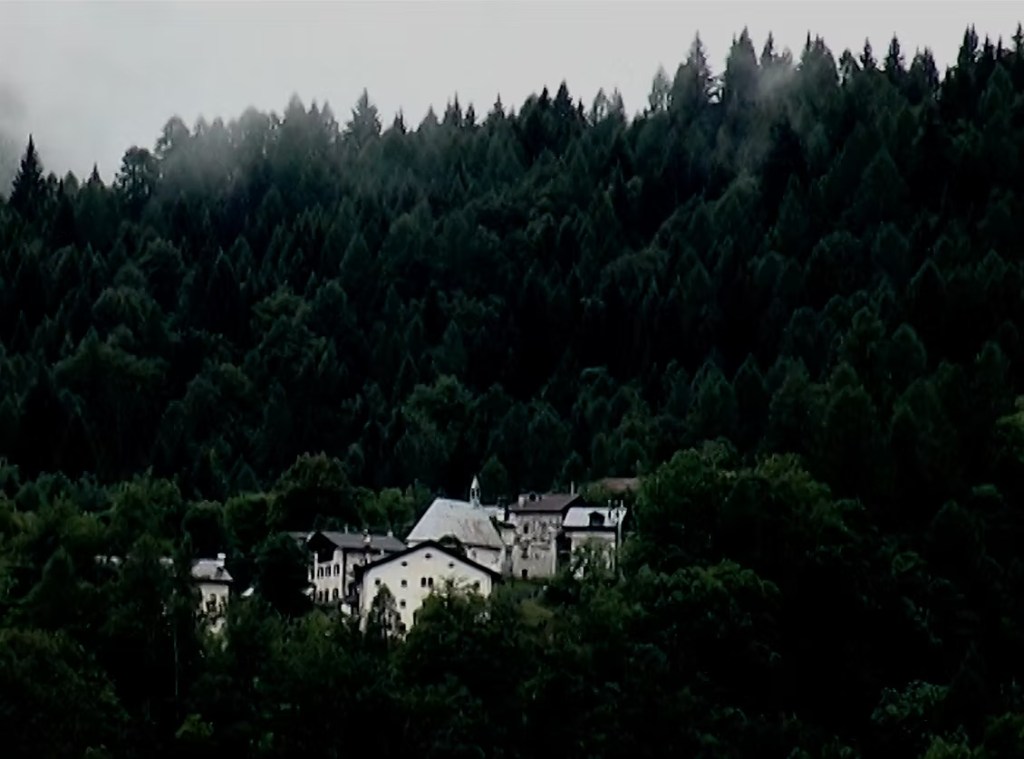
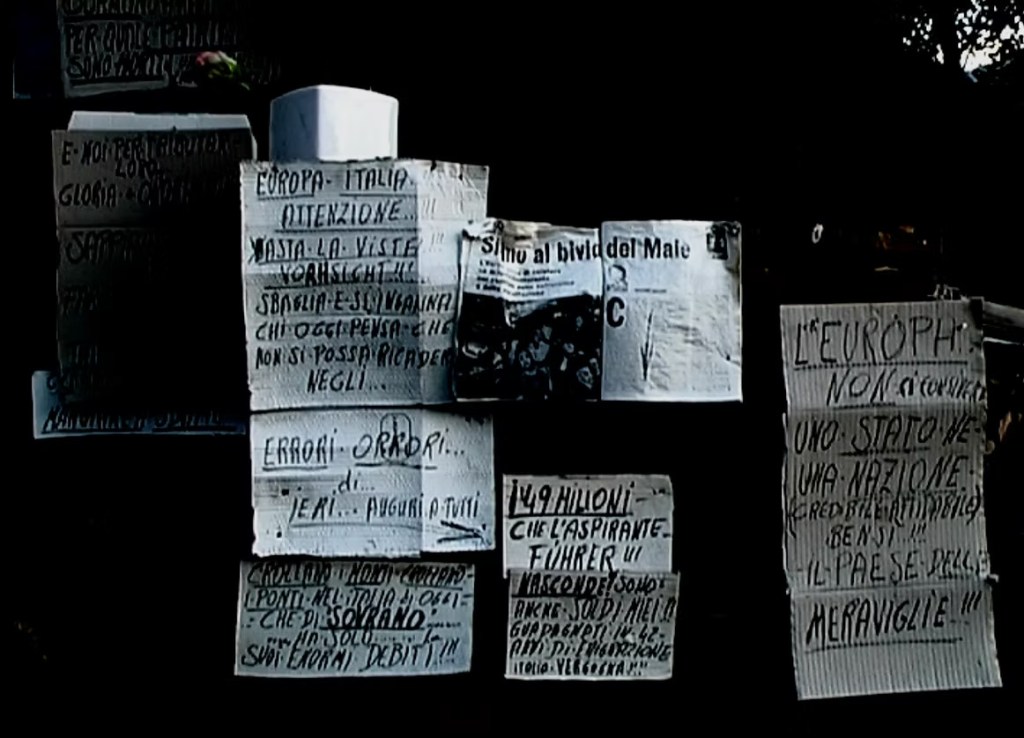
I am increasingly drawn to films about hermits and life in seclusion. Maybe that is why GRAZIANO – A Hermit’s Story (2024, dir. Jozefien Van der Aelst) screening in the international competition at the BISFF, spoke to me. The main character, an elderly man in his 70s, is the only resident in otherwise abandoned mountain village, his hometown. He does art, sings in the halls of an abandoned church, takes care of his blind dog, paints and writes poems, puts the handwritten placards on the empty streets expressing his views on Europe. It is unclear where exactly is the place, but my guess would be somewhere in Italian-speaking Switzerland or close to the border between Italy and Austria, but it can well be in any location in the region such as somewhere in Romania. That is exactly what Graziano says – Europe is in fact one body even though the national borders, taxes and capitalism cut it to pieces. In his youth Graziano left the village to be a migrant worker in Germany as many people in his generation. Before departure he did not get the courage to say to the girl he fell in love with how he feels. Now he looks through a telephone book for her name which he cannot recall anymore.
Watching Graziano spending time made be recall the times as a child I felt excited being left alone in the house or waking up in the middle of the night when everyone is sleeping. It was the time to do anything my heart desired, enjoy the alone time and dreaming about what the present and the future holds. The same feeling of limitless possibilities I got when my parents bought our first camera in the early 2000s and I finally got the chance to record stuff, matters of daily life as well as film reenactments such as the dance scenes from Dirty Dancing 1 and 2. Interestingly, the filmmaker Jozefien Van der Aelst uses Pal MiniDV to film Graziano. I kept thinking what his presence meant in this village, Van der Aelst becoming the fellow dweller. Did he also enjoy the loneliness, the quiet passing of time in anticipation for the film to come to life? The question the film left me with is this: what is the point of creating boundaries and fragmentations of reality—artificial categories—when the only thing that truly exists is continuity in change; our ghosts traveling in different abstract and literal vehicles, cinema or trains being among them?
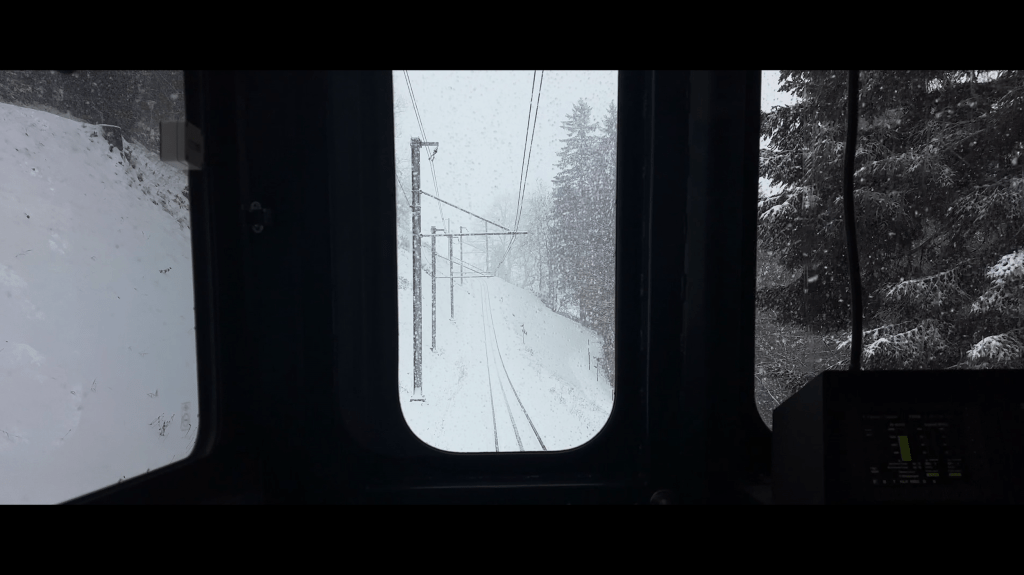
Snowy Train 눈 내리는 기차 (2024, dir. Kim Ji-hwan) took me on such a ride through space and time. Made from a long shot taken with a still camera on a train in Switzerland, Kim Ji-hwan plays with the scenery visible through the windows through glitches and overlays. My favourite moment in winter was sitting in a car covered with snow like in an igloo, finding oneself somewhere in the middle of light and darkness, pleasure similar to siting under the shade of trees. Excitement of hiding in plain daylight, stealing time only for oneself, extreme freedom in being alone.
The vast calm coming in the middle of the night with a snowfall after the violent, bone-chilling wind. There was an unexpected snowfall in Beijing on the evening the police for the second time came looking for the festival director because a festival-goer reported that one of the short films in Chinese-language competition, Anatomy of a Call 通訊默示錄directed by Hong Kong filmmaker Arnold Jing Wah Tam, featured a swear word – “他媽的” (‘fuck’). The film was made with a graceful amount of postmodernist playfulness, using phone calls as a weapon for spreading chaos and misinformation; an occasional curse word seemed necessary because of the film’s style. Otherwise Anatomy of a Call would not be a full-bloodied hair to Pulp Fiction. After meeting with different levels of officials – who admitted that the audience member overreacted – some of the screenings had to be rescheduled. It makes me think back to the first months after moving to Germany. A neighbour told me that there is a man living nearby who takes photos of cars that are not parked according to the direction of the road and reporting them to the police. Me, unaware of the rule, had my car parked in the wrong direction. Small moments like that made my first moments in Berlin doubt my reason. Some people love picking up a fight and I tend to be the one who always avoids it at all costs.
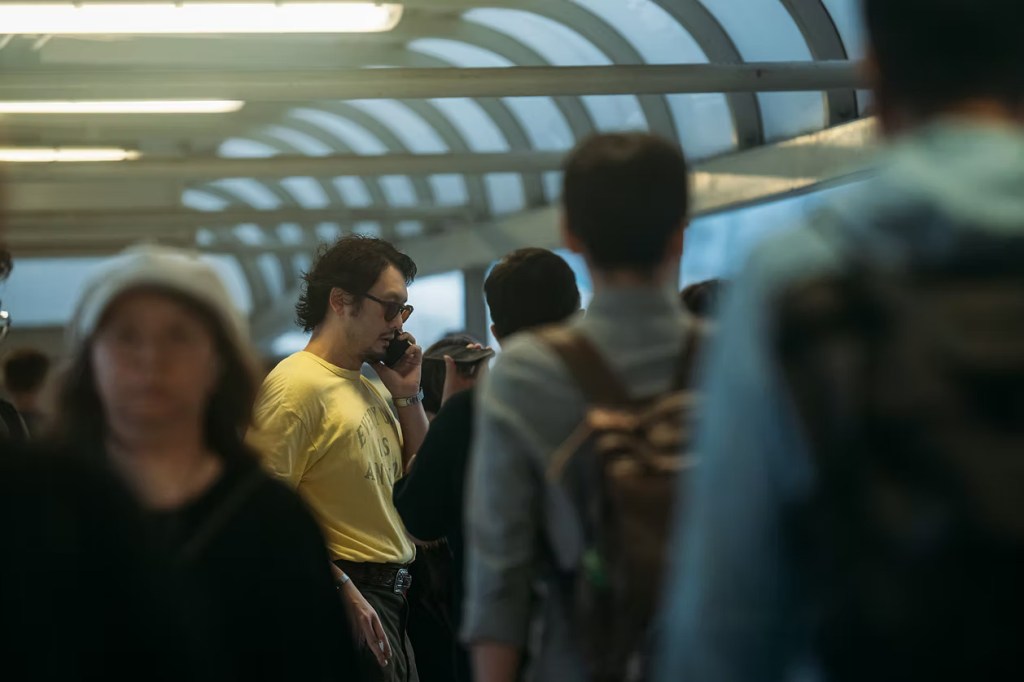
I haven’t mentioned that on the opening night police had to intervene because one guest started a fight with one of the filmmakers from Songzhuang – the famous village known from art galleries and independent filmmaking. He followed the filmmaker around with the phone, accusing the filmmaker of being a podophile and trying to get the confession on record. He really tried hard to pick up a fight with anyone around. Eventually, the filmmaker reported the incident, police came but the fight broke out anyway. At the police station the matter got resolved and the allegations were proven to be false.
There seemed to be indeed a problem with the aura and the atmosphere, as if from the first day there was a bad luck hanging over the festival. When one of the guests of the festival, a Russian filmmaker, accidentally got hit by a motorbike in otherwise quite calm art gallery district 798, all of the organisers were convinced of the curse and only looked forward to surviving the remaining days without the next major catastrophe, minor such as glitches during screenings being unavoidable and accepted with a calm smirk.
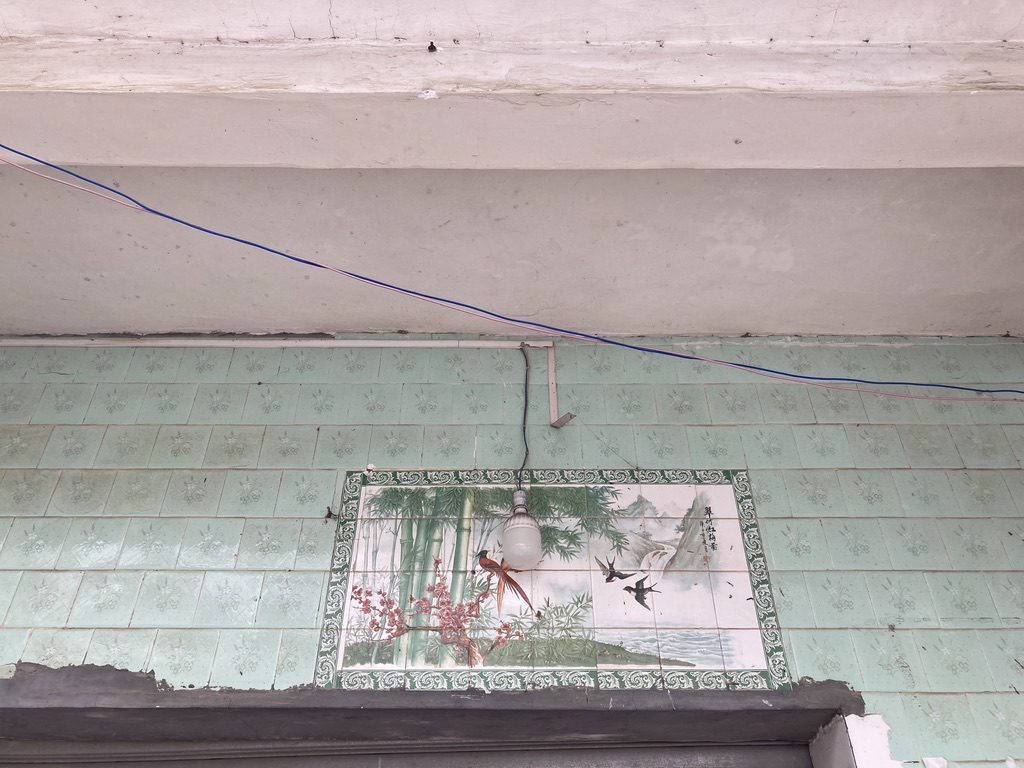
This organisational ordeal continued at the Hainan Island IFF. Even if, on the contrary to the BISFF’s shoestring budget, it received state funding and high endorsement of the central and local government. That is what happens at big festivals if the budget management is a mess and the funds are allocated to galas and red carpet instead of the festival staff – the person in charge of the logistics (DCP copies, translation) at Hainan Island IFF was in his early 20s, sleep-deprived and undernourished, receiving only 3 000 RMB (less than 400 EUR) for his work. I cannot say that I was not one of such cinephilic desperates in my early 20s, but at the time I was not put in charge of the most vital part of the festival – film screenings – at one of the key international film festivals in Poland. It is as if the 23-year-old me would be responsible for logistics at the New Horizons Film Festival or Camerimage. The high stress level is unimaginable.
However, HIIFF develops in a positive direction in general. In 2024 the festival cleared all debts, and it can step into the future with a clean slate. Screenings went smoothly, though one day a piece of ceiling fell on the audience. Many hotels and shopping malls in Sanya were built very quickly, sometimes without regard for safety. Durability is left in utter disregard. I feel that is the common problem all over the world which makes me cling even more to the wool sweaters and any wooden furniture inherited from family members or found in a second hand shops. Anyway, screenings were strained element of the Hainan Island IFF even though this year the programme was very solid, attracting praise from many film enthusiasts and industry members in China. HIIFF curators brought films which premiered not only at the key A-list film festivals such as Cannes or Venice, but also from the FID Marseille which shows a dedication to explore film history and different modes of cinema, not only those most marketable.
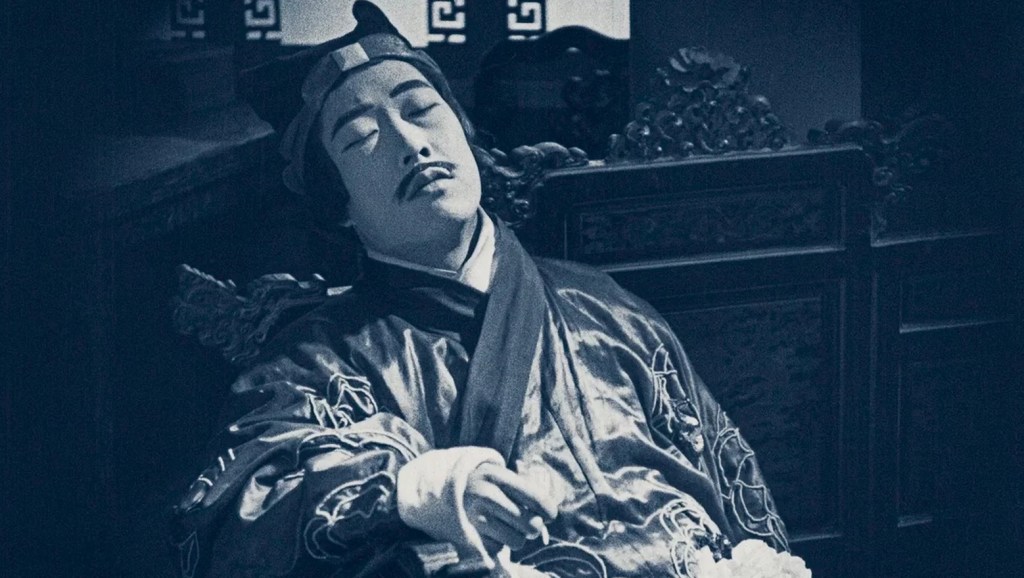
Regarding the history, my purpose at the Hainan Island IFF was to watch the retrospective celebrating 60 years of diplomatic relations between the PRC and France. Alongside the classics such as Joris Ivens’ A Tale of the Wind, there were some rare gems in the programme such as the 1920s silent costume drama Le Voile du Bonheur (The Veil of Happiness, 诗人挖目记) directed by Édouard-Émile Violet or the early 1980s indie co-productions such as Pékin Central (1986, dir. Camille de Casabianca). It was a satire on ideas of love and companionship – casual sex and professional ambitions leading to bizarre plot twists – as the characters tried to satisfy their ego and id, leaving superego on the plane from Paris to Beijing. Even if for a film with elements of comedy, many situations were exaggerated, but it took me back to the time I witnessed the complicated love lives of international students on exchange in China back in 2014 as if going abroad meant stepping into an alternative reality in which we are faced with our fears and desires more than usual. Nevertheless, I always saw myself as a person quite stubborn in my routine and value systems, and indeed I remain obstinately the same in any place on Earth.
The entire retrospective was full of surprises and discoveries. Those small moments are exhilarating, here many things are possible rather in practice than in theory. That very much goes for the programme of the retrospective which – except for Ivens’ work – featured films now completely forgotten. No global art cinema, no mainstream classics, only the strange hybrids created by the French imagination about the Other. The dreamscapes, sexual tension and thrill of the unknown ~ no one in this era of political correctness would dare to be so blunt and unaware as in the 1980s and the 1990s. But also, in a way, naive – the quality that almost choked to death after being swept under the rug. Why is naivety a bad thing? Is it surpassed because of the fear to be left unarmed either in a debate or while walking on the street at night? However, lack of naivety does not equal lack of fun. It only makes less things possible, discourages outrageous experiments. Eating bananas with chilling sauce and white yoghurt with sesame paste.
Lack of naivety is how I would characterise many of new releases, either at the film festival circuit or in theatres. Now what remains is waiting for a thaw, mellow melting of the rules after correctness disguised for truth reached unreasonable levels of autocratic, algorithmic power.
I am looking forward to hearing about your festival travels or any recent film that particularly stroke a cord with you. I will leave you with a song that I heard in a bar Golden Weasel run in Beijing by Anthony Tao, my former editor from SupChina/The China Project. Amarsanaa Battulga and I went there to see Anthony but accidentally walked into a quiz night. We got allocated to an eclectic group of quiz contenders, a guy from the Swiss embassy and a husband of a person working in the film industry on mainstream blockbusters. It was during the quiz night I heard a song that I have not listened to in ages but now for the 33-year-old me makes perfect sense:
Best wishes,
Maja
 sailuluo 赛璐珞