

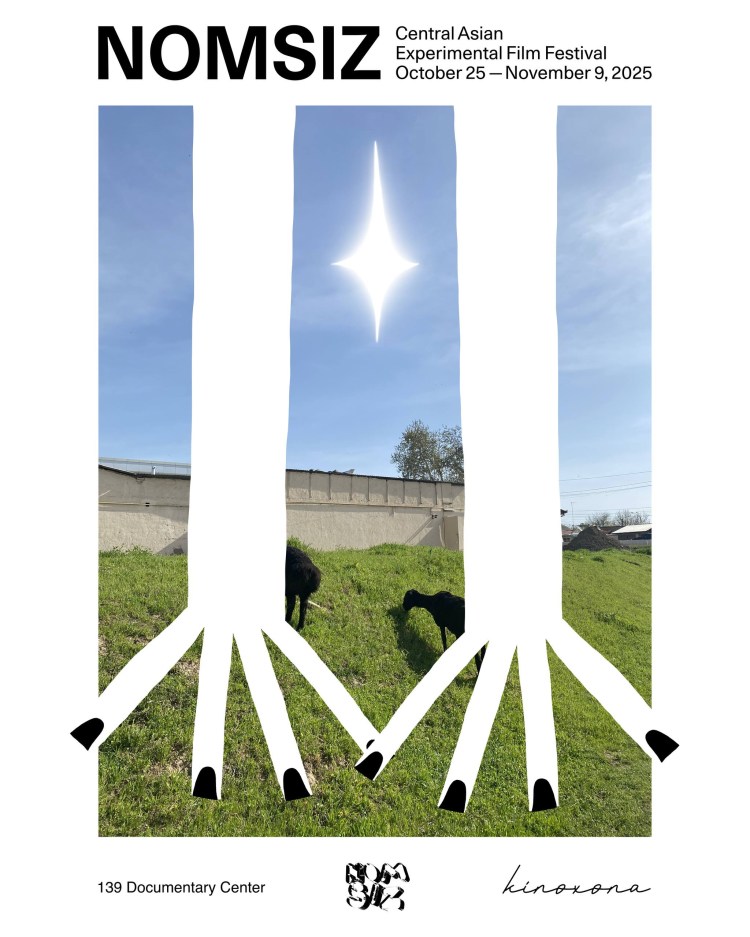
The NOMSIZ Film Festival is dedicated to amateur, experimental, and social filmmaking in Central Asia, engaging with both the history and the present of independent cinema in the region.

In its second edition, NOMSIZ brings a strong curatorial thought and a selection of short and mid-length films that push the boundaries of film language, as well as traditional modes of film production and distribution. Most importantly, it brings together a community of people for whom cinema is a tool for making sense of the contemporary world and commenting on it from a local perspective.
This report includes a brief introduction to the festival format and this year’s programme, followed by a short explanation of how and why I was there, as well as my thoughts on the films I saw.
Format
NOMSIZ in the Uzbek language means “nameless.” The festival is run by a tight-knit group of film professionals—programmers, film critics, lecturers, podcasters, and film event organisers—who, like many people in the independent film scene, multitask in order to make a living. The festival operates without a website; information circulates exclusively via Instagram and Telegram. As the organisers prepare the festival after working hours and without secure external funding, key details such as dates, venues, and the programme are announced at the last minute. During the first edition, all information was published only in Russian. This year, it was also made available in Uzbek and English. Russian functions as the festival’s lingua franca, since the organisers, the filmmakers, and the audiences mostly come from post-Soviet republics in the region. Moreover, several key organisers—such as Alexey Artamonov, who between 2019 and 2022 was the artistic director of the New Holland Island International Debut Film Festival in Saint Petersburg—emigrated from Russia following the outbreak of the war in Ukraine.
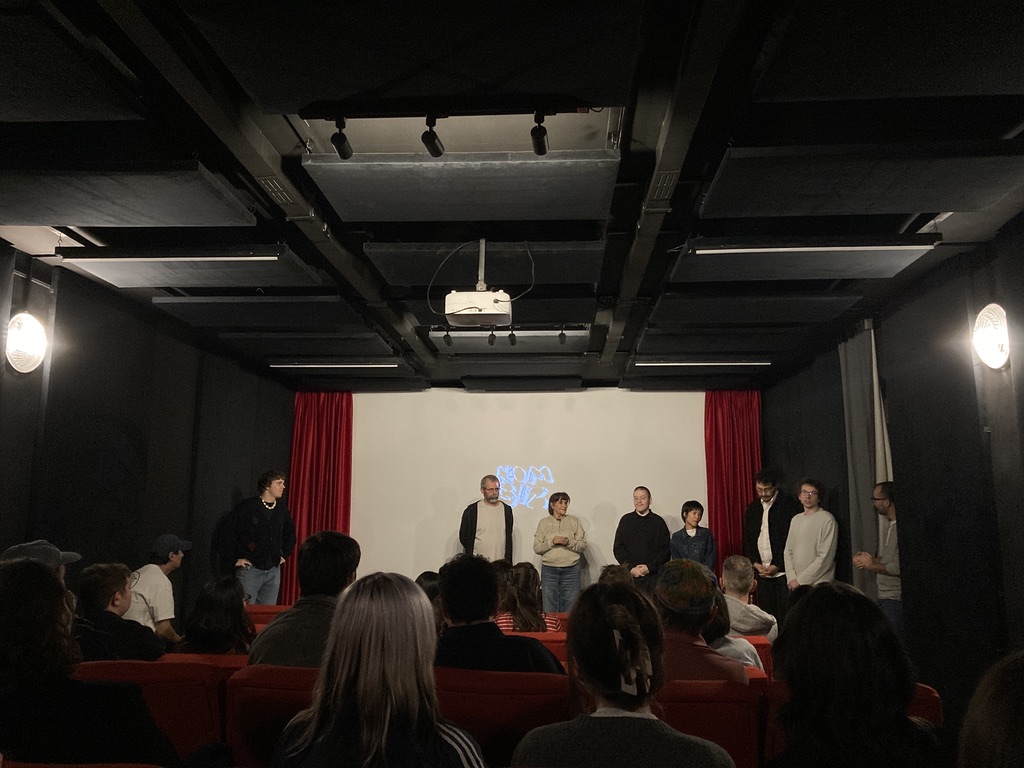
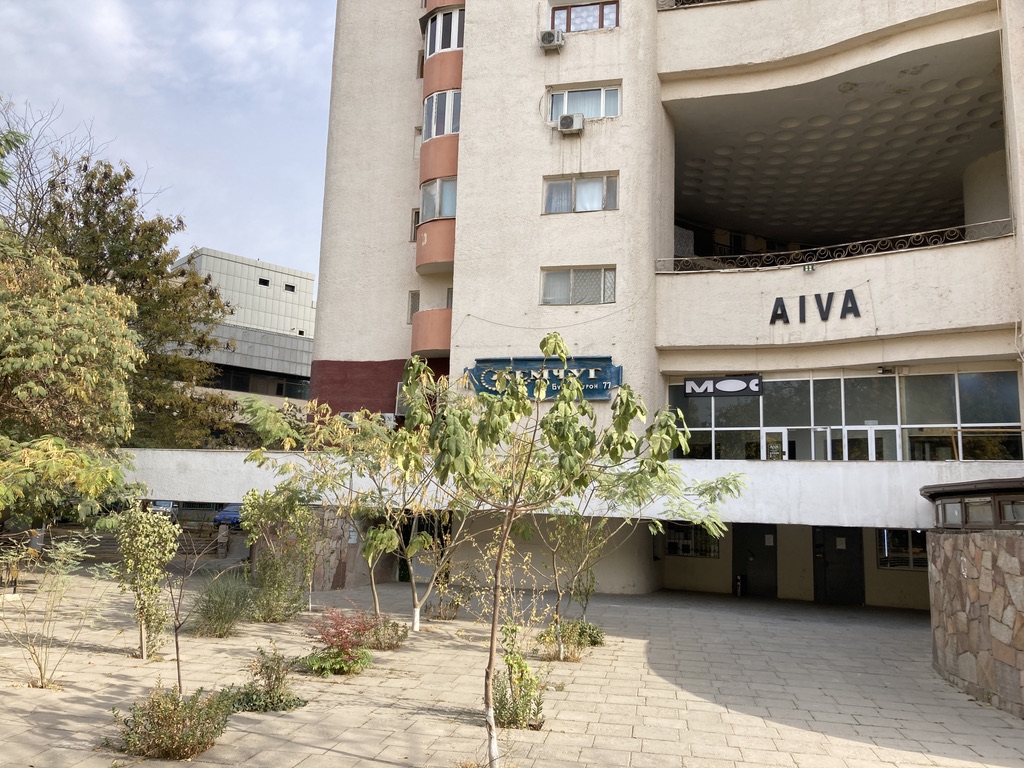
Following the closure of the art gallery 139 Documentary Centre, which hosted the event last year, the festival relocated to Kinoxona, a cinema located within the Tashkent Film School. The space has been rented only since this year by a collective of filmmakers who live, study, and organise events there, with the rent covered through collective donations. A second venue, Moc Hub, is a co-working and event space situated in Dom Zhemchug—a social apartment block built in 1985. Moc Hub occupies a large room on the first floor that was designed to function as a gallery and cultural space.
Programme
The festival opened on October 25 at Kinoxona with a programme presentation and a surprise screening, followed by French filmmaker Théo Deliyannis’s Journal Syriote, an ironic, diary-like musical film originally conceived as a series circulated as reels on his Instagram account and shared with closest friends.
On October 26, the festival moved to Moc Hub for a workshop on the video essay form, followed by Monographs 2020, a series of video essays commissioned by the Asian Film Archive, and the premiere of Alexander Barkovsky’s documentary Submission. The first weekend concluded with a live performance by the Almaty-based experimental music duo girl&friend.
The programme also placed particular emphasis on historical reflection and archival work. A retrospective dedicated to Kazakh documentary filmmaker Vladimir Tyulkin presented two films exploring cruelty and compassion through human–animal relations. Another key strand focused on amateur cinema from Soviet Uzbekistan, showcasing films from the 1970s and 1980s preserved by the Uzbekistan Amateur Filmmakers’ Association, contextualised by a workshop on low-budget filmmaking and archival practice.
Contemporary experimental cinema from the region is highlighted through three sets of open-call programmes featuring works from Kazakhstan, Uzbekistan, Kyrgyzstan, and beyond, spanning video art, essay film, and experimental documentary. The first programme, Yo‘lda – meaning “on the road” in Uzbek language – brought together experimental works created in Central Asia that reflect the idea of movement. The second programme, Yo‘lkira – meaning “fare” in Uzbek language – is the price paid as one moves forward and accepts one’s past. It featured five films about personal and historical traumas as well as cultural amnesia and ecological disasters. The third programme, Yo‘ldosh – Uzbek for “companion” or “fellow traveller” – focused on chance encounters between people, points of intersection, reflection on similarities and differences.
The screenings were accompanied by lectures and talks by film critics, curators, and artists, including a lecture on experimental cinema by Alexey Artamonov, a curated programme of Kyrgyz video art, and a special screening of Dinara Asanova’s The Wife Has Left, accompanied by a lecture on Asanova’s legacy in Soviet cinema. Across its diverse programme, NOMSIZ foregrounded collective viewing, dialogue, and the circulation of independent and non-institutional film practices within and beyond Central Asia.
Position
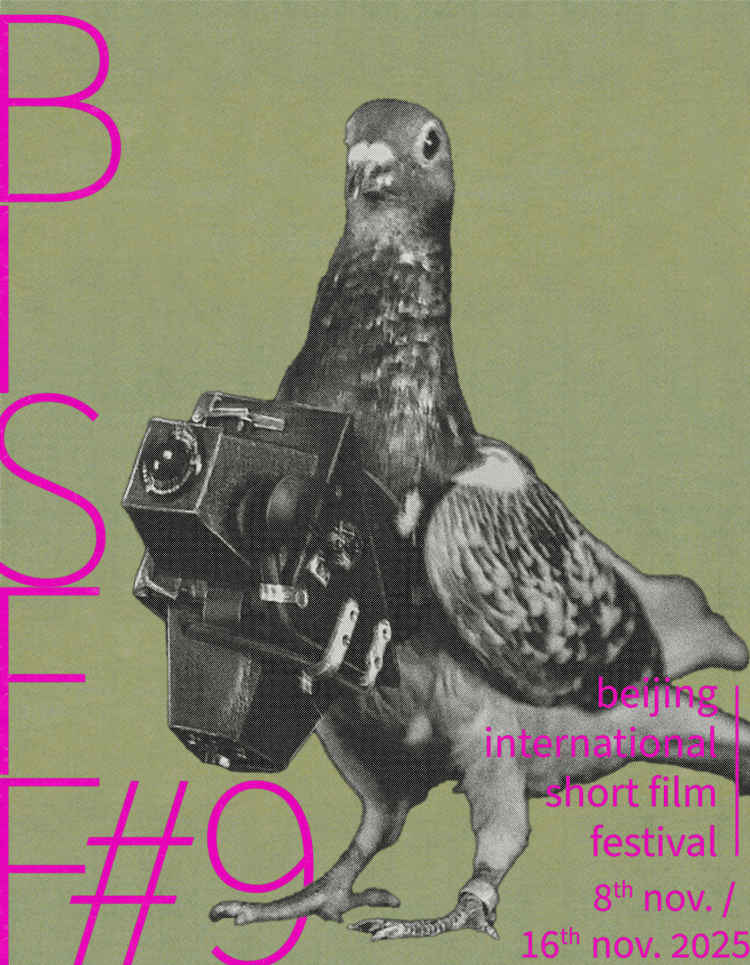
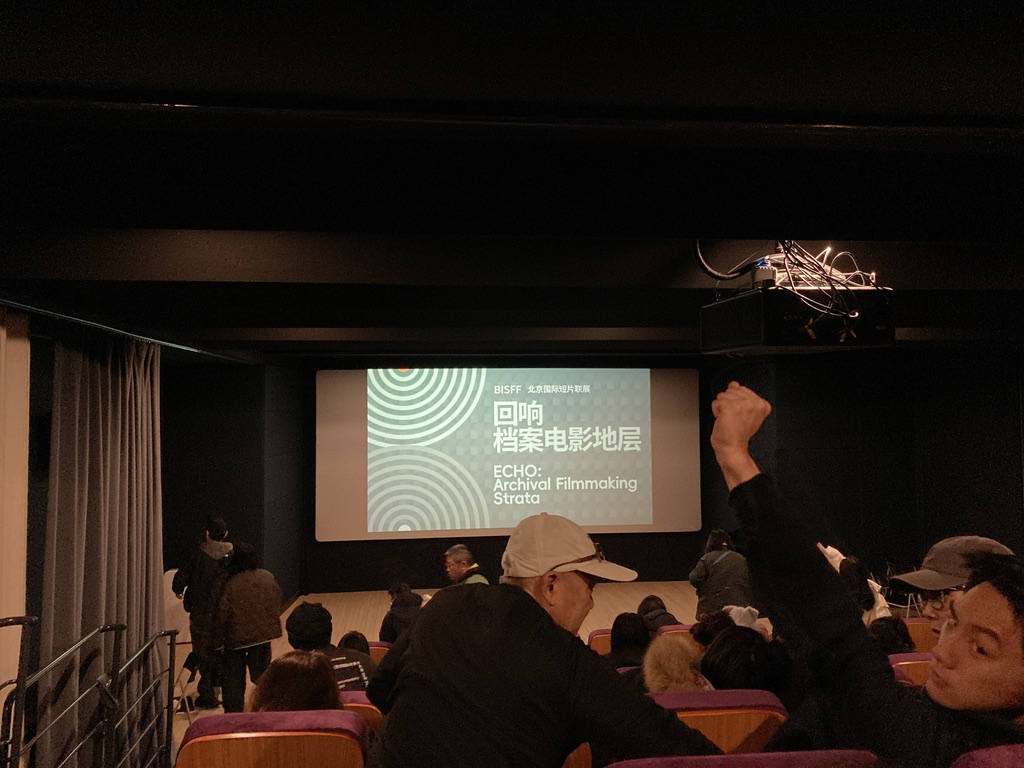
Before I delve deeper into the programme, I need to briefly explain how I learned about the festival and had the opportunity to participate in it. My attendance at the NOMSIZ Film Festival is the result of a long-winding story of sheer luck and fortunate encounters. Last year, at the Beijing International Short Film Festival, I met a Kazakhstan-born German filmmaker and his partner—also a filmmaker—both based in Berlin. Throughout 2025, we had several opportunities to spend time together, and at one of the parties I met Rita Sokolovskaya, who is one of the programmers involved in NOMSIZ. She expressed interest in screening MONOGRAPHS, a series of video essays on Asian cinemas commissioned in 2020 by the Asian Film Archive.
Back in 2020, during my first year of my PhD, I had the chance to be part of this project. It was also the first time I came into contact with Uzbek cinema, thanks to the video essay by Saodat Ismailova, which was included in MONOGRAPHS. The series was screened during the pandemic at various film festivals in online formats; NOMSIZ marked the first time I had the opportunity to watch the film with an on-site audience, discuss the Asian Film Archive’s project, and revisit the video essay I made five years ago. Theo Delliyannis and I were the only two guests who came to the festival from outside the region. It was also the first time I attended a film festival as a filmmaker rather than as a member of the press.[1] However, the urge to make sense of the festival experience through writing is always strong, and below I include a discussion of the films I managed to see during the festival.[2]
Note #1: Private spaces
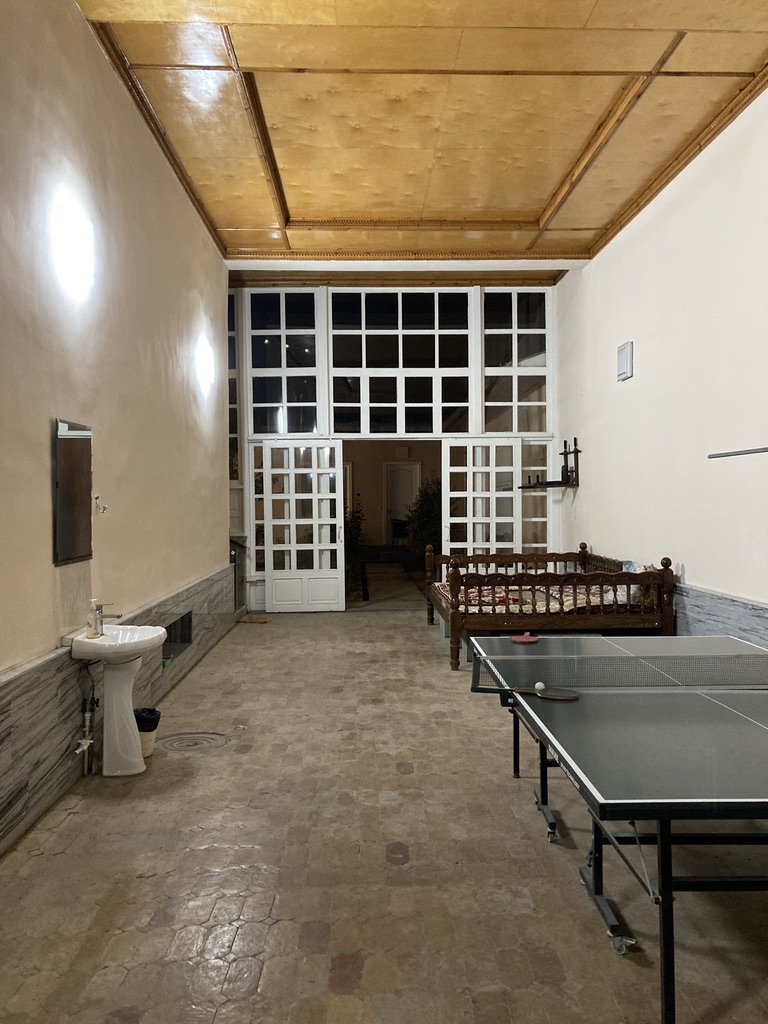
The opening of NOMSIZ was very low-key and inclusive. The venue itself—the Tashkent Film School—has a home-like feeling. It is a magnetic crossover of private and public space: the entrance features a ping-pong table, a traditional tapchan, and a small, flowered courtyard with a bar, while the Kinoxona cinema is located downstairs. The opening film, Journal Syriote, also channelled this atmosphere.

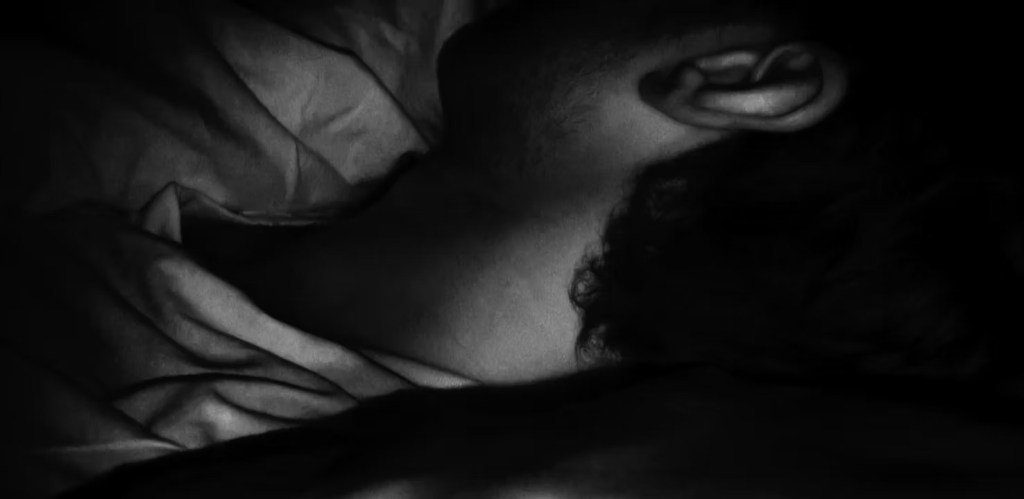
The film is an account of days spent by the filmmaker Théo Deliyannis in his grandmother’s house on Syros Island—a Greek island in the Cyclades, in the Aegean Sea—where he went several times during the Covid-19 pandemic. In Journal Syriote, he puts his observations on cinema into practice. Jokingly, he said that one of the motivations behind making the film was that scenes of characters using the toilet are usually scrapped from cinema, even though this is a need shared by all people.
The storytelling in Journal Syriote is very organic: Deliyannis makes it on the spot, in tune with the environment and with his emotions in the moment. He takes time to talk to a neighbour and care for stray cats, but this is not an act of documentation that pretends to objectivity. On the contrary, in Journal Syriote prosaic moments of life turn into chapters in a fictional odyssey taking place in one’s courtyard or even within the reality of one’s body and emotions—a limited space hiding the vastness of stories, drama, and comedic turns. The filmmaker strikes a balance between humour and sadness, movement and stillness. In the silence and solitude of a remote house near a small town on Syros Island in the middle of winter, Deliyannis returns to the core, creating a story through very simple yet thoroughly audiovisual means. Kudos for the use of close-ups.

Originally, the film was made as a series of short clips on Instagram Reels that Deliyannis shared among his closest friends. This connects Journal Syriote to the format of traditional television series, with audiences sharing an experience at a specific and limited point in time. The format leaves its mark on the narrative style; for example, some episodes end on cliffhanger moments. The digital clips distributed on Instagram Stories were later printed onto 16 mm film. During screenings in public spaces, Deliyannis loads them onto the projector himself, and the act of projection becomes a performance in its own right, imposing a different pace on the viewing experience.
However, there was no functioning 16 mm projector in Tashkent, and at NOMSIZ it was the first time the analogue clips were digitised again and edited into a feature-length film. Still, the filmmaker wanted at least to press play after each fragment to keep himself busy during the screening, but it turned out that the film in French had no English subtitles, only Russian ones. Therefore, instead of being the projectionist, Deliyannis kindly became a private benshi, translating the entire film for me during the screening. In the end, another kind of filmmaker’s performance accompanied Journal Syriote.

The drive to experiment with different audiovisual styles and exhibition and distribution methods—leading to the building of strong connections with the audience—continues in the Yo‘lda programme, which brings together ten experimental short films from Central Asia reflecting on the idea of movement. In The Night Shift, Assem Sultanova films farmers in the Qostanay region of Kazakhstan harvesting grain. Due to the short dry season, the crop has to be collected as quickly as possible; therefore, farmers and agricultural machines work night shifts to complete the harvest.
Shot in black and white, the film at first brings to mind John Grierson’s Night Mail (1936). However, there is no voice-over and no rationalisation of overnight labour for the good of the nation or the people. The act of work is stripped of ethical motivation and national narrative. Sultanova pays special attention to the flow of grain through machines and to people standing on enormous grain heaps that transform the landscape into a kind of man-made quicksand.
There is something addictive in watching the constant flow of grain, similar to the act of observing fire. The soundscape and images make the viewing experience almost bodily, connected more to the sense of touch than to hearing or sight. It resembles the sensation of putting one’s hand into a pile of flour for no reason other than to connect with materiality—to feel both the softness and the earthiness of the flour. The Night Shift reveals the labour required to deliver a basic staple food and reconnects the viewer with the materiality and temporality of a process that has become almost invisible in contemporary consumer culture.

Kündelik. Dubai engages with another side of contemporary consumer culture—tourism. Kazakh filmmaker Aiganym Mukhamejan presents her personal view of Dubai. The opening scene features her attempt to take a photo in a booth, in which she struggles with a system that imposes image standards prevalent in the United Arab Emirates.
The problem of interfaces and default images recurs throughout Kündelik. Dubai, with the filmmaker positioning herself as a misfit in Dubai and critically commenting on its visual culture, which combines sometimes contradictory elements of traditional Muslim modesty and modern urban life. For Mukhamejan, the short is part of a broader series, Kündelik, in which she explores different cities. However, rather than engaging with local people, the filmmaker remains on the surface. She does not acknowledge her privilege or her biased point of view as a tourist who passes judgement on her surroundings without becoming involved, thereby missing an opportunity for filmmaking—and travelling itself—to function as a method of introspection and self-exploration. Although some observations are entertaining and to the point, the overall mocking attitude renders the narrative mundane and leaves a sour aftertaste.
In My Voices, Kyrgyz filmmaker Aidai Amanova reflects on language, identity, and power. The four-minute short is shot from a first-person perspective. It depicts the simple act of changing clothes, sometimes with the help of another person whose face remains hidden beyond the frame. Through this simple metaphor, Amanova conveys the transgressive nature of learning and speaking different languages, as the synopsis aptly describes it: “the vulnerability of self-construction within systems of assimilation.”
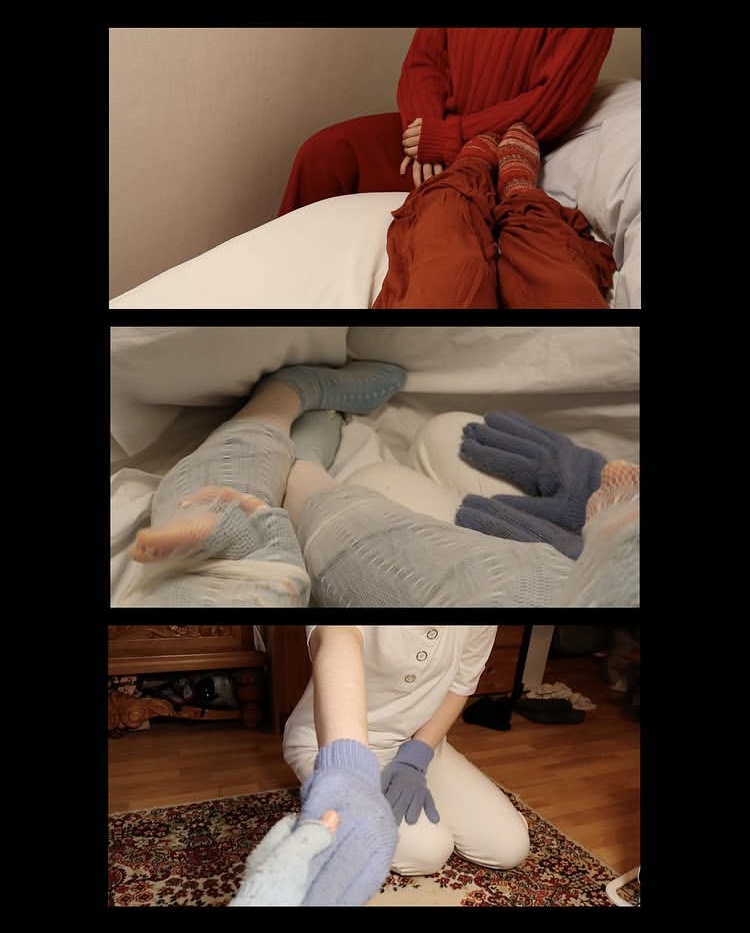
The voiceover moves between Russian, Kyrgyz, English, and Norwegian, implying the first-person narrator’s long and winding story of migration, shaped by the unequal distribution of wealth and resources across different regions of the world after the fall of the Soviet Union. Amanova reflects on cultural colonialism and the price to be paid when one is forced or chooses to step beyond the comfort or the limitations of one’s mother tongue.
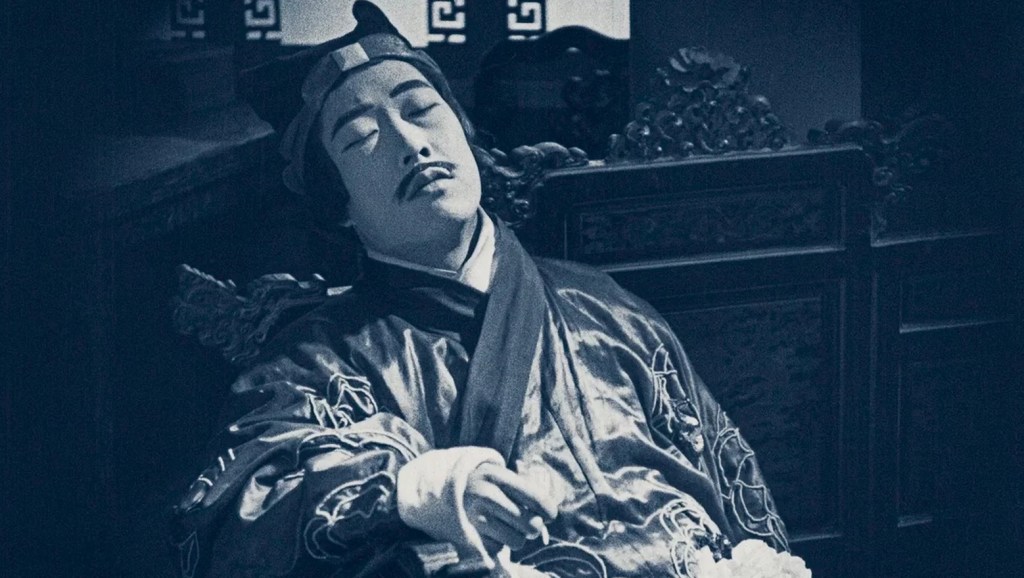
This brings me to say a few words about my own entry into NOMSIZ, the video essay Saved by the Party-State. In the work, I use voice-over to discuss and compare Stand Up, Sisters! 姊姊妹妹站起来 (1951, dir. Chen Xihe) and Blush 红粉 (1995, dir. Li Shaohong)—two films about the re-education of Republican-era prostitutes in the early years of Communist China, shot under very different conditions of film production.
As the only non-Asian person involved in the project, I was aware that my identity does not fit the frame and my positionality needed to be addressed, but at the time of making the short film I did not do so. Perhaps, as an early-career academic in the process of professionalisation, I felt compelled to present a thesis. But this was not the only reason. I wanted to challenge the discourse circulating at international film festivals and among international film critics by engaging with two films that lie beyond the canon of Chinese cinema familiar to global cinephile audiences. Therefore, I was driven by a desire to educate, fairly common among academics.
Both motivations resulted in my choice to use English for the voice-over, which is neither my mother tongue nor the language of the films I discuss. Why did I not record the voice-over in Polish or in Chinese? I could have provided English subtitles and achieved the same level of accessibility. Yet English has, for many years, offered me a kind of safe space and plasticity—a means of blending in and expressing myself publicly with greater confidence—whereas Polish and Chinese feel too private and intimate.
Why Chinese cinema? Perhaps it is a way of coming to terms with post-socialism and of trying to understand life under communism when discussing communist period in Poland is always negatively biased due to colonial exploitation by the USSR. Being in Uzbekistan forced me to question my positionality differently than being in China, particularly because of the legacy of the Cold War.
Although today I would make Saved by the Party-State using different audiovisual means, it is striking that the final line of the voice-over—posed as a question about the identity of a woman narrating one of the films—ultimately addresses the identity of the narrator of the video essay itself. Now, five years later, it is at least a little less difficult for me to say who she is.

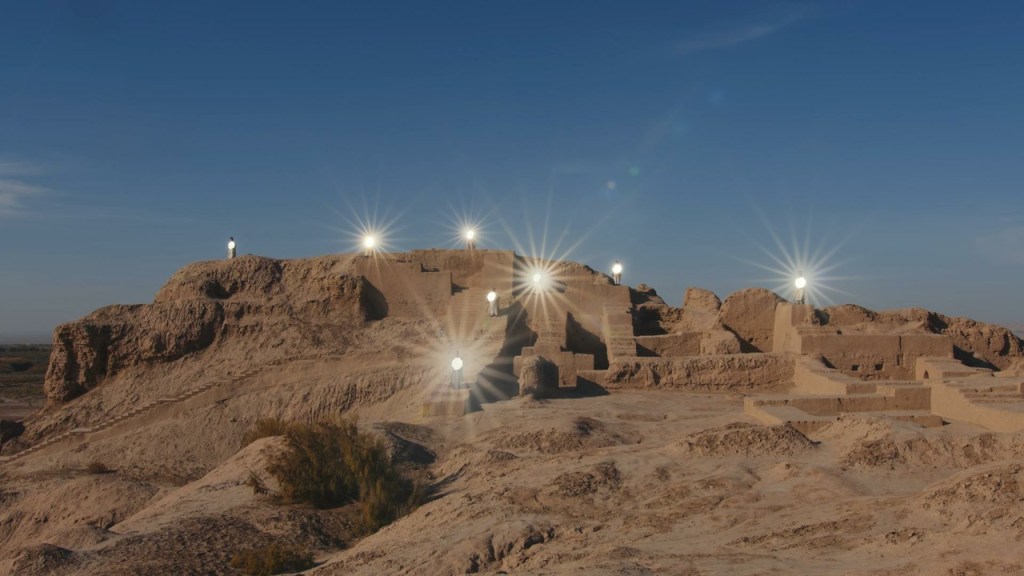
Focusing on the history of women in Central Asia, Uzbek filmmaker Saodat Ismailova knows exactly who she is and what she is doing. I first encountered Uzbek cinema through watching her contribution to Monographs, Her Five Lives, in which she reflects on the different representations of women in Uzbek cinema, constantly changing in response to shifting social realities throughout the XXth century in Uzbekistan: “A Victim of Patriarchy” (1925–1936), “A Machine of Communism” (1940–1960), “A Thawed Womanhood” (1960–1985), “A Perestroika Libertine” (1985–1996), and “A Confused Independent” (1996–2016). In many cinemas around the world, the representation of women is made to signify the state of the nation, imposing a function on the character, diminishing her agency. Through a supercut investigating the history of Uzbek cinema, Ismailova shows how the representation of women continued to be stereotyped and mobilized to address societal problems, rather than allowing female characters to navigate them independently and take informed action that would lead to a more nuanced portrait. Interestingly, in Ismailova’s most recent project, Melted into the Sun, screened as the closing film of NOMSIZ, she turns instead to pre-Soviet Uzbek history, myths, and traditions, engaging deeply with questions of location and cultural memory. Across these projects, her authorial position is strikingly clear: Ismailova situates herself confidently within contemporary art circulation and gallery contexts, while maintaining a precise and self-aware engagement with history and identity—qualities that have established her as a central figure in contemporary Central Asian moving-image practice.
Note #2: Temporal condition
Archival films presented at NOMSIZ were just as big of a treat as the selection of contemporary titles. The programme curated with the help of Oleg Karpov – documentary filmmaker and the archivist at The Uzbekistan Amateur Filmmakers’ Association (UAFMA) – was illuminating. A program showcased seven amateur films made between the 1960s and 1980s now collected at the UAFMA. Each short film was preceded by a short introduction by Oleg Karpov in which he explained how amateur film production worked in the USSR’s centrally-managed studio system and introduced a group of film studios that welcomed amateur filmmaking such as Studio “Splav” (Сплав, means “melt” or “conglomerate” in Russian) and Studio “Sirius” (Студия «Сириус»). The introduction as well as the workshop “No budget films: workshop with Oleg Karpov” that preceded the screenings were all in Russian, therefore I only managed to understand bits and pieces, thanks to the brief translation whispered to me by a helpful audience member and words I could understand due to the shared Slavic language root. As NOMSIZ catalogue states: “Amateur film studios operating in Uzbekistan in the 1960s-80s, as in the entire USSR, were places where cinema enthusiasts experimented with genre and form, with sound and editing, with plot and its absence. The authors did not claim to be professionals, and for this reason their films appear truly free.” Most of the short films were without dialogue, therefore their visual storytelling was especially compelling. The amateur short films were playful in all the different shades of this word.
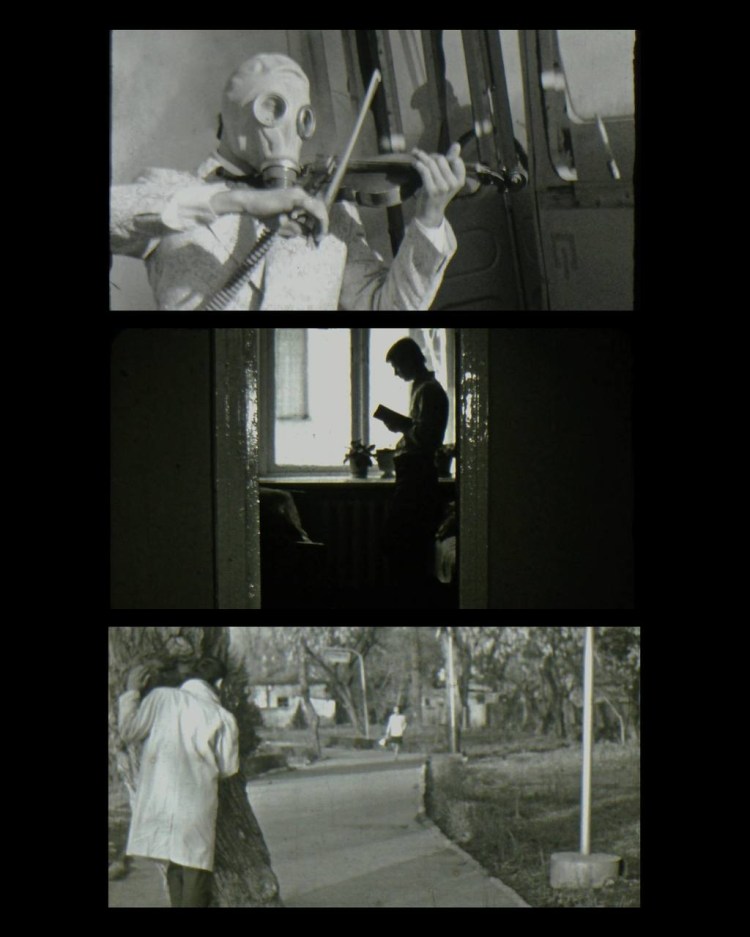
In An Autumn’s Tale (Осенняя сказка) made at Studio “Sirius” in Tashkent filmmaker Akhmedzhan Kasymov (Ахмеджан Касымов) managed to convey the excitement felt during the sunny days of early autumn and the sensation of magnetism felt towards a stranger on the street one finds to be attracted to. The film turns into a simple interplay of hide-and-seek between a girl and a boy in the parks and on the streets of Tashkent. Documentary project A Flower on the Window (Цветок на окне) directed by Harold (Lorenz Гарольд Лоренц) and made at Studio “Splav” shared this urban playfulness but from the perspective of the interior of an apartment.
Two short films addressed spirituality, albeit in completely different ways. In Seance (Спиритический сеанс), made at Studio “Spectre-77” (Спектр-77) in Tashkent, the filmmaker Igor Blidarev (Игорь Блидарев) presents an expressionistic take on a spiritistic séance. With quick editing, blurred and distorted images, and repeated, head-splitting sound effects, Seance is an experimental film in its most classic—already quite conventionalised—form. Interestingly, it was the only short film from the programme that was exhibited internationally upon its release; the others circulated locally or nationally at various film clubs across the USSR.
Cry of the Ages (Крик веков) directed by Shavkat Boltaev (Шавкат Болтаев) and made at Studio “Sitora” (Ситора) in Bukhara, is a documentary account focusing on pilgrims travelling to sacred religious sites in this ancient city, one of the centres of commerce and culture on the Silk Road. In Cry of the Ages, audiences get to see what Bukhara looked like before the large-scale renovation of madrasas and mosques, when tourists from outside Central Asia were still a minority among the crowds on the streets of the city. Boltaev combines close-ups of pilgrims’ faces with panoramic views of breathtaking architecture and masses of people praying, but it is the music that creates a profound atmosphere and imposes rhythm on the images.
Cry of the Ages reminded me of Boat-Burning Festival 王船祭典 (1979), in which Taiwanese photographer and filmmaker Chang Chao-tang 張照堂 edited images of religious practices in a small town on the east coast of Taiwan to the sound of Mike Oldfield’s Ommadawn, a Celtic-inspired progressive rock album. The combination produced an electrifying effect, turning the Boat-Burning Festival into a cathartic collective experience. Although the soundtrack of Cry of the Ages features traditional Uzbek tunes, Boltaev manages to channel a similar vibe. It felt particularly special to watch the film after having been in Bukhara just a few days before the screening and witnessing how tourist shops and restaurants now dominate the cityscape, while acts of religious piety have become rare.
Finally, a true gem in the collection of amateur films was Ballad of an Amateur Filmmaker (баллада о кинолюбителе), made at Studio “Sirius” and directed by Valery Nasyrov. The short film is built on the premise of a dream. It revolves around a young amateur filmmaker preparing to screen his work to the public. He does not mind living in modest conditions—the film reel is his greatest treasure. The plot twists begin once a thief enters the narrative.
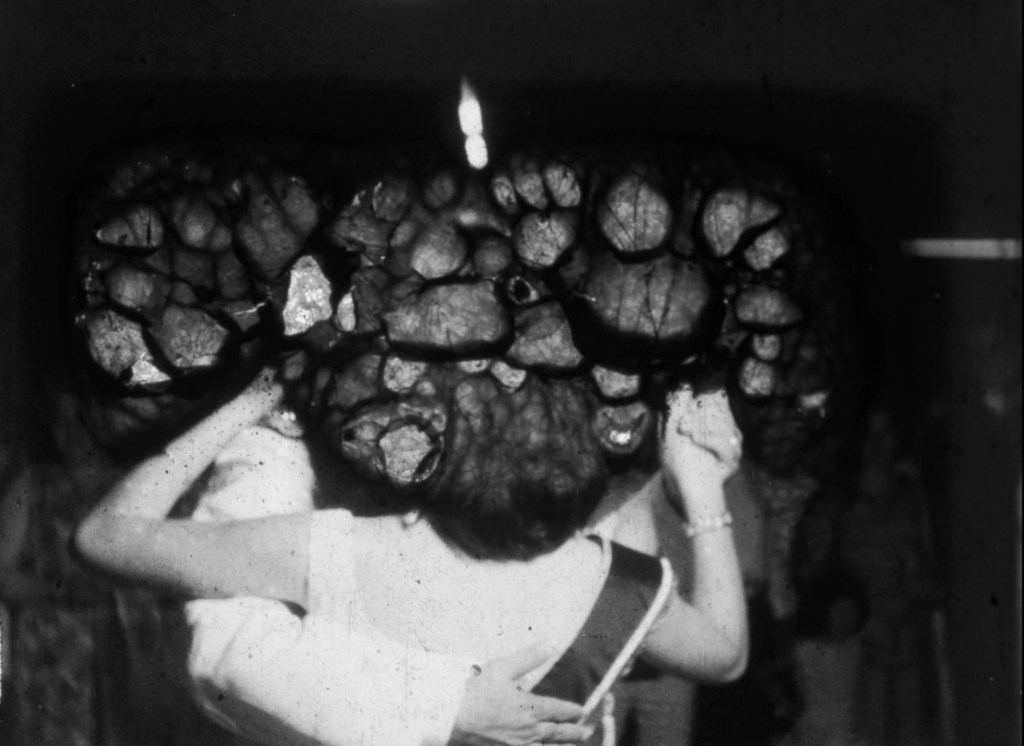
Valery Nasyrov’s film was screened from two digitised copies that have been found: one damaged beyond recognition, the other in a fairly good state. Both screenings offered not only food for thought on the preservation of amateur films—and, by extension, their place within the history of national cinemas, as well as issues of canonisation and official narratives—but, most importantly, they constituted different audiovisual experiences. Together, they drew attention to questions of time and decay, as well as to the basic essence of cinema itself. The damaged copy of Ballad of an Amateur Filmmaker was almost entirely white, approaching cinema at its most elemental, since it is, in the end, a matter of light and movement. Observing shades of shapes flickering on the screen was like observing a fireplace, just as mesmerising and addictive, only instead of warm oranges and reds, we saw only electric whites and grays.
The archival films screened at NOMSIZ also tackled different aspects of Soviet and post-Soviet realities through the works of two filmmakers in focus: Vladimir Tyulkin (Владимир Тюлькин) and Dinara Asanova (Динара Асанова).

In The Lord of Flies, one of Kazakhstan’s most prominent documentary filmmakers, Vladimir Tyulkin, focuses on the life of an elderly man living alone in the countryside, surrounded by animals—dogs, cats, chickens, cows, and others. Screened as part of a retrospective prepared by guest curator Arsenii Aksenov, The Lord of Flies stands out as one of the most striking and horrifying commentaries on the logics of efficiency, productivity, and resource optimisation celebrated across both socialist and capitalist systems.
The main character—who in his youth was a pioneer involved in developing the so-called uncultivated regions of the USSR and in his old age is sidelined following the collapse of the institutions and ideals upon which the Soviet project was built—constructs his own closed universe, positioning himself as a god-like sovereign within it. In an effort to maximise efficiency and reduce the costs of maintaining his animal world, he begins to kill dogs and cats in order to breed maggots on their flesh, which he then uses as feed for the remaining animals. Tyulkin refrains from moral judgement, instead carefully observing the internal logic through which the man governs his microcosm, a logic that mirrors broader biopolitical regimes of control, calculation, and expendability as the main character continues to see himself as a generous and kind-hearted ruler.
The film offers an intimate portrait not only of its protagonist, but of an entire generation raised on state-propagated ideals of labour, sacrifice, and progress, only to experience, in old age, the abrupt negation of those same ideals as the state itself underwent radical transformation. Forced into a historical vacuum in which former structures of meaning no longer functioned, this generation had to invent new logics to organise the world around them. This condition is particularly visible in post-socialist societies, where the legacy of those who came of age in the 1950s remains insufficiently acknowledged and only partially integrated into contemporary public discourse and national identity.
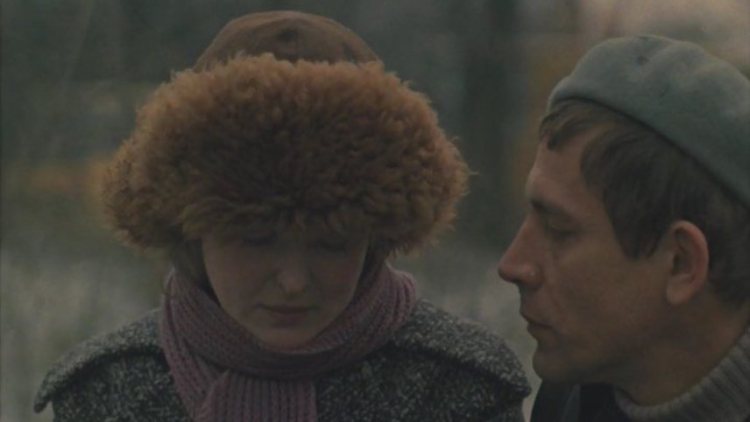
Dinara Asanova, a Kyrgyzstani-Soviet film director who worked at Leningrad’s Lenfilm from the early 1970s until her sudden death at the age of forty-two in 1985, specialised in films about teenagers. However, in The Wife Has Left, she centres on a man in his thirties whose wife has suddenly left him. The film unfolds through a series of flashbacks alongside his present-day attempts to persuade his wife to return. She works as a librarian and takes care of the household and their son, while he is building a career as an architect—a contrast that quietly structures their relationship.
When he wakes up alone in bed, as his wife had many times before when he stayed out late at company parties, the man is confused and terrified. Acting like a child who suddenly cannot find his parents, he screams at dawn in the middle of the courtyard of their apartment block, trying to get her back. Yet this is as futile as all of his later attempts. Asanova captures a breaking point: once love is lost, it is like a spell being broken, and no appeal to rationality or to “lesser evils” can bring it back.
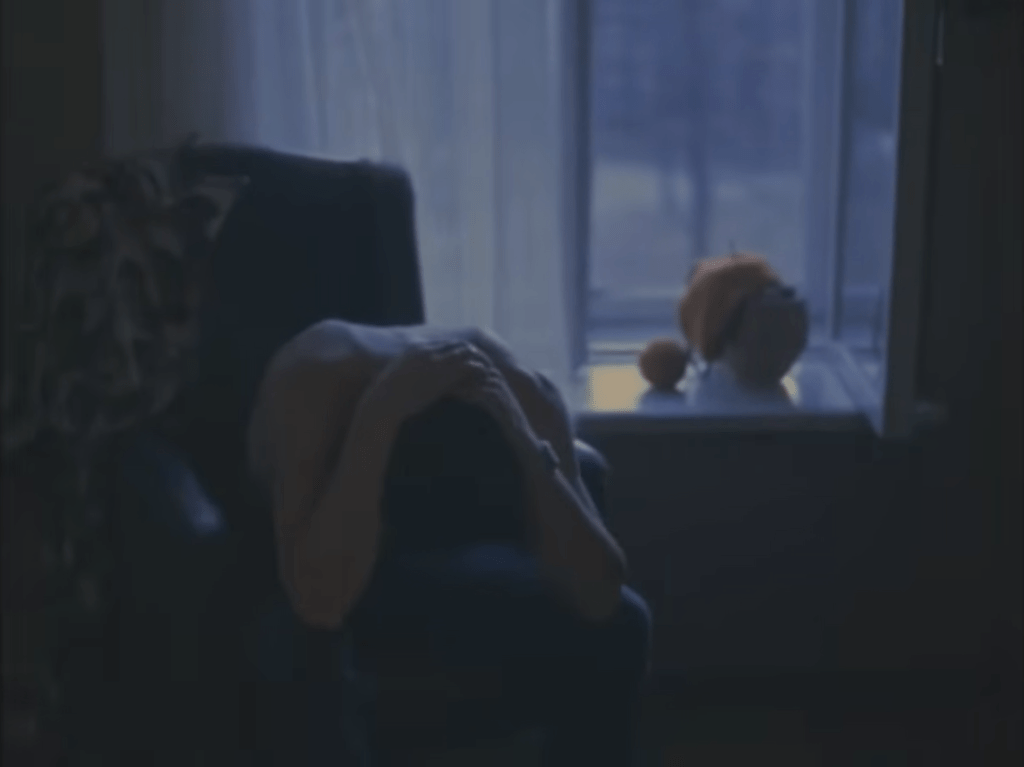
Visually, Asanova emphasises close-ups of faces and employs a recurring motif of windows, a convention often associated with women characters in family dramas and linked to the traditional patriarchal idea of 男主外,女主内 (“men go out to work and women stay at home”). However, in The Wife Has Left, it is the man who is repeatedly framed sitting by the window or gazing through it. The woman, by contrast, breaks out of the frame and away from her daily life, setting off on a journey of her own making.
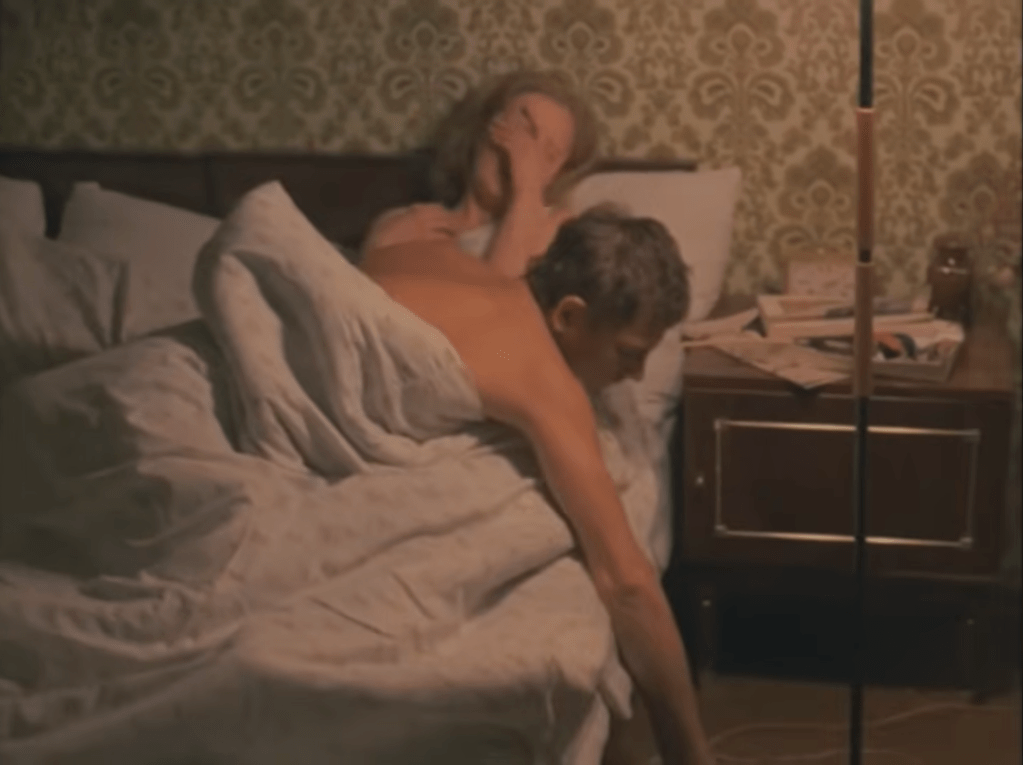
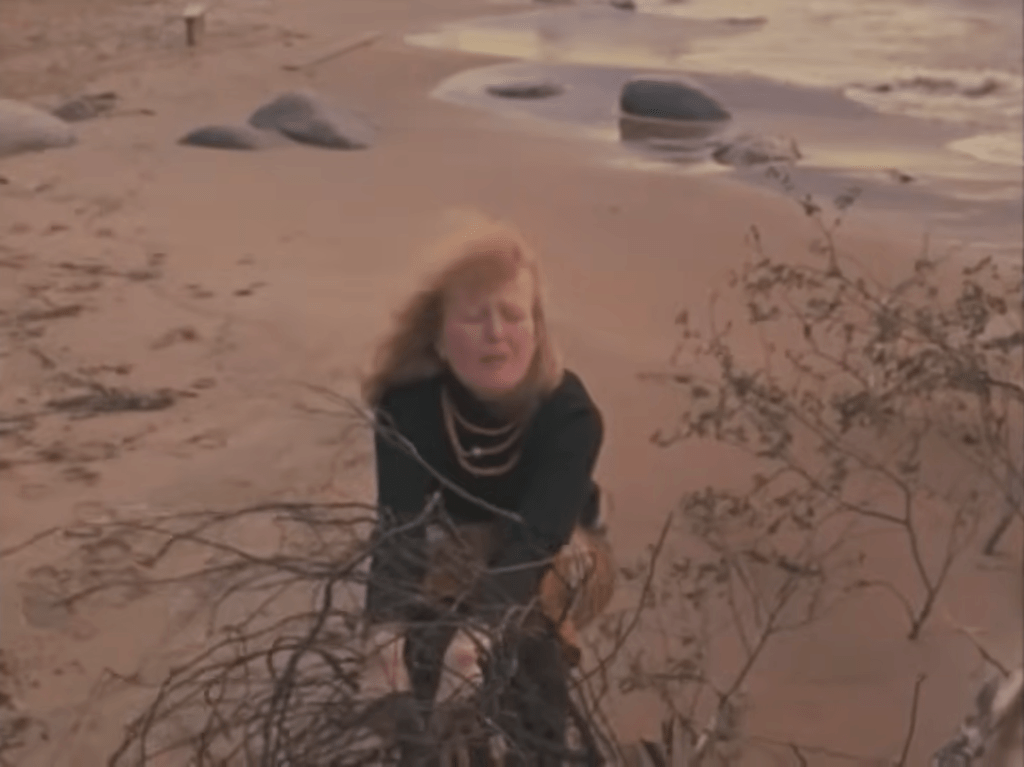

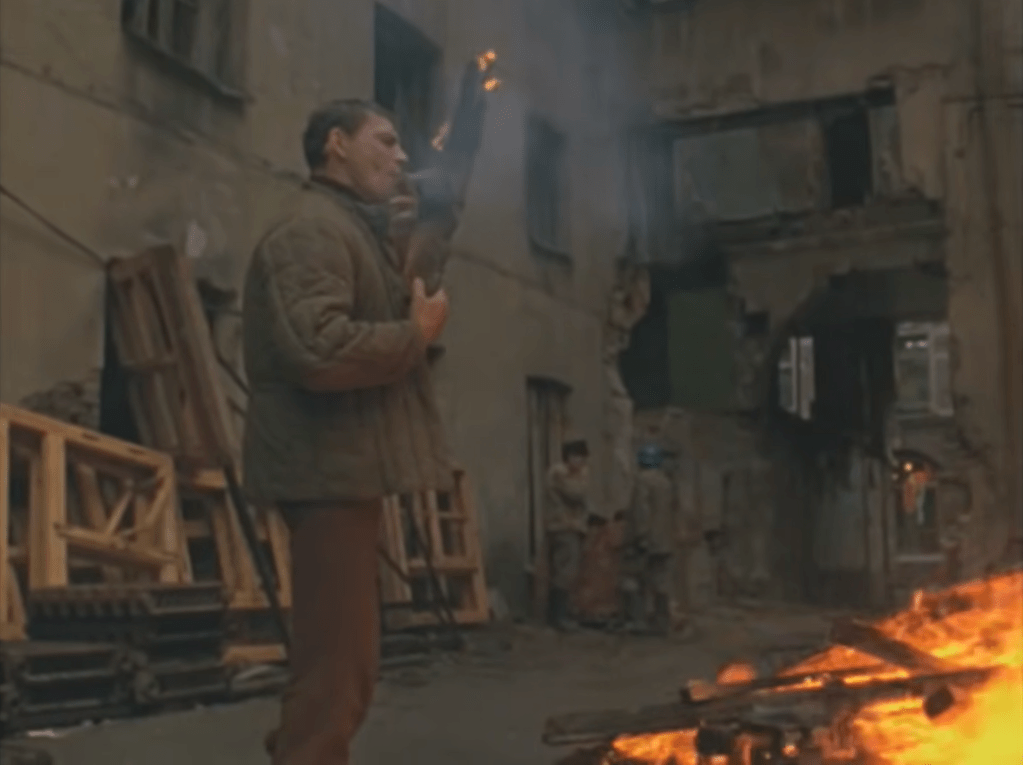


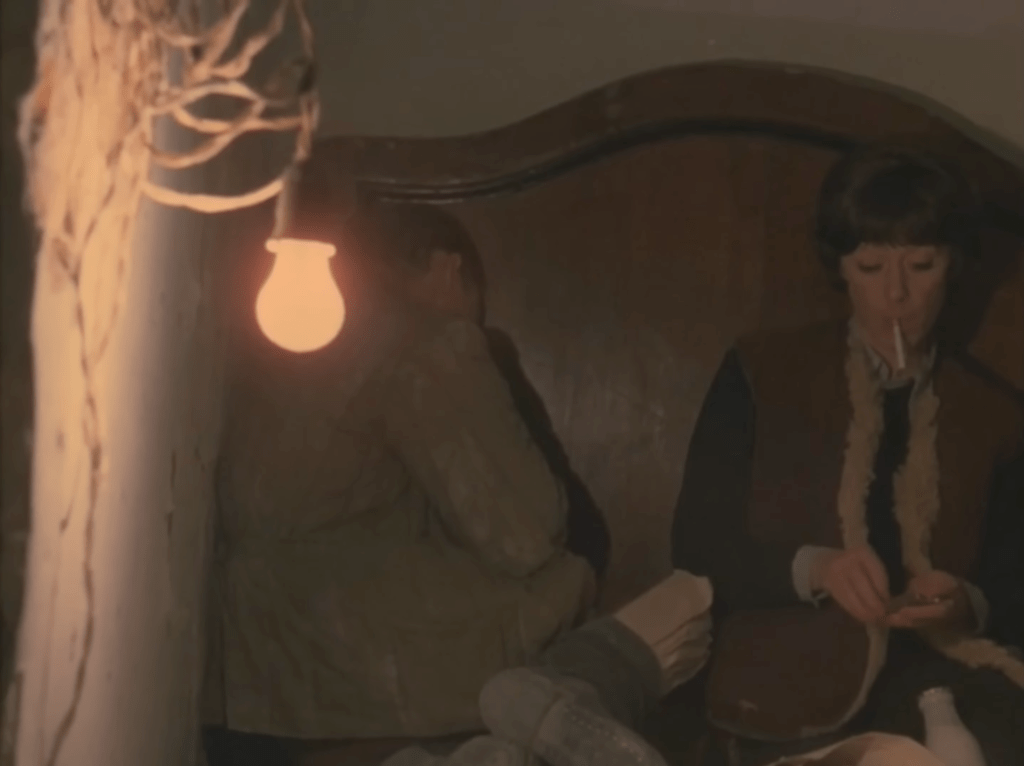


In the film’s only dream sequence, featuring masked figures and fleeting images of the wife struggling to free herself from branches on a beach by the sea, the metaphor appears quite explicit. What surprised me, however, was the presence of a character running through streets illuminated only by the neon sign of LOT Polish Airlines. What did the idea of Poland signify for the filmmaker and for the characters in the film? NOMSIZ made me thoroughly rethink geopolitics and different imaginaries of the world. I hope that next year the festival will celebrate its third edition, as it has already become something precious: a space of exciting film programming, home for independent cinema in Central Asia, and for a community of filmmakers and curators invested in experimenting with film language and reflecting on history, politics, and affect from a regional perspective. My account ends here.
[1] My attendance was made possible by the Adam Mickiewicz Institute and its programme Polska Kultura na Świecie, even though my video essay focuses on the history of Chinese cinema and was inspired by research I began at the Freie Universität Berlin. Polish culture was represented primarily through my presence as a Polish national. Nevertheless, I wanted to go to Uzbekistan because of the shared experience of post-socialism, the persistent ghosts of Tsarist Russian and Soviet imperialism, as well as the contemporary reality of Russian aggression. Just three weeks later, at the Golden Rooster Film Festival in Xiamen, China, Joan Chen’s husband assumed that Russian is spoken in Poland, which shows that the shadow of the Cold War persists.
[2] Unfortunately, I was not able to participate in the entire festival, as the dates I had originally been informed of were later changed. Instead of taking place over a full week, including weekdays, the screenings were redistributed across three weekends, between 25 October and 9 November.
















 sailuluo 赛璐珞
