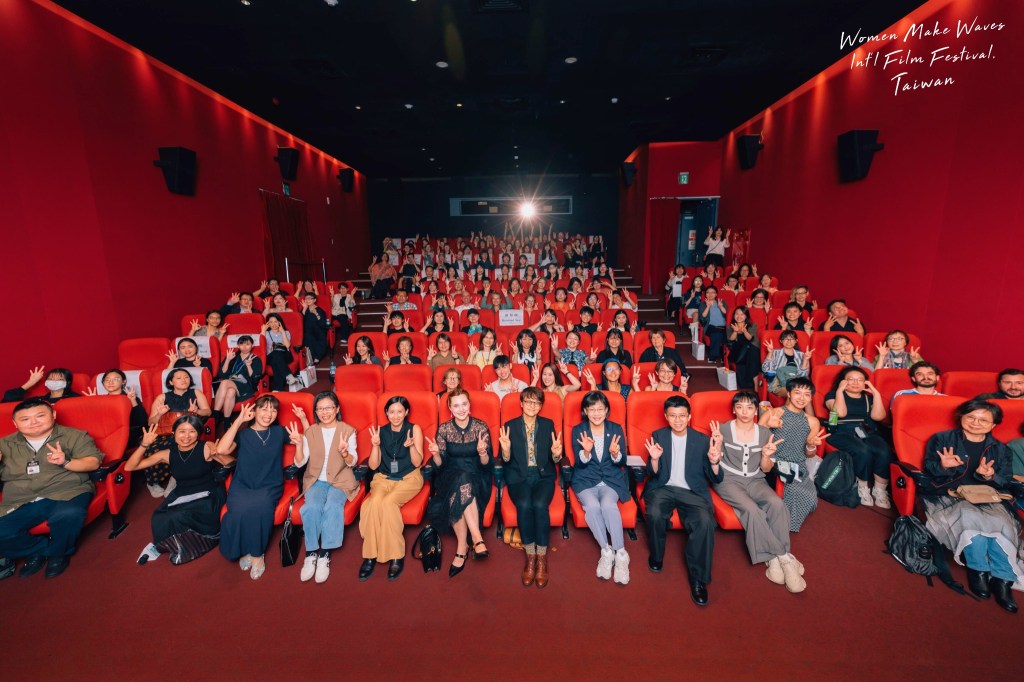
2025年10月17日至26日,台灣國際女性影展(Women Make Waves International Film Festival,簡稱:女影、WMWIFF)將迎來第32屆,以前瞻的策展理念呈現多元而銳利的選片。今年的主題單元包括「身體即異世界」(Sci-fi Reimagined: The Body as an Alien World)、探討社會議題的「闇夜凝視」(Seeing in the Dark)和探索個人經驗的「存在手記」(The Way Things Go: Notes on Existence)、以風景之眼回望歷史的「綿延之景」(Distilled Landscape),以及「唱,或者不唱」(Queering Voices)、兩個短片單元「XPOSED:慾望狂想」(Unruly Desires)與「短短」(Cinemini)。本屆影展亦將舉辦聚焦女性影像史的紀錄片回顧單元「特別放映:致先鋒女性!」(Special Screening: Salute to Trailblazers!),並香塔爾・阿克曼(Chantal Akerman)的回顧展。
I have always been very interested in the means of film funding and how it shapes both the filmmaking process and the finished film. That is one of the many reasons why this conversation with Meiske Taurisia – the Indonesian film producer – remains one of my fondest memories of interviewing filmmakers.
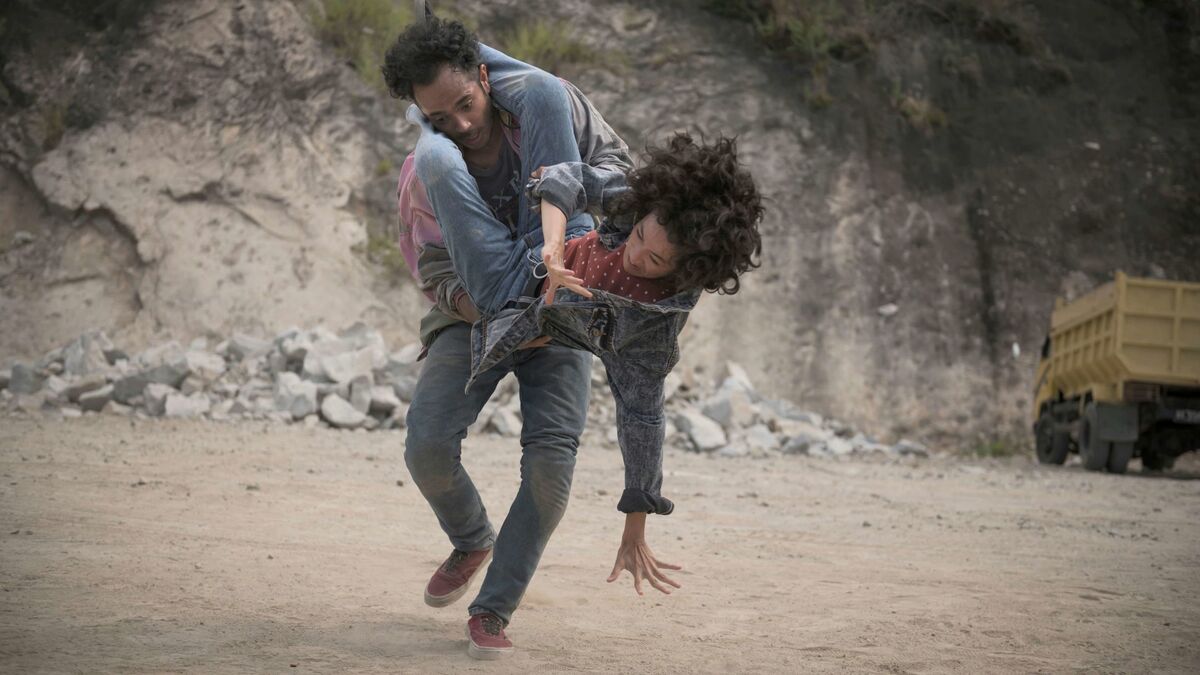
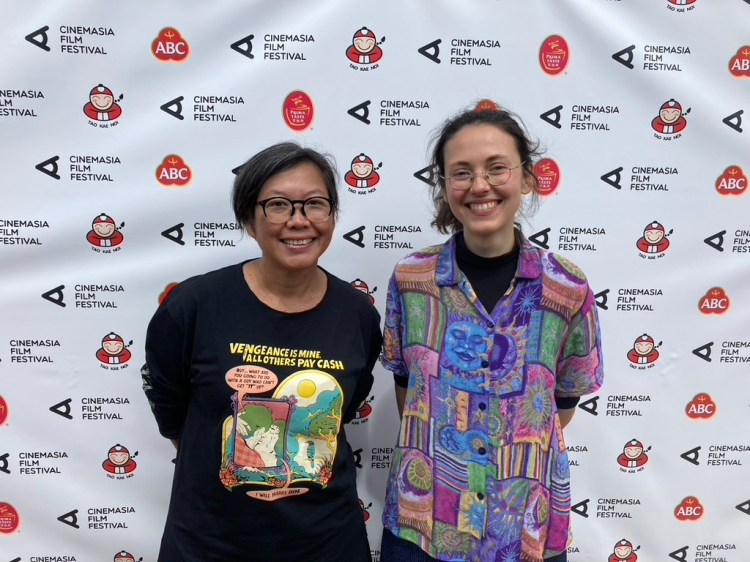
The conversation took place during the CinemAsia Film Festival in Amsterdam in May 2022, at the first post-Covid edition. Meiske Taurisia attended the festival with the Locarno-winning arthouse action film Vengeance Is Mine, All Others Pay Cash (2021, dir. Edwin). Since then, the Indonesian film market has undergone further changes, gravitating more and more towards Netflix for original productions, as the platform enjoys a large audience – especially among youth – in Indonesia who are eager to watch local films.
Meiske Taurisia discusses how she began working as a producer in the early 2000s, her long-term collaboration with director Edwin, and the release of Vengeance Is Mine, All Others Pay Cash in Indonesia during the pandemic. Between 2022 and 2025, she completed four films as a producer: the short film Evacuation of Mama Emola (2023, dir. Anggun Priambodo); the teen drama Dear David (2023, dir. Lucky Kuswandi) and the crime film Borderless Fog (2023, dir. Edwin), both for Netflix; and the horror film The Redemption of Sin (2024, dir. Yosep Anggi Noen). Her work is one example of the changes Indonesian cinema has undergone over the past two decades, shifting between independent production and collaboration with streaming platforms.
Maja: I noticed that many people are very unclear about what the role of a film producer is. Even I, when I started working as a journalist, would often ask directors questions that should’ve been addressed to producers—especially when it came to financing—because I’ve always been interested in the institutional side of cinema. How would you describe your role as a producer in the filmmaking process?
Meiske: I think it helps to think of it like running a restaurant: the director is the chef, and the producer is the restaurant owner or manager. There are certain areas only the chef should touch. If I start saying, “No, don’t use this salt,” or “Change this ingredient,” it would alter the whole dish—like bitter melon, for example. So I respect the director’s space. If I interfere too much, then why not become the chef myself?
Likewise, if the chef starts deciding on the interior, pricing, or management of the restaurant, you’d ask, “Why not just be the manager?” Each profession has its own “playground,” but those playgrounds complement each other. Our expertise complements each other—we can’t function alone.
That’s why I don’t understand when producers compete with directors. Everyone has their own territory. I have authority in my area, the director has theirs, and we discuss things. In Indonesia, I’ve seen cases where producers seem to compete with directors. But if it’s the director’s stage, let them have it. Everyone has their role, and we don’t need to step over each other.
Blind Pig Who Wants to Fly (2008, dir. Edwin)
Maja: The problem is when the producer used to be a director—or is still a director at the same time?
Meiske: I think that’s okay, actually. But I do believe that when people juggle multiple roles, they’ll always lean toward one. There’s no way to equally balance being both a director and a producer. One of them will be their strength, and for the other, they’ll delegate or have an assistant.
If someone’s both a director and a producer, I think they’ll usually be stronger in directing. Back to the cooking analogy—at the end of the day, it’s the taste of the food that matters. What kind of experience does the dish create? Sure, the restaurant name matters too, but if the food doesn’t live up to it, reputation won’t carry it.
Even the perfect dish will have critics. Some like it, some don’t. It’s about the majority response. But still, the cooking—the chef’s work—is central. That’s not to downplay my role as a producer. We have our own battlegrounds. Our bigger role is making sure people even get to taste the dish, you know? Turning an idea into a realized film. Everyone can have brilliant ideas, but can they actually bring all the ingredients together? That’s where the producer comes in.
You know, I’ve wondered why there’s no “Best Producer” award. But with something like “Best Picture,” it’s a combination of everything. I can live with that. Because if there were a “Best Producer,” how would you even judge it? It’s such a complex role. You need to have creative taste, understand art, management, financing, policy… everything. If we believe that film is primarily an art form, then yes, the cook—the artist—is essential. But film isn’t like fine art. In fine art, you don’t have “Best Art,” because artists work alone. In film, a director can’t work alone. That’s why they need producers and a crew. So in that sense, “Best Film” already represents everyone.
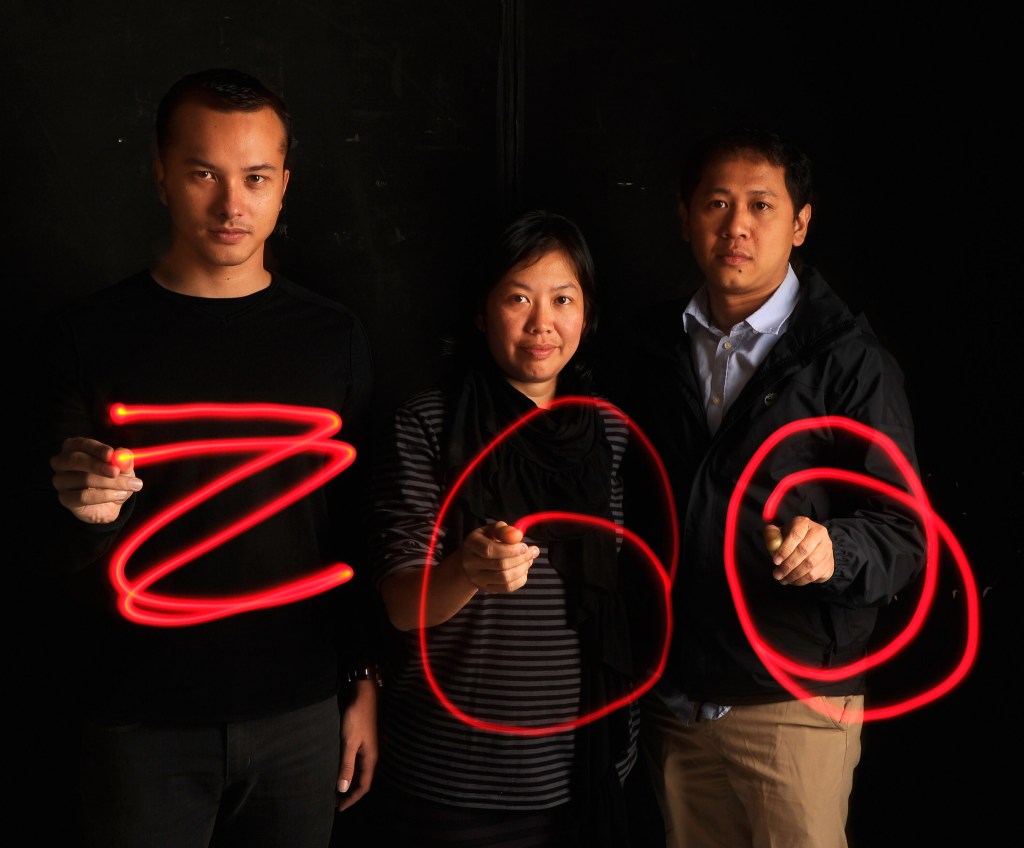
NEW YORK, NY – APRIL 23: Actor Nicholas Saputra, producer Meske Taurisia and director Edwin of the film ‘Postcards from the Zoo’ visit the Tribeca Film Festival 2012 portrait studio at the Cadillac Tribeca Press Lounge on April 23, 2012 in New York City. (Photo by Larry Busacca/Getty Images)
Maja: You studied textiles and design, and started off as a costume designer. How was that, and how did you transition into producing?
Meiske: It was really an accident. I never planned for this in my life. Back then in Indonesia, we would rent DVDs or pirated copies. Of course, I’ve always loved watching films, but I never thought of making them. I enjoyed film purely as an audience. I liked the visual surprises and plot twists—that’s what I looked for when I watched.
I studied architecture for my bachelor’s degree, and then I studied textile design at an art school. It was actually a double program—I studied at two different universities and had to go back and forth between them. Initially, I wanted to study art, specifically sculpture. But my parents said, “What are you going to do with sculpture?” So I chose textile instead.
After finishing both bachelor’s degrees, I worked in textile design. Then I went to the Netherlands to do my master’s, which focused on forecasting—fashion design and strategy. It wasn’t about designing clothes but more about turning something, like paper, into a fashion product. The focus was on trend forecasting—planning, and analyzing when fashion industries say, “This is the trend.”
Maja: Like Pantone.
Meiske: Yes, like Pantone and all that. That was my master’s in Arnhem. Then I returned home, but it was during a major economic crisis in Indonesia—right after the reformation era when Suharto lost power in 1998. By the time I came back, it was 2002, and the crisis was still ongoing.
I wanted to work for a branding agency, which aligned with my background, but none accepted me. So I worked as an art teacher at a high school. At the same time, I applied for a part-time job as a costume designer in film. I just wanted to try it. Teaching at high school and junior high school gave me more holidays than most other jobs—two months in the middle of the year and two months at the end—so I had a lot of free time. During those holidays, I took on film jobs. That’s actually how I entered the film industry—by accident. I was just trying to fill that two-month holiday gap.
Then I met Edwin. At that time, he was working as an assistant director, and I was the costume designer. We worked together on a film production, and that’s how our conversations started. He was already making short films, and I liked them—I thought he was really talented. I truly believed in his work. He wanted to make his first feature about the Chinese minority in Indonesia, and I’m ethnically Chinese. When I read his treatment, I saw myself in it. That’s what moved me. That’s why I said, “Okay, I’ll help you.” Edwin and his friend, the cinematographer, were like, “Hey, I’m the director, he’s the cinematographer—we don’t have a producer. Why don’t you help us?” So I did. I never thought about it as something long-term; it was just to help him, because I saw my own life in his story—his first feature.
But that help continue until now. We screened the film in competition at Busan in 2008, and then we were invited to Rotterdam in January with Blind Pig Who Wants to Fly. At that time, what I was thinking was: “Okay, for the next feature, I want him to be seen.” So I looked for labs, I met people, I promoted him—and eventually, he got the opportunity to make his second feature, and I became the producer.
It was never planned. I didn’t have a big vision of becoming a film producer. But I do know why I stayed in this profession. I studied art for a long time—my bachelor’s, my passion—all of it was in the art world. I think the reason I’m still here is because I truly believe there’s so much talent out there. And those people can’t do it alone. They need someone like me—someone who can see the talent and help realise it. That’s why I do this. I believe this is art. And I want to support these talented people. It just so happened that I met Edwin. If I had met someone else, maybe it would have gone in a different direction. But I believe in this work, and that’s why I’m still here.
Maja: When I was reading about the film culture initiatives you’ve supported in Jakarta such as micro cinema Kinosaurus. I was wondering how those initiatives have influenced local filmmaking?
Meiske: I do know that we distribute a lot. We try to be consistent, and we focus on empowering communities, which I think is very important in Indonesia. The reason this is important is because cinema in Indonesia is dominated by a monoculture of Hollywood films. We don’t really have many alternatives. I mean, there are cinemas that screen Korean films, but even Korean cinema is becoming like Hollywood now, competing like crazy.
So these communities are vital, we have to keep engaging with them. I can imagine that for people living outside of Jakarta, it must be very difficult to get access to non-mainstream films. I have the privilege of knowing people at the film festival circuit—I can reach out and ask for their films, and then distribute them in Indonesia. But imagine someone living outside of Jakarta—they don’t know how to reach sales agents and distributors.
That’s the reason why I set up such initiatives, cinemas won’t survive without supply. It’s the classic supply and demand idea of economics. I wanted to fill that gap, to support these communities so they could survive. Because if they don’t, then nothing will grow, nothing will be cultivated for the future.
At the same time, I also try to spread the idea of small economies. I remember when I made Blind Pig Who Wants to Fly in 2008, all the screenings in community spaces were free. Free of charge. But by the time I made Postcards from the Zoo, I told everyone: I don’t want the screenings to be free anymore. Back then, the mindset was: “If it’s an independent film, why should we pay?” And I had to tell them: “It’s the other way around. Because it’s independent, you should pay.” So when I screened Postcards from the Zoo, we charged three to four times more than a regular cinema ticket. People said, “Are you crazy?” And I said, “Well, if you want to watch it, great. If not, that’s okay.” I felt like I had to build that attitude—because otherwise, people wouldn’t see the amount of suffering and effort that goes into making these films.
But that’s the good part—I can say I had an influence on the attitude of local audiences. After Postcards from the Zoo, whenever I did community screenings, everyone paid. That might not sound like much in Europe, but in Indonesia, it’s significant. After that, the norm became: community screenings are not free anymore. That’s the kind of influence I think is important—for people to understand the value of our work.
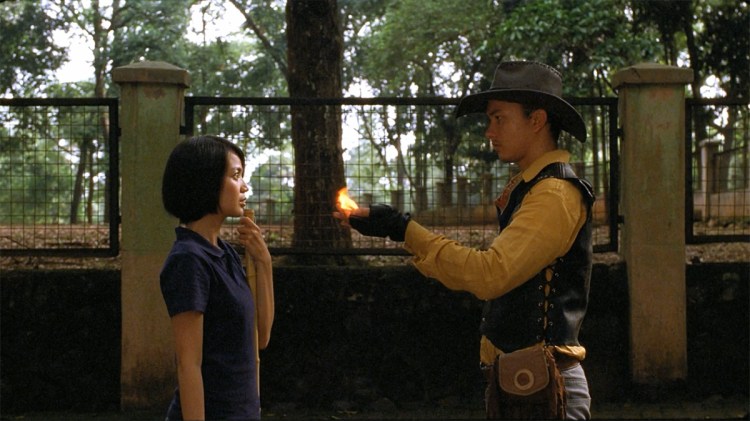
Postcards from the ZOO (2012, dir. Edwin)
Maja: If screenings are always free, it’s detrimental to the whole profession. It’s like doing film criticism for free.
Meiske: Yes! And audiences might not respect independent filmmakers. But now, slowly, people are beginning to understand. At least now there are two options. You can try to be big in the domestic market, with millions of viewers. Or you can try to be big internationally—by going to festivals. At least now those two are seen as equal. It’s not like, “If you do this, you’re better,” or, “If you do that, you’re lower.” No—they’re just different options. I mean, I also enjoy watching a film like Pretty Woman once in a while—it’s fun! But we can’t survive on that kind of cinema all the time.
Maja: There’s this myth of the independent filmmaker as a martyr—for example, Tsai Ming-liang selling tickets to his own film outside the theatre.
Meiske: Yeah, yeah, yeah. But I think, in general, that’s Asia—especially Southeast Asia. And the reason is simple. In Europe, you have the idea of a welfare state. In Asia, we don’t. None of the Asian countries—definitely not Korea, not Japan, and certainly not countries in Southeast Asia. Most of us are heavily influenced by US-style capitalism. That’s the mindset here. That’s why public funds hardly exist in this part of the world. It’s the opposite of Europe. You have public funds because you believe in the welfare state. You have a system—even if it’s not perfect. But we don’t.
That’s why I try to influence people with this idea of the small economy. I don’t know if it’s making a big difference, but I believe that independent filmmakers are now being recognized. Unconsciously, that change is happening. People are now paying the same amount to see a film in a community screening as they would in a regular cinema—that means something.
I remember fighting with the Ministry about this. I asked, “If I want to charge for tickets in community screenings, how do I do it legally?” Because if we call it a “ticket,” it includes taxes—and I can’t deal with taxes in these small communities. It’s all individual-based. So we discussed it with the Ministry, and they said, “Why don’t you call it a donation?” Donations don’t involve taxes. That’s how it started.
Maja: Let’s talk about the second pathway: the film festival circuit. Do you think there are barriers preventing young Indonesian filmmakers from getting into European festivals?
Meiske: Well, this is just my immediate response, but yes, there are barriers. One is the submission fee. It might not be a lot, but it still matters. If the fee is 50 or 70 euros—how much is that in Indonesia? It’s a lot. Especially for young filmmakers. Also—do they even have a credit card? That’s another issue. These may sound like small things, but they’re real obstacles. I remember in the beginning, when Edwin and I made short films, we could do it for 300 or 500 euros. So if the submission fee is 50 euros, that’s already a big chunk. That’s why their only option is often to submit to festivals that do not have submission fees or a very small one.
When I did the short film with Edwin, I had already traveled to festivals. I got to meet programmers—or at least I could ask around. I could ask, “Who’s the programmer for short films at this or that festival?” And people would introduce us. Sometimes we’d get a fee waiver code. But for filmmakers who don’t have access to this network it is difficult.
I feel there’s a hierarchy, or at least an uneven power relationship. For example, if you have a collective from Indonesia and a collective from Europe working together, it feels more balanced. It’s fair. But when you’re helping someone—let’s say I’m helping a filmmaker working on his short film—I’m doing all the submissions, everything. Now imagine doing that for ten people. The workload gets bigger and bigger, and that’s essentially the producer’s job.
So when we talk about initiatives and collectives, my question is: do they want to take on the role of producer? If not, then what can they offer? Maybe just publish a list of quotas or opportunities—like saying, “Hey, this is a slot for getting into this festival.” That might be the most they can realistically do. But imagine if 100 filmmakers are reaching out to the programmers. Sure, they can try to help, but then they’re expected to manage access across every festival, almost like a gatekeeper. And there will always be networks—some people have access, and some don’t.
I’m not saying I’m not concerned. But it also reflects how eager someone is to break in. I mean, lots of people are already making short films. I jumped in midway, too. Your growth depends on how much you want to develop yourself, how you navigate this map—how you approach people, how you talk to them. There’s a kind of knowledge that you either try to catch up with or you don’t. The gap also challenges you: do you want to catch up?
Ideally, there would be better conditions. Like in Busan—they don’t charge submission fees. That’s great. It’s more accessible. But every festival has its own policy. Some are charging really high fees.
Maja: Yes, it’s twisted. It’s a whole economy. I heard Venice charges 70 euros for a short film, but then when I think about press accreditation to the Berlinale, it’s the same amount in the environment in which as a freelancer you are being paid 50 euro or 80 euro per review or an entire essay or festival report.
Meiske: Imagine 1,000 submissions—that’s 70,000 euros. No wonder Venice can pay for Hollywood premieres. But that’s another story—Hollywood is a different world. It’s the same with Cannes. These festivals exist within a canon, this idea that everyone needs everyone else. Hollywood wants the stamp of artistic quality, and art festivals want Hollywood’s stamp of accessibility and commercial success.
Maja: Wow, that’s a vicious circle. So what are your plans now, for work?
Meiske: I still want to make films. I realised a few years ago—after more than ten years of doing this—I can’t switch anymore. I know how to be a producer. Before that, I used to change a lot. But at one point, I told myself, “Okay, this is it.” If I start something new, I’ll have to begin from scratch—without any knowledge. And now, I’m not sure I can do that anymore.
Maja: Any new projects?
Meiske: When I worked on Blind Pig Who Wants to Fly and Postcards from the Zoo, we relied on European grants. That was the only way to make the films back then. But after Postcards from the Zoo, I realized it’s not sustainable. In Southeast Asia, you can’t just keep relying on Europe. So, I co-founded a company with Palari Films, where we mix investment and grants. Possessive and Aruna were our experiments with investment. With Vengeance is Mine, Others Pay Cash, I already had experience and it worked. It was difficult, because both sides had different expectations. But I think Vengeance met both. And we won the Golden Leopard, that was a big moment. It felt like a shared success.
So now I want to keep experimenting—with financing, and also with the kinds of films we make. That’s where I still see growth for myself. I can’t make films just for money—I get bored too fast. I need challenges. And now that I have my own company, with fifteen people working with me, I have to think about them, too. Not just myself. That’s why I’ve accepted that we need both commercial and artistic projects. If we want to survive, we have to do both. But I believe we can still keep the Palari signature, even in commercial films. I don’t know how yet—but that’s the challenge.
Maja: That’s really interesting, because in a way, it connects to your original interest in branding.
Meiske: That’s true! In the end, it all connects.
Maja:Vengeance was also released in Indonesia. How was the audience response?
Meiske: It was good. But it’s a hard question to answer. It was during the pandemic. Cinema attendance was around 30%. In that context, the film did well. It even made the top ten box office in 2021. That wouldn’t have happened in normal times.
Like, last year during Eid—which is one of the key holiday seasons in Indonesia—a horror film made four million admissions in one week. That’s usually the number one or two films would do. Vengeance only had around a hundred thousand tickets sold. But still, it made top ten that year. So we were like, “Yay! Top ten!” But of course, it was due to special conditions. But in the end, I’m happy.
Maja: That’s really interesting. Sometimes art films weren’t hit as hard as big blockbusters when it came to numbers.
Meiske: Yeah, that’s true. And the audience response was great. It was in the big commercial cinemas. But we also had community screenings. They’d book a cinema, bring friends, and watch it together. That was really nice. We were able to empower communities with this film because it had just won a big international award. It helped bring people back to the cinema.
I think we had around a hundred screenings that were organized by cinephile communities. Not by us. They saw the film was playing in their city, and they made it happen themselves. That was the best part. Even during the pandemic, it still created a kind of momentum. I think the pandemic maybe even helped that, because people needed something to gather around. It made an impact on the cinema landscape here.
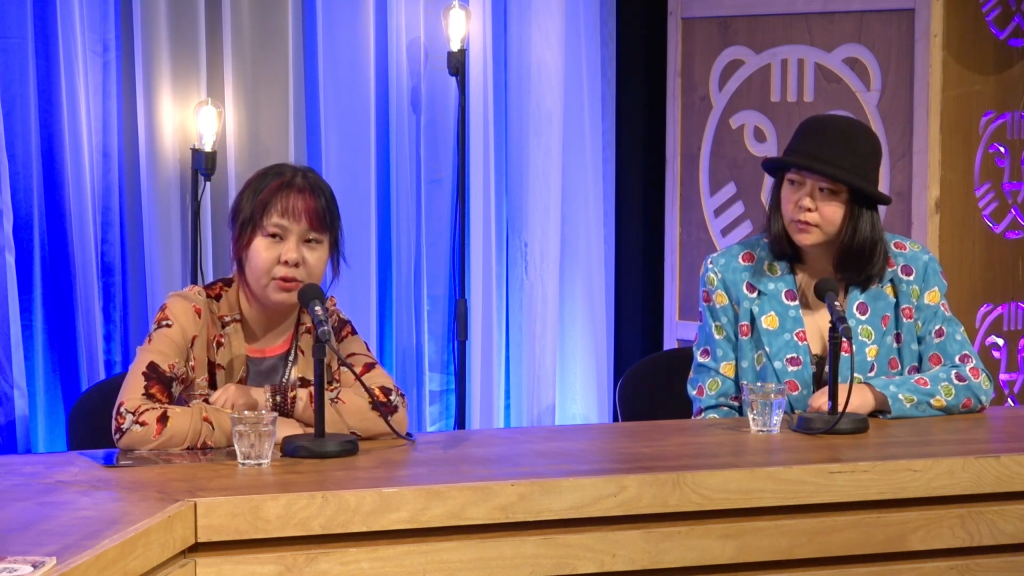
在鹿特丹一个飘雪、寒冷的清晨,Gagaland 的媒体场次刚刚结束,一群记者走出放映厅,神情恍惚地环顾四周。刚刚在银幕上看到的东西,充满了社群媒体的美学气质,并交织着纪录片、童话与音乐录像的元素。向来持怀疑态度的 Kevin B. Lee 打破沉默,问道:“我们刚才看到的——这算是电影吗?” 也许我对任何能让我思考、让我感受的视听形式都太容易动容,但 Gagaland 一下子就吸引了我。它像是华语电影中极为罕见的珍宝——在叙事与形式上都展现出强烈的在地性。 不久之后,我与策展人丁大为一起采访了这部影片 23 岁的导演滕语涵和制片人闵婕,谈论 Gagaland 的创作过程以及支撑其背后的理念。
TYH: 跟红毛一起生活的那段时间,我有一个特别深的体验。有一次拍摄时,他突然向我伸出手,那一刻对我来说非常神奇,像是一个有魔力的瞬间。因为在那之前,我只是通过屏幕和媒体认识他,当他真实地站在我面前,那种鲜活的姿态让我特别感动。 尬舞跟中国其他任何形式的舞蹈都不一样。广场舞讲求的是“整齐划一”,大家要一致;但尬舞恰恰相反,它追求“我偏要和你不一样”。越有个人特色越好。尬舞的人常说:“我怎么快乐就怎么跳。”而我觉得——快乐本身是一件需要勇气的事,是一种勇敢的行为。我们常说 happy is also revolution,快乐本身也是一种革命。真正去追随自己的快乐,需要极大的勇气。所以我觉得“尬舞”是非常勇敢的。而且在那样的一个环境中,它能如此自然地生长出来,还与中原街区的气质如此契合,甚至发展成了一种本地亚文化潮流——这太吸引人了。 当我第一次看到红毛跳舞时,他那种迸发式的身体能量深深打动了我。他跳起来的时候,会整个人蹦起来,用尽全身力气。那是一种非常真诚的表达。对我来说,那一刻永远都是感动。当你真的站在那个场景里,就会明白——没有人能拒绝“尬舞”。它有一种魔力。对我来说,这完全是身体的语言,是一种超越国界的表达。如果让我用语言去讲“尬舞”,我可能要说很久;但如果现在我跳一段,你立刻就能明白。
TYH: 其实片中有纪录片的部分涉及到了这一点。比如结尾那个镜头,我们写了“404 not found”,其实也有这种隐喻。最后那个小男孩拉着小女孩,在那个有点虚构感的“武林大会”场景中,也许是在尝试“走出去”,但镜头却定格在“404 not found”——那也是一种表达。 “尬舞”虽然火,尬舞的人也获得了很多关注,但这种关注同时带来了压力。很多人觉得他们“很低俗”,而他们自己则会问:“为什么快乐的事就低俗?”确实,进入直播领域后,他们开始通过刷礼物获得收入,也就不可避免地出现利益纠纷。你也知道,现在的直播圈有一些“擦边”的内容——当然,那完全不是红毛他们这一批人。但这确实让整个领域变得更复杂。 尬舞的动作又太“出格”,它不符合所谓“高雅”的审美标准,也不在主流的美学体系里。它太狂野了,所以势必会引起争议。我觉得他们内心其实挺委屈的。尤其是当他们被赶出公园——有时刚放歌就被撵走。 有一次我和红毛、还有他的舞伴“大雪”一起去公园。那儿原本有很多人围着看别人跳交谊舞,曲子节奏很快,我也不知道叫什么。红毛和大雪站在旁边,也想跳。结果当他们一开始跳的时候,人群立刻转过来围着他们看,跳交谊舞的人反而被冷落,只能把音乐关掉。 这就说明,“尬舞”从来不缺关注度。很多人都渴望被看见——而“尬舞”天然地吸引目光,也因此不可避免地和别的群体形成“关注度的竞争”。
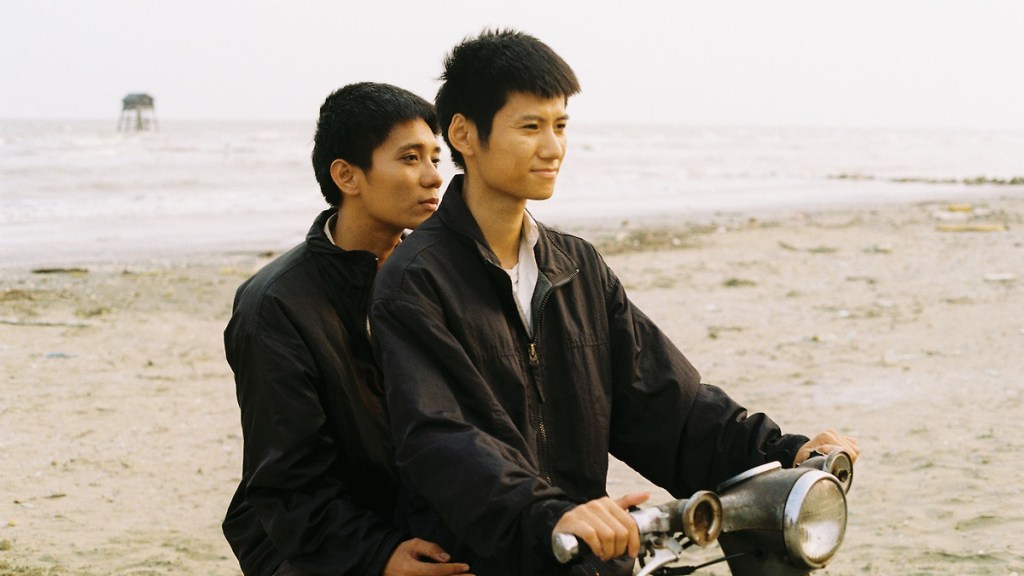
During the CinemAsia Film Festival in 2025, filmmaker Truong Minh Quý presented his feature, Việt and Nam, to audiences in Amsterdam. It was an unexpectedly warm early March in the Netherlands when we sat down in the festival office near Studio K to talk about the film, almost one year after its premiere at the Cannes Film Festival in 2024. I had seen the film a few months earlier and rewatched it in preparation for the interview. I was curious how the film would affect me after some time had passed. I must say, it is not a film to be watched in between other screenings at a major film festival. While seeing it at the Busan IFF was a memorable and powerful experience, I felt somewhat sad that I didn’t have enough time to reflect on it as it deserves. However, at a film festival like CinemAsia, which is dedicated to local audiences, there is space to breathe, think, and talk about the film. Truong Minh Quý was a very generous interlocutor. Despite having been interviewed multiple times since the film’s premiere, he avoids repeating the same answers—as if the film is now its own being, with its own history.
Maja Korbecka: Việt and Nam has been traveling the film festival circuit for a year now. How has your attitude toward the film—or your understanding of it—evolved over this time?
Truong Minh Quý (TMQ): I think there have been many changes. The film started its journey in May last year in Cannes, and just before that it was banned in Vietnam—which, to be honest, I don’t think should overshadow the conversation around the film. But I also can’t avoid it, because it has become something people immediately associate with it.
At every festival, the film is introduced as “banned in Vietnam.” Audiences always ask about it—why it was banned, how it was banned. So I can’t escape that; it’s become part of the film’s history. The beginning of this journey was emotionally overwhelming, because everything happened all at once.
But now, after all the festivals and the release, I think I’ve learned a lot. I’ve learned to accept different opinions about the film. And I’ve also learned how to look at the film in a more innocent, fresh way—almost as if I were back at the beginning, before it was even shot.
What sort of feedback have you received from audiences that surprised you?
TMQ: This film occupies a strange position. For me, one of the main reasons for making it was to let go of the dominant narrative of Vietnam. I think both audiences inside and outside Vietnam already have a set image when they think of Vietnam—usually war and landscapes.
For me, filmmaking is a spiritual process. There’s this enigma I’ve always felt I had to solve—the enigma of “Vietnam” as a narrative. As a filmmaker, how do I deal with that? How do I work with this narrative, which is so ingrained in the history of cinema and art, while also responding to it?
At the same time, I wanted this film to be about releasing that burden—the burden of history. That’s why, in the film, you see a directness in many aspects: in the way it approaches the war—or rather, the wars—because there are many, and they’re often unnamed (in the film). I wanted the audience to be free to connect each scene with whatever war or wars they wanted.
This directness also applies to the love story in the film, and to how the characters express emotion. There’s something very lyrical and transparent about it.
Even the title—Việt and Nam—is a way of calling something by its name, of facing it directly, and then letting it go. For me, the film is quite open emotionally, and it’s really about a spiritual journey—trying to solve a spiritual question.
But what surprised me is how differently audiences reacted. The Vietnamese authorities banned the film because of the English-language title – “Việt and Nam.” That was unexpected. They saw the title as offensive. Overseas Vietnamese audiences, on the other hand, have very different political backgrounds. So for some of them, the title made them think the film was a propaganda piece, and some refused to watch it.
So the film is just there, standing independently in the sunlight, so to speak—and it’s fragile. People project onto it depending on their political and historical backgrounds. Each person sees it through their own lens. I’ve also received feedback from overseas Vietnamese, especially in France, who told me the film made them feel homesick. Some haven’t returned since the 1970s, and they told me it made them want to go back.
But of course, I’ve also had some not-so-positive responses, especially from Vietnamese audiences who are politically motivated in a different way. What I’ve learned is that I now need to maintain some distance from the feedback.
Some people see me as a kind of messenger or representative of Vietnamese cinema or history. But I’m not comfortable with that. It’s not a position I ever wanted. I’m just a filmmaker. I decided to tell this story in this way, at this moment. And in the future, I’ll move on.
MK: I heard you’re working on a new film. What is it about?
TQM: It’s a documentary I started shooting more than two years ago, before Việt and Nam. I’m co-directing it with Nicolas Graux, my partner, who’s also a filmmaker. It’s a documentary in the form of a home-movie film. Something like what Jonas Mekas did.
We shot it with vintage Bolex cameras on Super 16mm. The technical nature of this camera really shaped the film. The frame rate is unstable, very fleeting. Each rolling lasts a maximum of about 30 seconds, and it’s hand-rewinded so everything is manual. That constraint created the style of the film.
MK: So each scene can only last about 30 seconds before you have to stop and reload?
TMQ: Yes, exactly. We have to stop, wind it up again. That’s how it works.
MK: Will it be a full-length feature?
TMQ: It’s around 70 minutes now. I think that’s a good duration—not too long. We’re in the final stage of editing.
MK: I’m really looking forward to seeing it. It sounds lovely. What’s it about?
TMQ: It’s mostly about how we see the beauty of life—flowers, children playing.
MK: Did you shoot it in Brussels?
TMQ: No, in Vietnam.
MK: Can you still shoot films in Vietnam? Could you make another film with new footage there?
TMQ: I have to be more cautious than before. I think my name is now known infamously. I never wanted to be visible to the system, but it happened.
That said, we’re independent filmmakers, so we know how to work around these things. For example, I don’t have to have my name on the official paperwork for the shoot. Or I could use a pseudonym. And often we just say we’re making a documentary—authorities tend to think documentaries are harmless, so they don’t pay attention.
MK: For me, it was mind-blowing because it reminded me of Yellow Earth and what it did to the global image of Chinese cinema.
TMQ: I like Chen Kaige’s films more than Zhang Yimou’s or the others. There’s this darkness in them, you know—something wise but also something corrupt in the characters. His films are heavy. I like that—they’re not just beautiful like Zhang Yimou’s. Maybe I should have called the film “Blood Earth” (haha).
MK: I think “Việt and Nam” is perfect because it evokes the division between the South and the North.
TMQ: For me it is not a division as such. It’s like, I keep using this metaphor—when we stand in front of a mirror, we see the reflection of our face in the mirror, there are two faces but they are one at the same time. So Việt and Nam, for me, are like a mirror. It’s not something to connect or separate—it just reflects.
MK: One of the things that really grabbed my attention in the film was the idea of colonialism—or rather, what contemporary colonialism means. Choosing to go to another country as if that’s the only good way out of poverty. I was wondering how you see the connection between the film and colonialism?
TMQ: I think the film definitely has a strong historical foundation. It all goes back to war, and to how we perceive different wars in relation to what’s happening in the film.
But at the same time, I wanted everything to be abstract. Even the destination of the characters—the country they want to go to—it’s never named in the film. Same as the characters’ own names. We don’t really know who they are.
Because when we talk about immigration, if we only rely on what we read in newspapers or in interviews with real people who immigrated and returned, then yes—we hear that the main motivation is to earn money to send home. But not all of these people are poor. Some come from average families, even well-off ones.
So the motivation to leave is not just economic. There’s something deeper. Maybe historical. And the film tries to make that connection. I think the audience can make those connections—or not. But in the film, I never answer the question “why.” Why do they want to go?
Because I think, first of all, we shouldn’t have to justify why we want to go somewhere else. But also, due to economic and political reasons, for some countries it’s incredibly hard to travel. Even just to travel requires huge preparation—sometimes half a year in advance. And in this case, it’s not just travelling. It’s gambling with your life.
So the film doesn’t answer the “why.” That question is too vast. And for me, not the most important. What matters more is how to create interconnections between migration, history, and memory. So the character lives in between. He carries the history of his family, who have a direct link to war, and now he himself is migrating.
Also, I think this film contains many wars—not just the American war in Vietnam, which is the most obvious one, because of how Hollywood shaped our collective knowledge. Whenever we talk about the war in Vietnam, people immediately think of American movies.
This film makes references to that, even visually in some scenes. But it also references the Vietnamese propaganda war films. It uses cinematic language to refer to different cinematic and historical backgrounds.
And the film also implies other wars—not directly, but they’re there. Like the war between Vietnam and the Khmer Rouge. There are many scenes that imply different historical moments. Always unnamed, but present.
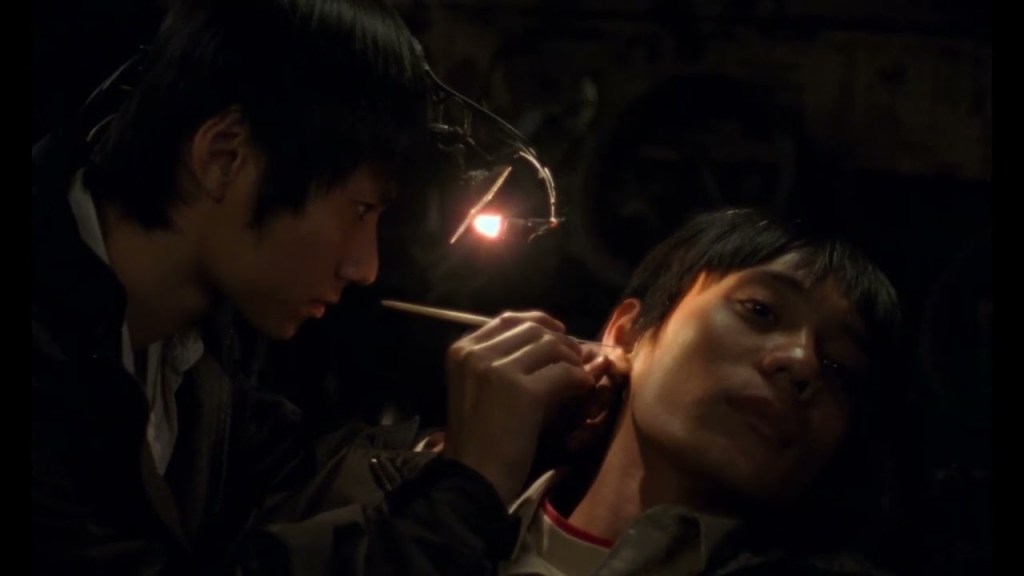
MK: When I was watching it, what really struck me was how you use the color black. It’s a very subjective impression, of course, but when I was in Vietnam and visited temples, I remember them being very, very black—especially compared to temples in Taiwan or China. I was wondering about your use of black. I mean, obviously, there’s the association with coal mining, but beyond that, blackness seems to create a very strong character for the film itself. What does it mean to you?
TMQ: I think it’s very important. First of all, for the audience to be immersed in such darkness is quite unusual—and maybe even uncomfortable. Some people might feel it’s too dark.
But for me, it’s essential. First, of course, it’s the environment. Coal miners work every day underground. If you actually go into a coal mine, you’re completely immersed in darkness and silence. It’s like being stuck in a sound recording studio —but without light. What you see is only what’s within the small lit zone of the tunnel.
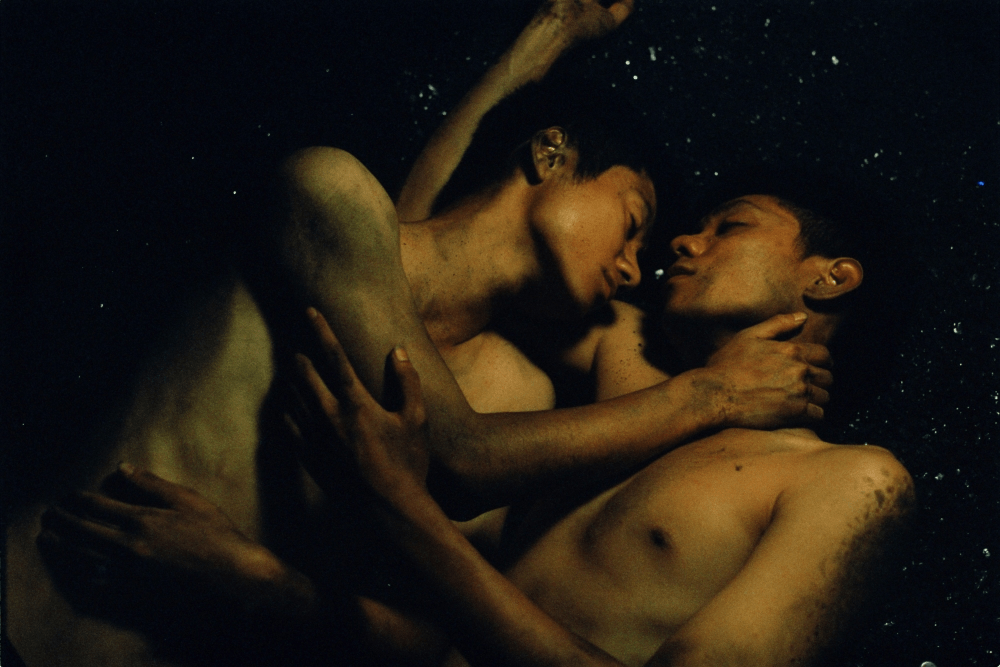
You feel very suffocated. It’s a completely different world. But because of that limitation, there are certain forms of beauty that you can’t see when it’s too bright—like the floating coal dust, the way it sparkles.
So in this film, I use darkness, of course, as something metaphorical—as a way of giving space for imagination. In the darkness, the audience can imagine more. They can picture the two lovers floating in a starry night, for example.
But the darkness is also historical. It’s the darkness of unsolved questions, of memory. There are many questions in the film that are never answered. And I think darkness can carry a kind of weight—a heaviness that is important to feel through watching.
And of course, when we talk about film, we also have to consider practicality. Artistic choices must align with the reality of making a film within budget. In that sense, darkness is very practical. You don’t have to show everything.
MK: I can imagine that it must have been very difficult to shoot with that kind of lighting.
TMQ: Yes, but it had to be like that. Otherwise… Well, if this was a Hollywood film, we would see everything—even inside the coal mine.
But here, I took inspiration from the real environment of underground coal mines. And that inspiration also helped us with the budget, because we only needed to light what the audience needs to see. Some scenes were shot in a studio, and we only lit specific areas. Other scenes were filmed in a real cave, which we transformed into a coal mine.
If we followed the Hollywood style of lighting, we would have had to construct everything from scratch. And the result wouldn’t be right for me, because when people see that kind of lighting, they know it’s a movie. But when people watch this film, the first thing they feel is that it’s suffocating, it’s dark—like being in a black hole.
That layering between darkness and light also creates something dreamlike. Though that wasn’t my intention, some people ask me, “Was it a dream?” Like in the opening scene, where the boy retells his story. But for me, everything is real. And I think reality already contains that dream-like quality. It can happen by accident, through editing or even just through atmosphere—it becomes obvious.
MK: I also noticed that the film is a huge co-production. Was it difficult to communicate with all the producers and maintain your vision? Did anyone try to interfere?
TMQ: Luckily, I didn’t encounter any conflict between the producers and my choices as director. I think I was fortunate. I was also lucky to work with a crew of about 50–60 people for 45 days.
From the outside, it looks like a massive production—eight or nine countries involved. But actually, this is pretty standard for independent films from Vietnam or similar countries where there’s no national film funding. So we had to piece by piece find money from different countries. Some gave very small amounts, some a bit more—and each one wanted us to spend their portion of the budget in their own country, in one way or another.
That’s a whole separate issue. This model of international co-production is helpful, of course, but it also comes with problems. For example, this film—if it were made in France, with the same scale and length—it would be impossible to make it with the same budget. It would cost three times as much, but with half the shooting days.
So when people watch this film and see that it’s shot on Super 16mm, with 45 shooting days, and multiple locations all over Vietnam, they might assume it had a huge budget. But no. It was only possible because we shot it in Vietnam (with the understanding and support of the crew, too). So there’s also a question of fairness in the global economy of filmmaking. I don’t have an answer to that.
MK: During the shoot, did you change the script in any way? Or was it exactly as it was written?
TMQ: I had a script before the shoot, of course. But I made many changes during location scouting and casting. Not so much during the shoot, but in pre-production.
For example, the older man who plays the veteran—he’s a real veteran. He shared his own memories with us. That changed the confession scene. So the final version is different from what was written.
And when I found the right locations, the characters’ actions had to change accordingly. Small things. But important.
MK: Maybe this is too personal, but—what do your parents think about the film?
TMQ: They haven’t seen it yet. I haven’t had the chance to show them in the right setting. They don’t live in Ho Chi Minh City (Saigon), where I organized private screenings for friends.
But at the beginning, when some news came out saying the film was banned, my mother asked me, “Is your film anti-state?” I told her, “No, it’s not. Don’t believe what you read in the media. They haven’t seen the film.”
MK: I hope you’ll get a chance to show it to them properly.
TMQ: Of course I could show it to them on my computer, but I don’t want to. It’s a totally different experience.
MK: I first saw it in a cinema in Busan, and then again recently on my laptop—and it’s just not the same.
TMQ: Exactly. I think it’s very important for a film like that, even if it’s just in a small screening room. My parents could sit down in the dark with others. If they just watch it on a laptop, they won’t focus. They’ll laugh or ask me questions in the middle. But if they’re in a cinema—maybe they can see others praising their son and then they’ll think, “Okay. Maybe this film isn’t bad. Someone liked it.”
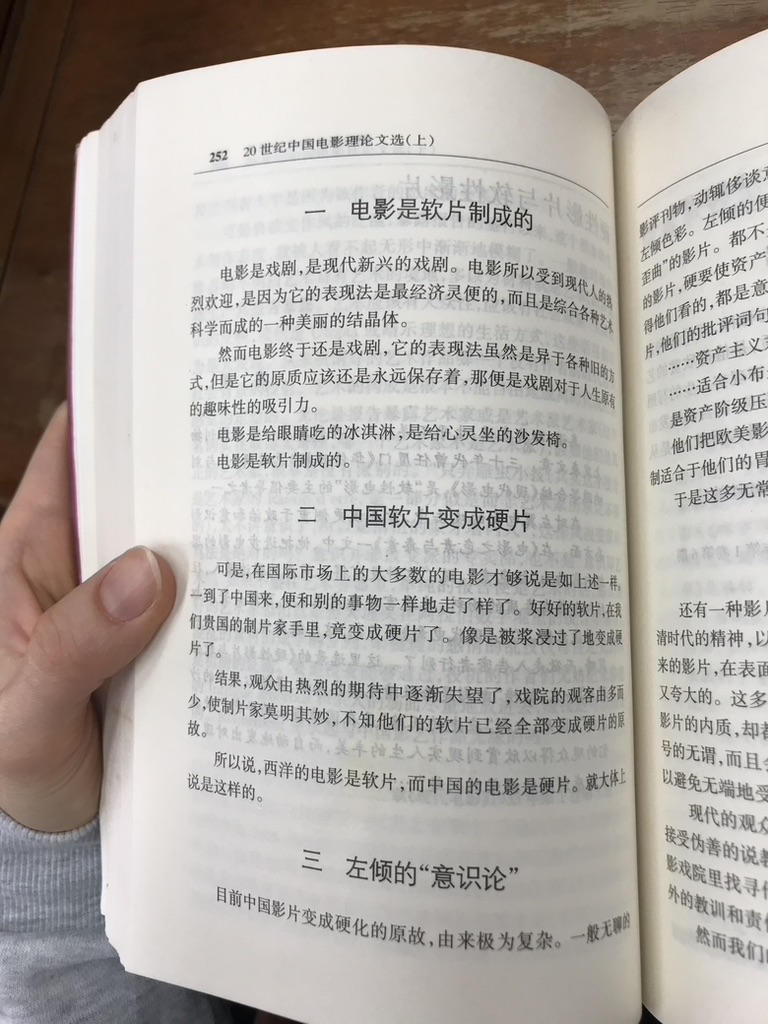
The motion picture is a form of drama—a new and modern drama. Its warm reception among the people of our time lies in the fact that it offers the most economical and flexible means of expression, and that it stands as a beautiful crystallisation of many arts and sciences combined.
Yet, in the end, cinema remains dramatic in nature. Though its methods of expression differ from those of the past, its essence should ever be preserved—the innate dramatic charm that holds man’s enduring interest in life itself.
Cinema is ice cream for the eyes, and an armchair for the soul.
A film is made of a soft material.
II. Chinese Celluloid Turns Hard
Yet such is the case only with the majority of films on the international market.
Once cinema reached China, it, like so many other things, underwent a curious transformation. The soft film, in the hands of our esteemed domestic producers, somehow turned rigid—stiffened as though soaked through with starch.
The result was that audiences, once filled with eager expectation, gradually lapsed into disappointment. Attendance at the theatres, once abundant, began to dwindle, while the producers themselves, quite at a loss, could not fathom why their soft films had all become hard.
Thus one may say that Western films are soft, while Chinese films are hard. Taken in general, this is indeed the case.
III. The Consciousness Debate of the Left
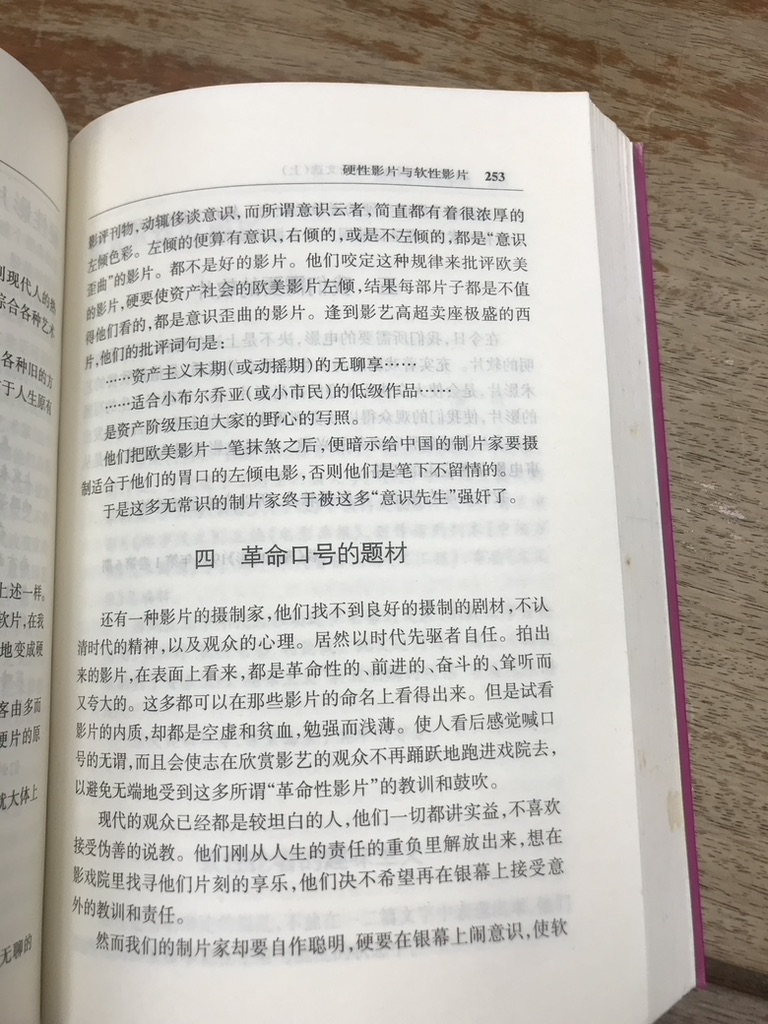
The reasons for the hardening of Chinese films at present are exceedingly complex. In general, the idle film journals of the day are fond of speaking at great length about consciousness (yishi, 意识)—and by that term, they nearly always imply something steeped in the colour of the Left. To be left-leaning is, in their view, to possess “consciousness”; to be right-leaning, or even not left enough, is to produce a film of “distorted consciousness,” and therefore, a bad film.
With this dogma as their rule, they proceed to criticize the films of Europe and America, forcing them, by sheer argument, into a leftist frame. Consequently, every Western film becomes, in their eyes, unworthy of attention because it presents a “distorted consciousness”. When they encounter Western pictures that are artistically superb and immensely successful at the box office, their criticisms take on a familiar tone:
“…A vapid indulgence of the late (or declining) capitalist era…”
“…A low-grade work suited to the petty bourgeoisie (or small-town citizenry) …”
“…A portrayal of the bourgeois ambition to oppress the masses.”
Having swept aside all Western cinema with such phrases, they then hint to Chinese producers that only left-leaning films will suit their taste—otherwise, they will show no mercy in print.
And so, these ignorant producers have at last been violated by this host of so-called “Mr. Consciousness.”
IV. The Subjects of Revolutionary Slogans
There is yet another sort of filmmakers who, unable to find sound material for production and blind to both the spirit of the age and the psychology of the audience, nonetheless assumes the pose of a pioneer of the times. The films they produce appear, on the surface, to be revolutionary, progressive, and full of struggle—grandiose and sensational in every respect. This much can already be discerned from the titles they choose. Yet, if one looks beneath the surface, the substance of these films proves hollow and anemic—forced, shallow, and utterly lacking in vitality.
Such pictures leave the spectator with nothing but the futility of shouted slogans. Indeed, they often drive those who go to the cinema for the enjoyment of art to stay away altogether, lest they be subjected, without reason, to the tedious preaching and propaganda of these so-called “revolutionary films.”
Modern audiences are, after all, more frank and practical. They care for usefulness in all things and have little patience for hypocritical sermons. Having just laid down the burdens of their daily responsibilities, they seek in the cinema a brief respite of pleasure. They do not wish to be confronted again, upon the screen, with unexpected lessons or duties.
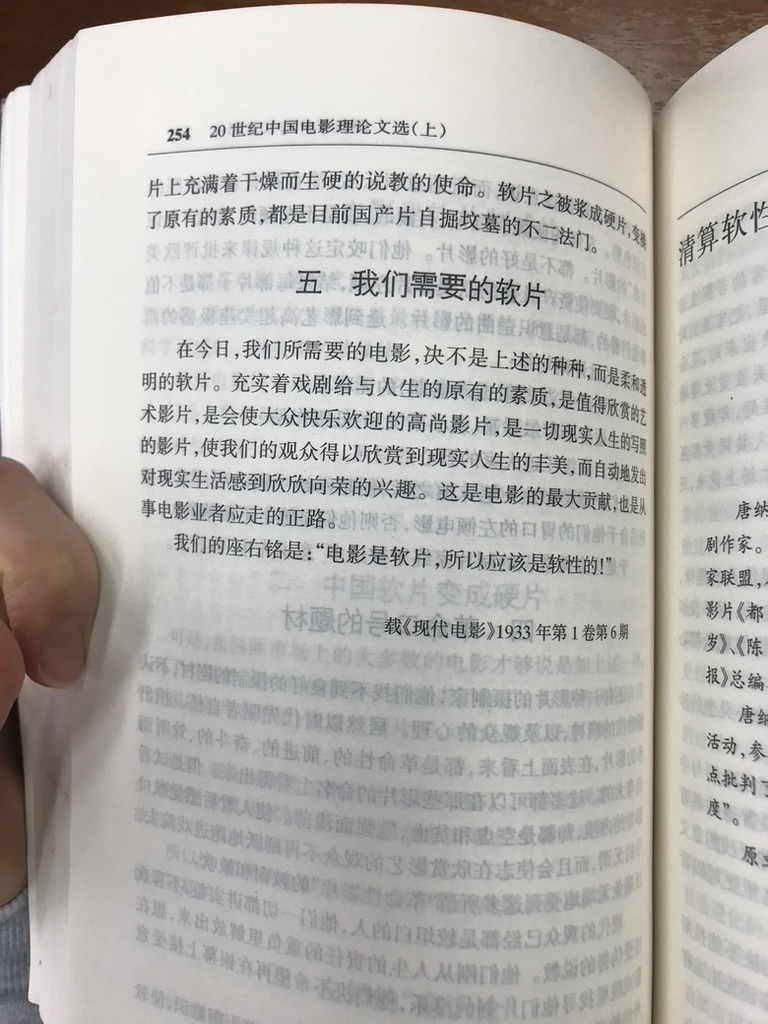
Yet our producers, thinking themselves clever, insist upon forcing ideology onto the screen, turning soft film into a medium stiffened with dry and lifeless moralizing. Thus the soft film, soaked and starched into hardness, loses its natural quality—and this, alas, has become the surest way for our domestic cinema to dig its own artistic grave.
V. The Soft Films We Need
What we need in our cinema today is none of the kinds just mentioned, but films that are gentle and transparent—soft films in the truest sense. They should be filled with the original essence that drama has always imparted to life; they should be works of art worthy of appreciation, noble films that bring genuine joy and welcome to the people.
Such films ought to mirror the realities of life itself, allowing audiences to behold the richness and beauty of the world around them, and to awaken, of their own accord, a renewed interest and vitality toward life. This is the highest contribution of the motion picture, and the rightful path for all who devote themselves to the art of film.
Our motto is this:
“A film is made of soft celluloid; therefore, it ought to be soft in spirit.”
— Published in Modern Cinema, Vol. 1, No. 6 (1933)
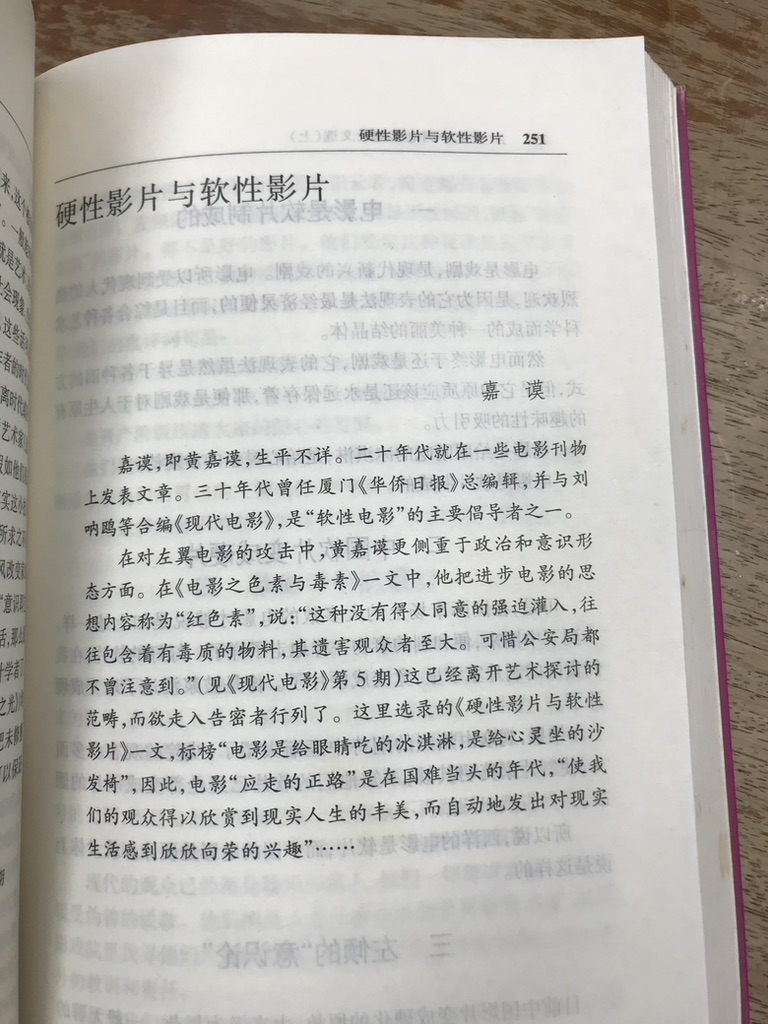
[1] Huang Jiamo (1916-April 26, 2004) born in Du’an, Guangxi province in Southern China. Screenwriter, film theorist, and scholar. Coming from a family who worked at the renowned Shanghai publishing house West Wind (西風), Huang Jiamo got involved in the intellectual debates in the 1930s when he started publishing a film magazine Modern Film (現代電影) alongside modernist writers Mu Shiying and Liu Na’ou. In 1936, Huang became a screenwriter for the Shanghai Yihua Film Company. In 1944, he graduated from the Department of Political Science of National Central University in wartime-time Chinese capital city, Chongqing. After graduation, he joined the Foreign Affairs Bureau of the Military Commission of the Nationalist Government as a translator. After 1956, he engaged in historical research at the Institute of Modern History of the Academia Sinica. Died in 2004 in Taiwan.
Back in late January 2023, during the first on-site post-pandemic edition of the International Film Festival Rotterdam, I interviewed Sohn Koo-yong, whose second feature Night Walk screened in the Harbour section of the festival. For many people, it was overwhelming to be back among crowds again—sitting in a cinema or gathering at IFFR’s regular bar, WORM. It was also the last year the press office was located on the third floor of the IFFR festival centre, de Doelen—a white, bright, and spacious area that I now deeply miss since the festival centre was restructured.
Our memories and emotions are often tied to the physical spaces we inhabit, to how we feel within them. Night Walk is just about that. It is a landscape film that sheds narrative in favour of evoking a particular mood—an attempt to capture an impression of a place at a specific moment in time.
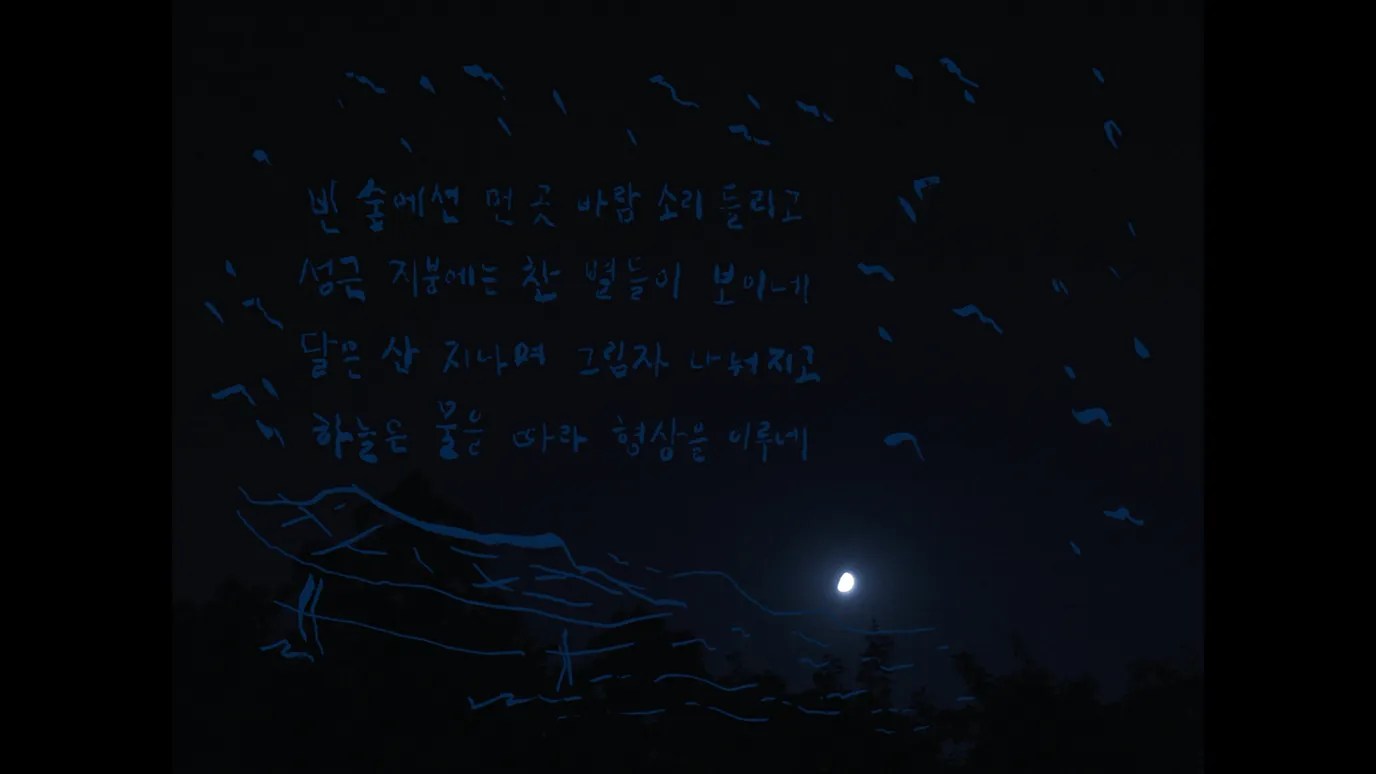
Maja: Let’s talk about the visual side of your film. I was very taken by the drawings in the intertitles, which give the film a unique and cohesive style. They create this feeling of anticipation—of getting up at night and sensing that something interesting is happening outside. It’s like a calling. I was wondering, why did you choose the color blue? Was it to evoke the night?
Koo-yong: There were two reasons. The first is a practical one. Initially, I wanted to shoot in black and white, but I also had the idea of superimposing drawings and text. My previous film was also a landscape film, but it was shot during the day. That was the first time I used text and drawings as intertitles between shots. This time, though, I wanted to blend the intertitles and the image together.
I realized that if the film were in black and white, the drawings would have to be white, and that didn’t look good. So, for practical reasons, I decided to tint the image so that the drawings and text would blend harmoniously with it.
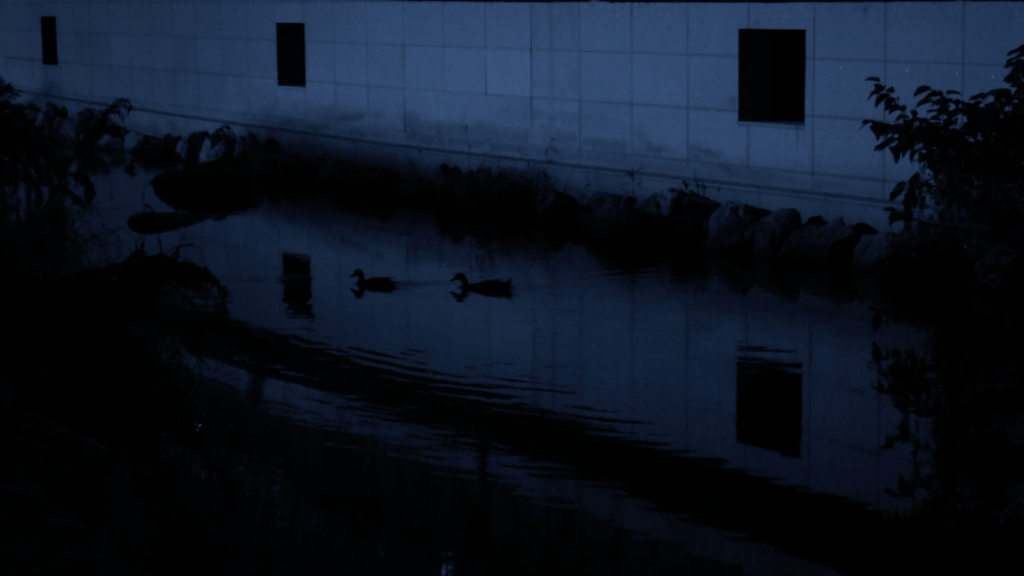
But the more important reason is emotional. The idea for the film came from a certain feeling I had before shooting. I often take walks in the neighborhood that became the film’s location—it’s not far from my house. Along the road, there’s a stream that flows from underground. It’s hard to describe, but one night, as I walked along the stream, I saw the water—the indigo-blue hue of the water, the night sky, and myself in between. I felt completely at one with the water and the sky. It wasn’t something logical—it was purely a feeling. From that night on, the color blue stayed in my mind. The emotion I had was as if the whole world was tinted in dark blue.
Maja: It’s very interesting, because when we think about the cityscape—and just walking at night—it’s usually yellow, illuminated by the streetlights. The neighborhood where you shot, Segeomjeong, is it a residential area?
Koo-yong: Yes, it is. The popular image of Seoul in the media makes it seem entirely metropolitan and modern, but it’s actually not like that. There are many small neighbourhoods such as this, and the city itself is surrounded by mountains. I think it’s one of the most mountainous cities in the world. Segeomjeong is located just above the main downtown area, but because it’s enclosed by mountains, it feels quite suburban and quiet. The natural landscape—the mountains and the stream—probably dominates more than the urban scenery.
Maja: I was curious about the visual stillness in your film. The shots are so steady and composed—how long did it actually take for the camera to be there?
Koo-yong: It was there for quite a while. I really take my time shooting because I develop the narrative structure of the film as I go. This one was filmed from spring to fall—about five to six months, all in the same neighborhood.
What you see in the film is probably less than ten percent of all the footage I recorded. For example, if a shot in the film lasts ten seconds, I didn’t just shoot for ten seconds. The camera would stay there for a long time, and I needed to feel its presence with me. Even if there’s no movement, the camera has to settle into the space.
In Korean, the word for filming a scene is composed of two characters meaning to gather and light. It captures the essence of what a camera does—it collects light. Even though I work digitally, it’s still about gathering light. So even if a shot ends up being ten seconds long, I might stay there for half an hour. I need to feel that process, to sense what the light is doing.
Maja: “Shooting” feels external and obviously has a connotation to violence, while “gathering light” is a process that goes inwards. How did you decide where to film?
Koo-yong: While shooting, I was already thinking about how the sequence might come together in editing. But during the edit, I was also drawing, and I wanted to create a kind of rhythm—a visual rhythm that moves in and out, between wide shots and close-ups. I didn’t want it to be repetitive. The timing and pacing had to vary. Maybe it’s instinctual.
Maja: So there wasn’t a fixed logic to it. It’s also fascinating that gathering light at night must have been so time-consuming—there isn’t much light, apart from the moon. Did you ever meet people walking around while you were shooting?
Koo-yong: A few, yes, but it’s a very quiet neighbourhood. I was mostly shooting late at night, so there weren’t many people around. From the start, I didn’t want to include pedestrians in the shots.
Maja: The history of this place is fascinating. There’s a strong Confucian tradition associated with it. There was a chronicle of scholars who observed the compilation of the Veritable Records of the Joseon Dynasty. So, it’s the same stream?
Koo-yong: Yes, it’s the same one. Of course, I’m aware of that history, but I didn’t want to emphasise it. Often, landscape films are linked to a director’s attempt to connect the scenery with historical or political meaning, and I wanted to move away from that. My main impulse came from a sentiment, a feeling. I wanted to express that sensation the way one might in painting or music. Kristina Aschenbrennerová, who programmed Night Walk at IFFR, described it as a “visual song,” and I felt that was the best way to describe the film.
Maja: I can see that. Watching the film was very soothing—it felt like a good rest for the nervous system.
Koo-yong: Regarding the scholarly background—they’re called seonbi. The texts in the film come from anthologies written by them. In fact, one or two of these scholars often visited the area that is now Segeomjeong. During the Joseon period, many seonbi had the habit of retreating to the mountains. It’s not in the film, but there was once a villa in the mountains—of course, it no longer exists, only the stones remain. It’s one of the few places in Seoul that can still be considered a genuine historical site, with remnants of the original structure.
Maja: I also wanted to ask you about the class issue: seonbi being the educated class. I was wondering what their place is in contemporary Korean culture. How are these traditions reflected today?
Koo-yong: Well, my main motivation when making something comes from the fact that contemporary Korea is very detached from tradition. You might know this, but after the Korean War, our whole society began looking only forward—striving to become richer and richer. Nobody looks back. And I think that’s a very bad thing.
Whenever I travel abroad, even in Japan, I feel that there’s an accumulation of time—society, politics, everything layers upon itself. But in Korea, we just forget yesterday and keep moving forward. And in my opinion, artists and filmmakers rarely talk about this. That’s really my main drive: to look back. Especially for Koreans, I think we should just stop for a moment—look back, or look sideways. Stop constantly moving forward when we don’t even know where we’re going.
That’s the main reason I included the Joseon poems. Nobody reads them anymore. From my research, of course, the seonbi were part of the elite—they worked for the government—but many of those still remembered today were the ones who went against power. They left Seoul for the countryside or the mountains to teach. They were mainly educators, spreading Neo-Confucian ideas to the people.
Of course, this didn’t reach the lower classes. And regarding your question—how it’s linked with contemporary Korea—in my opinion, there’s no real link. Politicians don’t know, nobody talks about the seonbi. Only a few scholars or researchers do. Even in school, these poems are barely read. Maybe a little bit in high school, but it’s not central. The main goal, as you probably know, is to get good grades and enter a good university.
Maja: The anchor of the film is a walk, yet visually it’s composed of static shots. Could you talk a bit about that choice—to use fixed frames instead of panning or a handheld camera?
Koo-yong: It’s really hard for me to find a reason to move the camera, especially when there’s no person in the frame. If a shot doesn’t include a person, any camera movement feels very artificial to me—even though the film is about walking. In my previous film, I followed an actress on a walk; she was, in a sense, playing me—walking through the neighborhoods. But this time there’s no actor. Each shot represents my own perspective. In that way, perhaps it allows the audience to feel as though they’re walking with me, seeing these places through my eyes.
Maja: I also wanted to ask you about the drawings. When I was watching the film, I thought of Feng Zikai, the illustrator active in 1930s Shanghai.
Koo-yong: Yes, the tradition of literati painting—art created by scholars—goes back to ancient China. In Joseon, though, it took on a slightly different character. The essence of literati painting, I believe, is not the depiction or representation of the outer world. Of course, it features flowers, mountains, and landscapes, but the painters didn’t objectify them—they didn’t treat the mountain as a separate subject. They were attuned to nature. What they painted was not nature itself, but themselves in communion with it.
This interaction with nature was not through the senses, but through the heart. There’s a term—마음 (ma-eum)—which means “seeing not with the eyes, but with the heart.” It’s about dissolving the boundary between oneself and the external world. It’s a kind of inner vision. That’s what I wanted the film to express—this inner vision. Although the camera records what I choose to frame, it also, in a way, captures me behind the lens. It shows that the landscape can exist not only outside us, but also within our inner world.
Maja: I’m guessing that’s also why you didn’t use any music?
Koo-yong: Well, actually… at first, I recorded all the sounds very meticulously. But during the editing process, the soundscape began to feel unnecessary. It’s a very difficult decision to make a silent film in this era, but once I removed the sound, it suddenly worked. Perhaps it relates to drawing attention inward—to the inner world. And when you think about it, our environment today is so polluted with noise. Sometimes, while walking, it feels good not to listen to anything at all.
Maja: It was also interesting how the intertitles—their typography and placement on screen—follow the conventions of silent cinema. Was that reference intentional? Or was it more connected to poetry?
Koo-yong: Of course, I thought about silent films—their simplicity and visual purity. I think they represent a purer form of cinema. But I didn’t consciously model Night Walk on silent film conventions. In many landscape or experimental films, there’s narration or voice-over, but I wanted to take a different approach. I felt I should strip away everything unnecessary—anything that this specific film didn’t need. That meant removing the voice-over, the actor, and even the plot. I simply wanted to make something very simple.
Maja: There are still actors, though—a cat and some dogs. In terms of narrative, it feels like the story of going out and coming back home. How did you choose the poems and match them with the images?
Koo-yong: At first, I wanted to write the text myself, maybe in the form of a diary. I was cautious about using poems because I didn’t want them to take away the poetic quality that should come from the images themselves—not the drawings, but the pure images. Eventually, I decided to use the poems because, although they are separate works, together they tell a story.
The poems at the end of the film speak of the moment when morning arrives, while others describe the passing of the seasons. The shooting took place from spring to autumn—it’s perhaps not immediately visible, but I wanted to create a sense of narrative through the poems. Initially, I selected them based on how they spoke of the night. Many of these poems praise the moon and the moonlight. In the Eastern tradition, the moon is not something to be conquered, as in the Western imagination of astronauts; it’s something that reflects one’s inner world—the moon within the heart. The literati wrote about that idea, and it connected naturally with the shade of blue I had felt.
Maja: That’s interesting, because in Chinese poetry—take Li Bai, for example—there’s an image of reaching for the moon reflected in water, which became the saying 海底捞月 (“to fish for the moon”), meaning to attempt the impossible.
Koo-yong: Yes, I think I know that poem—Li Bai.
Maja: He often wrote about the moon. I think he drowned himself—he loved drinking, and one night he fell into the water and drowned.
Koo-yong: Is that a legend, or is it true?
Maja: I’m not sure, maybe it’s half and half.
Koo-yong: So, you know a lot about Chinese literature?
Maja: I don’t really know much about poetry. I’m generally very interested in language—how sayings create images, and how they shape one’s perception of the world, of humans and their environment. When it comes to the poems in your film, actually, at some point—because I’m a very slow reader—I stopped following the text completely. And somehow, I enjoyed that even more: catching only fragments of words, or simply looking at the typography. In that way, it became an even more integral part of the film for me. It’s a different kind of perception, but it felt very good that the film didn’t try to impose all the information on the viewer. It just invites you to observe. Do you already have an idea of what you’d like to do next?
Koo-yong: I have a few in mind. It will also be about a landscape, but I’ll try to approach it differently.
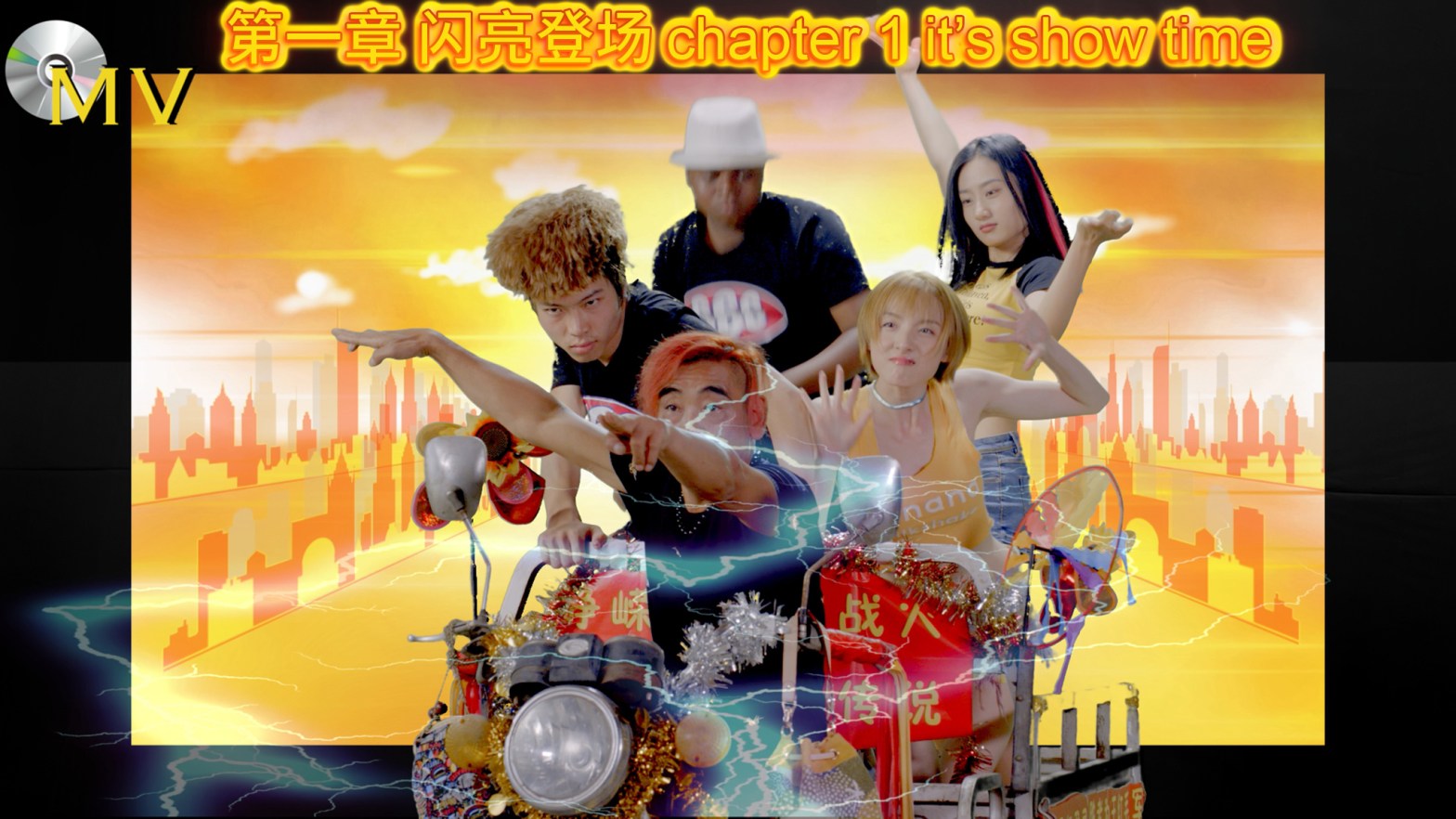
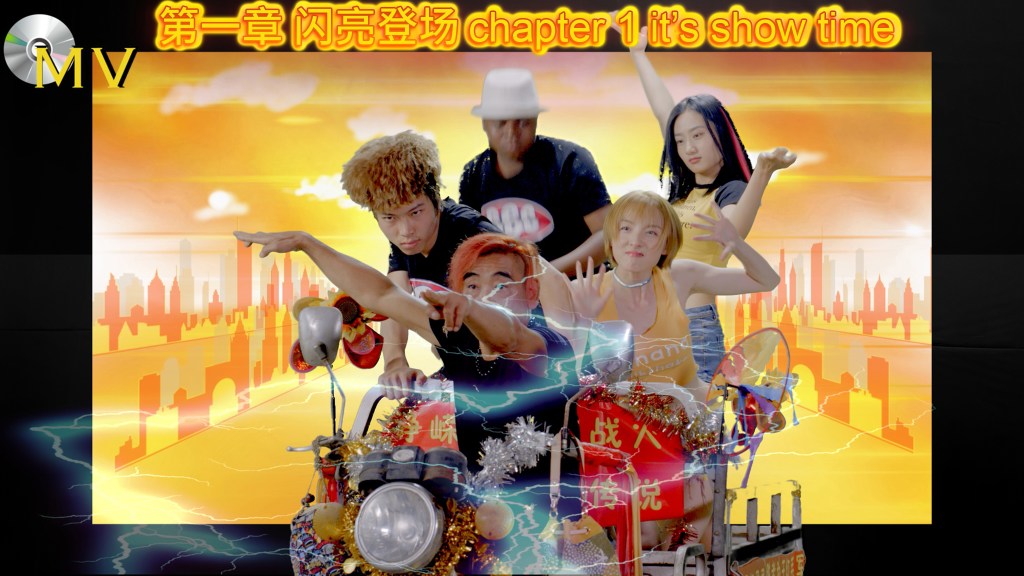
In one of Gagaland’s visual effect abundant sequences, the characters face the audience, walking ahead in a rainbow-coloured limbo filled with flashing emojis and glittering texts floating across the screen. Quick editing allows jumps from one dreamscape to another as smoothly as a swipe of a finger between different reels posted on social media apps. However, this 85-minute-long music video is not as experimental as it appears at a first glance.
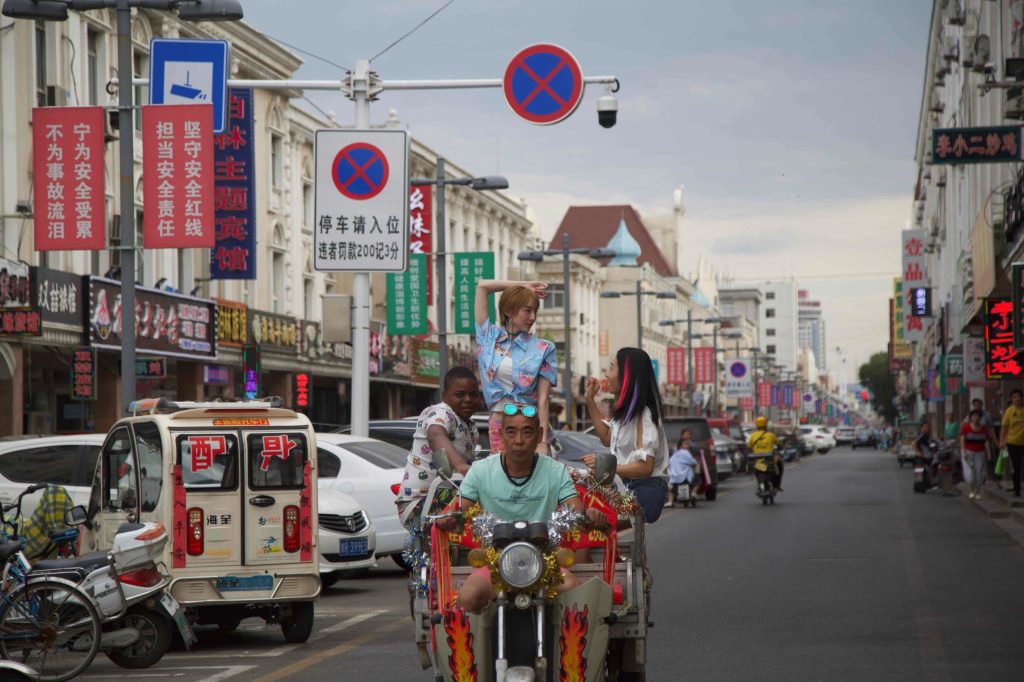
Gagaland (2023, dir. Teng Yuhan)
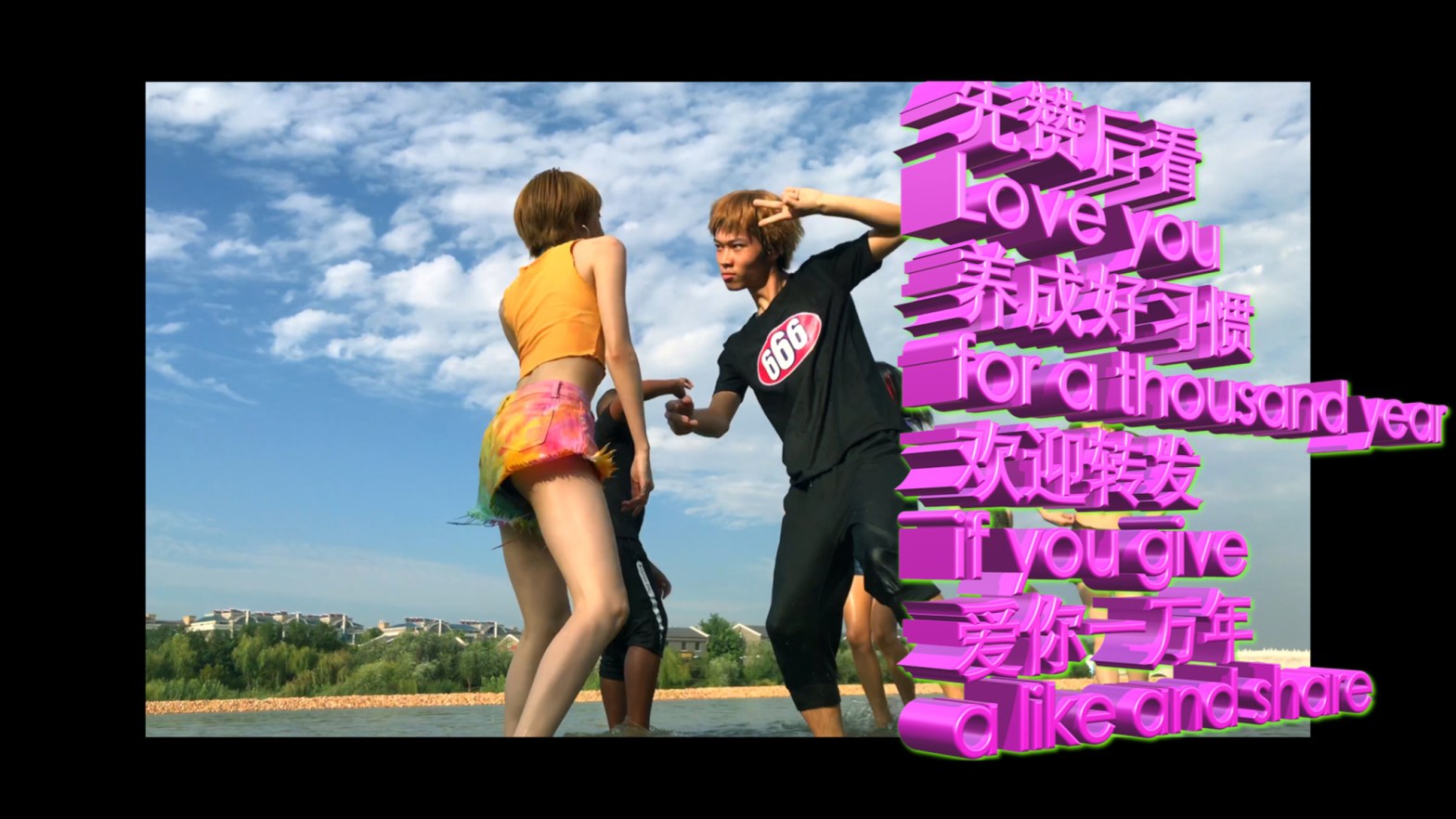
Immediately after the premiere of Gagaland, many film critics at the International Film Festival Rotterdam asked, “Is this film still cinematic?” The question implies a concern about the future of cinema, which is considered endangered by short video content on social media and the way it modifies audiences’ visual literacy. The debut full-length fiction feature by 23-year-old Téng Yǔhán 腾语涵 is inspired by this dreaded form of visual culture—specifically, short videos posted on the social media platform Kuaishou. She sees it as having the potential to give voice to those underrepresented in Chinese official media, since many short videos posted there are made by people living in the Chinese countryside. Immersed deeply in the reality of third- and fourth-tier cities in Central and Northeast China, Gagaland is a tribute to the golden age of the social and online phenomenon it portrays—ga-dance (gàwǔ 尬舞)—a freestyle street dance that started trending on Kuaishou in the 2010s. It does not have any specific choreography or form, but is based on pure improvisation, which gives unlimited space for self-expression and the exertion of individual agency in dance. Gagaland’s ostensibly simple and cliché storyline allows a chaotic stream of images and movement to take over the viewing experience.
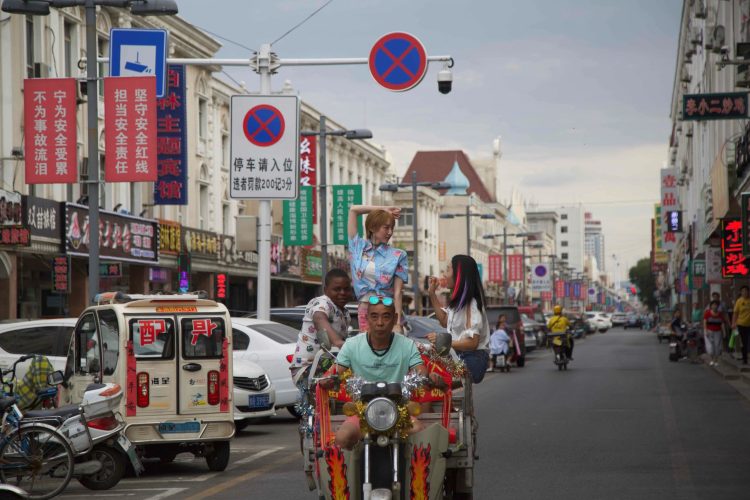
Gagaland follows a zero-to-hero, boy-meets-girl storyline. K.Dì (K弟), a 16-year-old from Inner Mongolia, leaves his job at a duck feather factory and, while escaping from bullies, accidentally joins a group of livestreamers dancing on a street corner. He soon becomes part of this crew, led by the charismatic 50-something Pink Hair (红毛 hóng máo), who earns a living online through virtual gifts in the form of emojis purchased by followers. K.Dì joins the group and begins livestreaming alongside three other dancers—B Girl (霹雳女 Pīlì nǚ), Shuǐxiān (水仙), and Kennedy (肯尼迪)—fellow vagrant young migrant workers or left-behind children turned teenagers. K.Dì’s dance and personal style quickly attract attention, amassing more and more fans. He falls in love with B Girl and starts dreaming of getting rich in order to give her a better life. Gradually convinced that Pink Hair keeps all the income from livestreaming for himself, K.Dì considers joining a rival dance crew whose leader offers him a large share of their revenue.
Gagaland (2023, dir. Teng Yuhan)
Teng Yuhan had been fascinated by ga-dance from its boom in 2014 until its decline by the end of the decade, following a series of protests that labeled the dance as vulgar and a sign of bad taste. It was targeted even more viciously than the beloved pastime of China’s elderly—square dancing (guǎngchǎng wǔ 广场舞)—because ga-dance was accused of immorality and overtly sexual dance moves used to gain followers and virtual gifts. Teng Yuhan describes ga-dance as “different from all other dances in China. In square dance, we must be consistent and united, while ga-dance celebrates individualism and difference. The more original, the better. It is a dance that is an expression of happiness. I think it is very courageous and brave. There is a saying, ‘happy is also revolution,’ which is an idea I very much agree with.”
However, Gagaland pays tribute to a specific dance scene in Zhengzhou rather than to ga-dance in general. In her work as a filmmaker and visual artist, Teng Yuhan is strongly influenced by subcultures that began to consolidate online via forums, blogging, and livestreaming, since she herself came to know them from the perspective of a fan and follower. Pink Hair (real name Gù Dōnglín 顾东林) is, in fact, a real-life online celebrity who became the protagonist of the 2018 documentary film Dancing in the Wind (dir. Yuè Tíng 岳廷) before he died of a chronic illness in 2021. Teng spent many months living with Pink Hair and his dance crew. In the meantime, the project developed organically, and her position shifted from that of an observer to that of a participant.
A Beijing Film Academy drop-out, Teng Yuhan learned filmmaking at the Li Xianting Film School, established in 2006 and privately funded by art critic and curator Li Xianting, who continues to run an artist commune in Songzhuang in a low profile after a police raid in 2013. Teng recalls the foundational experience that helped shape Gagaland: “One day, when I was filming, Pink Hair suddenly extended his hand to me. This became a very magical moment in my life, because I suddenly stopped caring about anything else. It’s incredible, because I had only known him through screen-mediated livestreaming. When he stood in front of me inviting me to dance, that vivid gesture moved me.” Teng stresses that, for her, Pink Hair’s moves embody the local spirit of Zhengzhou—the bodily strength and genuineness that can be found only in physicality, which becomes a shared language of all humanity. His ga-dance style is very grassroots and local, but simultaneously has the potential to be universally understood and inclusive.
Gagaland (2023, dir. Teng Yuhan)
The need for self-expression through freestyle dance is irresistible to many living on the margins of Chinese society. Teng Yuhan recalls that when she went to film Pink Hair’s crew dancing at West Square near Zhengzhou Railway Station, a homeless man wearing an army hat suddenly appeared and started dancing and laughing. Since Pink Hair was his friend, the homeless man invited the dancers and the film crew to the place where he lived—an open basement underneath the train station. This real-life encounter led Teng to add an episodic character of a homeless man to the script. She likens him to a god of dance living underground, going outside only when called by the sound of Pink Hair’s music blasting from loudspeakers.
Teng romanticised her experiences and observations during pre-production and shooting, perceiving Zhengzhou’s three rival ga-dance crews competing for territory and fans as factions from classic Chinese novels The Water Margin and The Romance of the Three Kingdoms. Gagaland is also marked by references to films directed by masters of art cinema. The scene featuring a giant iPhone resembles the monolith from Stanley Kubrick’s 2001: A Space Odyssey. The intentional low quality of the special effects and the romanticism embedded in Gagaland’s storyline feel akin to Nobuhiko Obayashi’s Hausu.
Teng Yuhan turns Kuaishou aesthetic and videos made by livestreamers into cinematic material. Instead of assuming the position of a livestreamer, she remains a filmmaker, referencing texts recognised and celebrated in the history of literature and cinema. Kinetic energy bursts from every frame of the film, attempting to exceed the limitations of the screen, yet Gagaland is still shot horizontally. The camera is directed at the dancers rather than being taken over by them, as it would have been had Teng followed the livestreaming format and allowed more space for experimentation and improvisation.
Gagaland (2023, dir. Teng Yuhan)
All the characters in Gagaland are modelled after real-life individuals, but the cast was sourced online through an advertisement posted on Douban. Pink Hair is the only one hailing from Zhengzhou’s ga-dance scene, and his appearance does stand out from the rest of the performers, who were selected to fit specific archetypes: the main character is slim and handsome, his love interest is blond and ethereal, the sidekick is slightly overweight, and the second girl in the group is black-haired and projected as “the big sister.” These cliché storylines are often reproduced in videos posted on Kuaishou, but Teng does not reflect on them critically; instead, she retains a positive bias toward the content on the platform, a result of her experience as a fan. Teng started working on Gagaland when she was 18 years old; she wrote lyrics and performed some of the hǎnmài songs[1] featured in the film. She also made a cameo as a nurse in one of the scenes.
The DIY spirit that springs from fandom makes Gagaland a patchwork project made out of passion. While talking with the audience after the film’s world premiere at the International Film Festival Rotterdam, Teng Yuhan was very cautious about ga-dance’s reputation as lowbrow and in bad taste. Gagaland tells as much about Zhengzhou’s ga-dance scene as it does about the troubled relationship between local grassroots culture and intellectual elites, who remain simultaneously fascinated by it yet reluctant to allow the former to take the reins in the creative process.
[1] Genre of music called “shouting to the microphone” (hǎnmài 喊麦) originated in the nightclub culture in the third- and fourth-tier cities and rural areas in the Northeast of China at the end of the 20th century. It is characterised by MC shouting lyrics over melodies downloaded from the internet. Gagaland soundtrack features songs by Panmalon Jon who, due to his characteristic singing off-key and rapping off-beat, rose to fame in 2014 with the song “My Skate Shoes”.


















 sailuluo 赛璐珞