
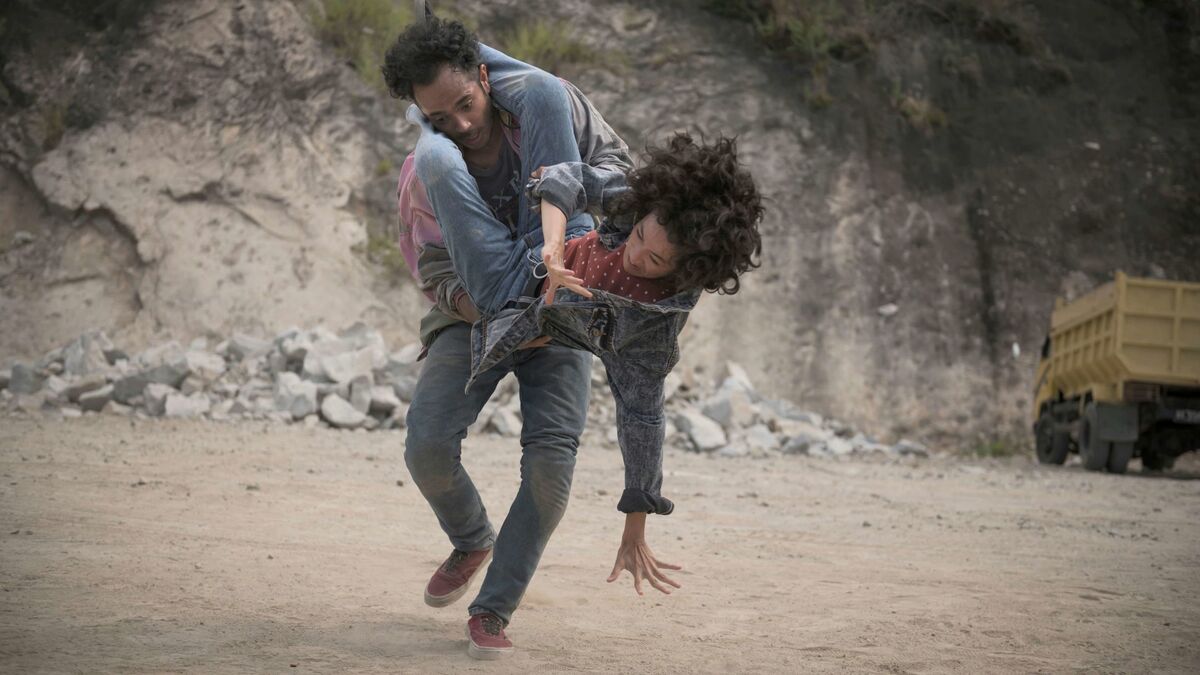
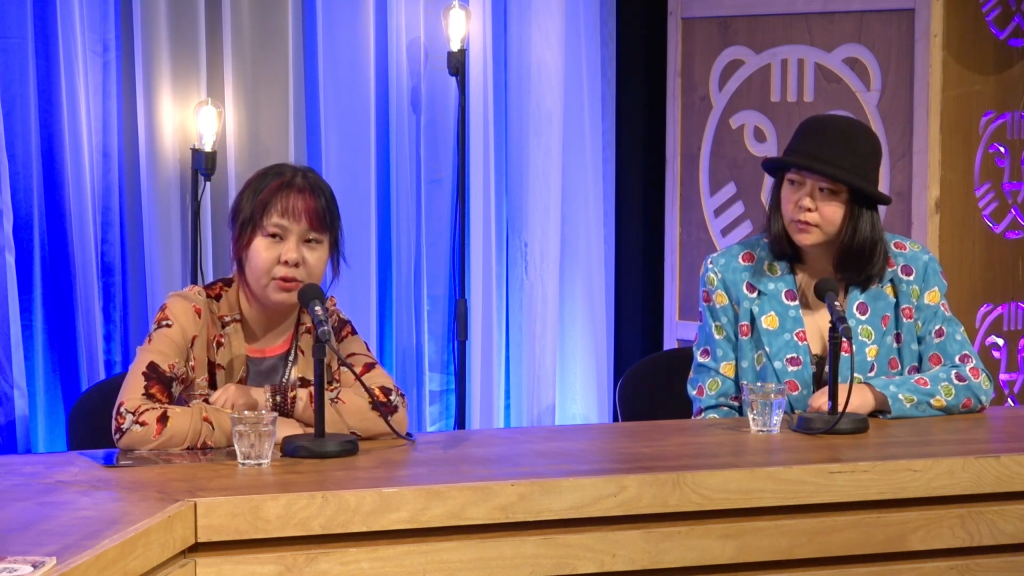
I have always been very interested in the means of film funding and how it shapes both the filmmaking process and the finished film. That is one of the many reasons why this conversation with Meiske Taurisia – the Indonesian film producer – remains one of my fondest memories of interviewing filmmakers.
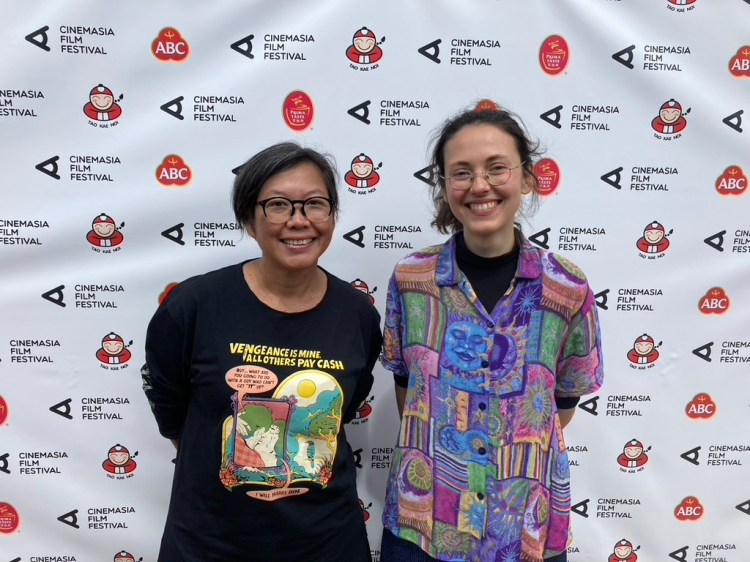
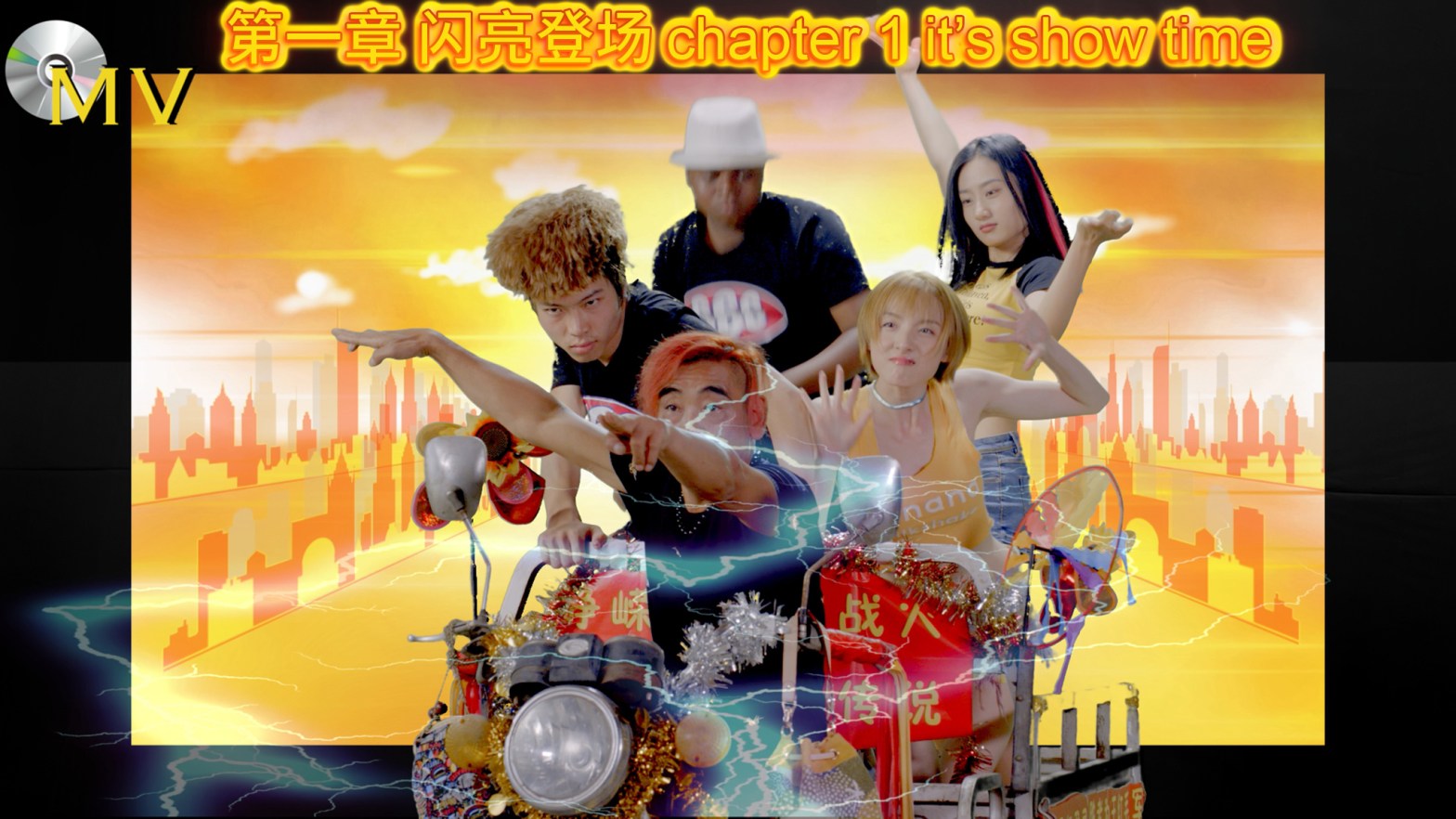
The conversation took place during the CinemAsia Film Festival in Amsterdam in May 2022, at the first post-Covid edition. Meiske Taurisia attended the festival with the Locarno-winning arthouse action film Vengeance Is Mine, All Others Pay Cash (2021, dir. Edwin). Since then, the Indonesian film market has undergone further changes, gravitating more and more towards Netflix for original productions, as the platform enjoys a large audience – especially among youth – in Indonesia who are eager to watch local films.
Meiske Taurisia discusses how she began working as a producer in the early 2000s, her long-term collaboration with director Edwin, and the release of Vengeance Is Mine, All Others Pay Cash in Indonesia during the pandemic. Between 2022 and 2025, she completed four films as a producer: the short film Evacuation of Mama Emola (2023, dir. Anggun Priambodo); the teen drama Dear David (2023, dir. Lucky Kuswandi) and the crime film Borderless Fog (2023, dir. Edwin), both for Netflix; and the horror film The Redemption of Sin (2024, dir. Yosep Anggi Noen). Her work is one example of the changes Indonesian cinema has undergone over the past two decades, shifting between independent production and collaboration with streaming platforms.

Maja: I noticed that many people are very unclear about what the role of a film producer is. Even I, when I started working as a journalist, would often ask directors questions that should’ve been addressed to producers—especially when it came to financing—because I’ve always been interested in the institutional side of cinema. How would you describe your role as a producer in the filmmaking process?
Meiske: I think it helps to think of it like running a restaurant: the director is the chef, and the producer is the restaurant owner or manager. There are certain areas only the chef should touch. If I start saying, “No, don’t use this salt,” or “Change this ingredient,” it would alter the whole dish—like bitter melon, for example. So I respect the director’s space. If I interfere too much, then why not become the chef myself?
Likewise, if the chef starts deciding on the interior, pricing, or management of the restaurant, you’d ask, “Why not just be the manager?” Each profession has its own “playground,” but those playgrounds complement each other. Our expertise complements each other—we can’t function alone.
That’s why I don’t understand when producers compete with directors. Everyone has their own territory. I have authority in my area, the director has theirs, and we discuss things. In Indonesia, I’ve seen cases where producers seem to compete with directors. But if it’s the director’s stage, let them have it. Everyone has their role, and we don’t need to step over each other.
Maja: The problem is when the producer used to be a director—or is still a director at the same time?
Meiske: I think that’s okay, actually. But I do believe that when people juggle multiple roles, they’ll always lean toward one. There’s no way to equally balance being both a director and a producer. One of them will be their strength, and for the other, they’ll delegate or have an assistant.
If someone’s both a director and a producer, I think they’ll usually be stronger in directing. Back to the cooking analogy—at the end of the day, it’s the taste of the food that matters. What kind of experience does the dish create? Sure, the restaurant name matters too, but if the food doesn’t live up to it, reputation won’t carry it.
Even the perfect dish will have critics. Some like it, some don’t. It’s about the majority response. But still, the cooking—the chef’s work—is central. That’s not to downplay my role as a producer. We have our own battlegrounds. Our bigger role is making sure people even get to taste the dish, you know? Turning an idea into a realized film. Everyone can have brilliant ideas, but can they actually bring all the ingredients together? That’s where the producer comes in.
You know, I’ve wondered why there’s no “Best Producer” award. But with something like “Best Picture,” it’s a combination of everything. I can live with that. Because if there were a “Best Producer,” how would you even judge it? It’s such a complex role. You need to have creative taste, understand art, management, financing, policy… everything. If we believe that film is primarily an art form, then yes, the cook—the artist—is essential. But film isn’t like fine art. In fine art, you don’t have “Best Art,” because artists work alone. In film, a director can’t work alone. That’s why they need producers and a crew. So in that sense, “Best Film” already represents everyone.
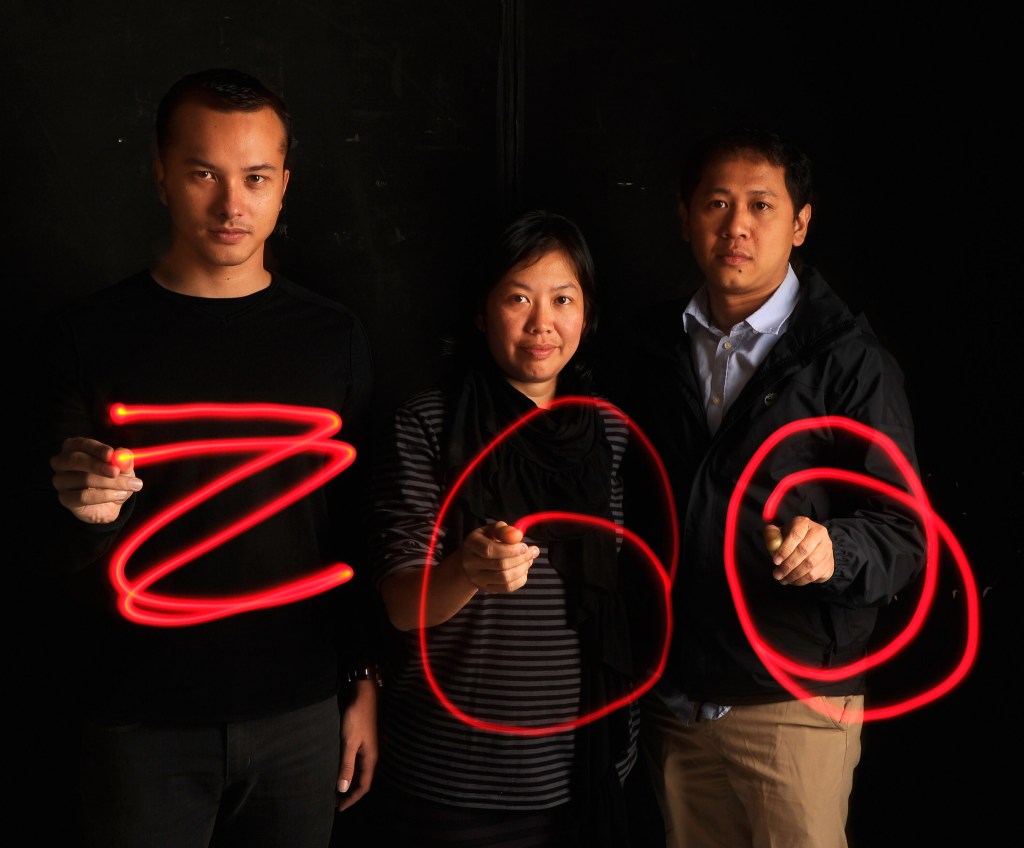
Maja: You studied textiles and design, and started off as a costume designer. How was that, and how did you transition into producing?
Meiske: It was really an accident. I never planned for this in my life. Back then in Indonesia, we would rent DVDs or pirated copies. Of course, I’ve always loved watching films, but I never thought of making them. I enjoyed film purely as an audience. I liked the visual surprises and plot twists—that’s what I looked for when I watched.
I studied architecture for my bachelor’s degree, and then I studied textile design at an art school. It was actually a double program—I studied at two different universities and had to go back and forth between them. Initially, I wanted to study art, specifically sculpture. But my parents said, “What are you going to do with sculpture?” So I chose textile instead.
After finishing both bachelor’s degrees, I worked in textile design. Then I went to the Netherlands to do my master’s, which focused on forecasting—fashion design and strategy. It wasn’t about designing clothes but more about turning something, like paper, into a fashion product. The focus was on trend forecasting—planning, and analyzing when fashion industries say, “This is the trend.”
Maja: Like Pantone.
Meiske: Yes, like Pantone and all that. That was my master’s in Arnhem. Then I returned home, but it was during a major economic crisis in Indonesia—right after the reformation era when Suharto lost power in 1998. By the time I came back, it was 2002, and the crisis was still ongoing.
I wanted to work for a branding agency, which aligned with my background, but none accepted me. So I worked as an art teacher at a high school. At the same time, I applied for a part-time job as a costume designer in film. I just wanted to try it. Teaching at high school and junior high school gave me more holidays than most other jobs—two months in the middle of the year and two months at the end—so I had a lot of free time. During those holidays, I took on film jobs. That’s actually how I entered the film industry—by accident. I was just trying to fill that two-month holiday gap.
Then I met Edwin. At that time, he was working as an assistant director, and I was the costume designer. We worked together on a film production, and that’s how our conversations started. He was already making short films, and I liked them—I thought he was really talented. I truly believed in his work. He wanted to make his first feature about the Chinese minority in Indonesia, and I’m ethnically Chinese. When I read his treatment, I saw myself in it. That’s what moved me. That’s why I said, “Okay, I’ll help you.” Edwin and his friend, the cinematographer, were like, “Hey, I’m the director, he’s the cinematographer—we don’t have a producer. Why don’t you help us?” So I did. I never thought about it as something long-term; it was just to help him, because I saw my own life in his story—his first feature.
But that help continue until now. We screened the film in competition at Busan in 2008, and then we were invited to Rotterdam in January with Blind Pig Who Wants to Fly. At that time, what I was thinking was: “Okay, for the next feature, I want him to be seen.” So I looked for labs, I met people, I promoted him—and eventually, he got the opportunity to make his second feature, and I became the producer.
It was never planned. I didn’t have a big vision of becoming a film producer. But I do know why I stayed in this profession. I studied art for a long time—my bachelor’s, my passion—all of it was in the art world. I think the reason I’m still here is because I truly believe there’s so much talent out there. And those people can’t do it alone. They need someone like me—someone who can see the talent and help realise it. That’s why I do this. I believe this is art. And I want to support these talented people. It just so happened that I met Edwin. If I had met someone else, maybe it would have gone in a different direction. But I believe in this work, and that’s why I’m still here.
Maja: When I was reading about the film culture initiatives you’ve supported in Jakarta such as micro cinema Kinosaurus. I was wondering how those initiatives have influenced local filmmaking?
Meiske: I do know that we distribute a lot. We try to be consistent, and we focus on empowering communities, which I think is very important in Indonesia. The reason this is important is because cinema in Indonesia is dominated by a monoculture of Hollywood films. We don’t really have many alternatives. I mean, there are cinemas that screen Korean films, but even Korean cinema is becoming like Hollywood now, competing like crazy.
So these communities are vital, we have to keep engaging with them. I can imagine that for people living outside of Jakarta, it must be very difficult to get access to non-mainstream films. I have the privilege of knowing people at the film festival circuit—I can reach out and ask for their films, and then distribute them in Indonesia. But imagine someone living outside of Jakarta—they don’t know how to reach sales agents and distributors.
That’s the reason why I set up such initiatives, cinemas won’t survive without supply. It’s the classic supply and demand idea of economics. I wanted to fill that gap, to support these communities so they could survive. Because if they don’t, then nothing will grow, nothing will be cultivated for the future.
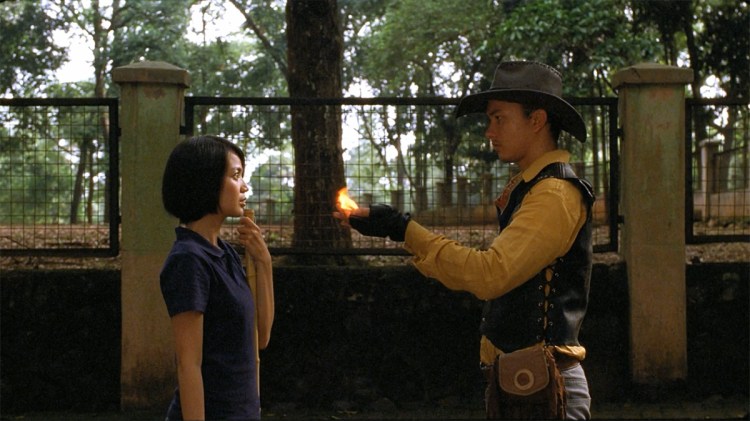
At the same time, I also try to spread the idea of small economies. I remember when I made Blind Pig Who Wants to Fly in 2008, all the screenings in community spaces were free. Free of charge. But by the time I made Postcards from the Zoo, I told everyone: I don’t want the screenings to be free anymore. Back then, the mindset was: “If it’s an independent film, why should we pay?” And I had to tell them: “It’s the other way around. Because it’s independent, you should pay.” So when I screened Postcards from the Zoo, we charged three to four times more than a regular cinema ticket. People said, “Are you crazy?” And I said, “Well, if you want to watch it, great. If not, that’s okay.” I felt like I had to build that attitude—because otherwise, people wouldn’t see the amount of suffering and effort that goes into making these films.
But that’s the good part—I can say I had an influence on the attitude of local audiences. After Postcards from the Zoo, whenever I did community screenings, everyone paid. That might not sound like much in Europe, but in Indonesia, it’s significant. After that, the norm became: community screenings are not free anymore. That’s the kind of influence I think is important—for people to understand the value of our work.
Maja: If screenings are always free, it’s detrimental to the whole profession. It’s like doing film criticism for free.
Meiske: Yes! And audiences might not respect independent filmmakers. But now, slowly, people are beginning to understand. At least now there are two options. You can try to be big in the domestic market, with millions of viewers. Or you can try to be big internationally—by going to festivals. At least now those two are seen as equal. It’s not like, “If you do this, you’re better,” or, “If you do that, you’re lower.” No—they’re just different options. I mean, I also enjoy watching a film like Pretty Woman once in a while—it’s fun! But we can’t survive on that kind of cinema all the time.
Maja: There’s this myth of the independent filmmaker as a martyr—for example, Tsai Ming-liang selling tickets to his own film outside the theatre.
Meiske: Yeah, yeah, yeah. But I think, in general, that’s Asia—especially Southeast Asia. And the reason is simple. In Europe, you have the idea of a welfare state. In Asia, we don’t. None of the Asian countries—definitely not Korea, not Japan, and certainly not countries in Southeast Asia. Most of us are heavily influenced by US-style capitalism. That’s the mindset here. That’s why public funds hardly exist in this part of the world. It’s the opposite of Europe. You have public funds because you believe in the welfare state. You have a system—even if it’s not perfect. But we don’t.
That’s why I try to influence people with this idea of the small economy. I don’t know if it’s making a big difference, but I believe that independent filmmakers are now being recognized. Unconsciously, that change is happening. People are now paying the same amount to see a film in a community screening as they would in a regular cinema—that means something.
I remember fighting with the Ministry about this. I asked, “If I want to charge for tickets in community screenings, how do I do it legally?” Because if we call it a “ticket,” it includes taxes—and I can’t deal with taxes in these small communities. It’s all individual-based. So we discussed it with the Ministry, and they said, “Why don’t you call it a donation?” Donations don’t involve taxes. That’s how it started.
Maja: Let’s talk about the second pathway: the film festival circuit. Do you think there are barriers preventing young Indonesian filmmakers from getting into European festivals?
Meiske: Well, this is just my immediate response, but yes, there are barriers. One is the submission fee. It might not be a lot, but it still matters. If the fee is 50 or 70 euros—how much is that in Indonesia? It’s a lot. Especially for young filmmakers. Also—do they even have a credit card? That’s another issue. These may sound like small things, but they’re real obstacles. I remember in the beginning, when Edwin and I made short films, we could do it for 300 or 500 euros. So if the submission fee is 50 euros, that’s already a big chunk. That’s why their only option is often to submit to festivals that do not have submission fees or a very small one.
When I did the short film with Edwin, I had already traveled to festivals. I got to meet programmers—or at least I could ask around. I could ask, “Who’s the programmer for short films at this or that festival?” And people would introduce us. Sometimes we’d get a fee waiver code. But for filmmakers who don’t have access to this network it is difficult.
I feel there’s a hierarchy, or at least an uneven power relationship. For example, if you have a collective from Indonesia and a collective from Europe working together, it feels more balanced. It’s fair. But when you’re helping someone—let’s say I’m helping a filmmaker working on his short film—I’m doing all the submissions, everything. Now imagine doing that for ten people. The workload gets bigger and bigger, and that’s essentially the producer’s job.
So when we talk about initiatives and collectives, my question is: do they want to take on the role of producer? If not, then what can they offer? Maybe just publish a list of quotas or opportunities—like saying, “Hey, this is a slot for getting into this festival.” That might be the most they can realistically do. But imagine if 100 filmmakers are reaching out to the programmers. Sure, they can try to help, but then they’re expected to manage access across every festival, almost like a gatekeeper. And there will always be networks—some people have access, and some don’t.
I’m not saying I’m not concerned. But it also reflects how eager someone is to break in. I mean, lots of people are already making short films. I jumped in midway, too. Your growth depends on how much you want to develop yourself, how you navigate this map—how you approach people, how you talk to them. There’s a kind of knowledge that you either try to catch up with or you don’t. The gap also challenges you: do you want to catch up?
Ideally, there would be better conditions. Like in Busan—they don’t charge submission fees. That’s great. It’s more accessible. But every festival has its own policy. Some are charging really high fees.
Maja: Yes, it’s twisted. It’s a whole economy. I heard Venice charges 70 euros for a short film, but then when I think about press accreditation to the Berlinale, it’s the same amount in the environment in which as a freelancer you are being paid 50 euro or 80 euro per review or an entire essay or festival report.
Meiske: Imagine 1,000 submissions—that’s 70,000 euros. No wonder Venice can pay for Hollywood premieres. But that’s another story—Hollywood is a different world. It’s the same with Cannes. These festivals exist within a canon, this idea that everyone needs everyone else. Hollywood wants the stamp of artistic quality, and art festivals want Hollywood’s stamp of accessibility and commercial success.
Maja: Wow, that’s a vicious circle. So what are your plans now, for work?
Meiske: I still want to make films. I realised a few years ago—after more than ten years of doing this—I can’t switch anymore. I know how to be a producer. Before that, I used to change a lot. But at one point, I told myself, “Okay, this is it.” If I start something new, I’ll have to begin from scratch—without any knowledge. And now, I’m not sure I can do that anymore.
Maja: Any new projects?
Meiske: When I worked on Blind Pig Who Wants to Fly and Postcards from the Zoo, we relied on European grants. That was the only way to make the films back then. But after Postcards from the Zoo, I realized it’s not sustainable. In Southeast Asia, you can’t just keep relying on Europe. So, I co-founded a company with Palari Films, where we mix investment and grants. Possessive and Aruna were our experiments with investment. With Vengeance is Mine, Others Pay Cash, I already had experience and it worked. It was difficult, because both sides had different expectations. But I think Vengeance met both. And we won the Golden Leopard, that was a big moment. It felt like a shared success.
So now I want to keep experimenting—with financing, and also with the kinds of films we make. That’s where I still see growth for myself. I can’t make films just for money—I get bored too fast. I need challenges. And now that I have my own company, with fifteen people working with me, I have to think about them, too. Not just myself. That’s why I’ve accepted that we need both commercial and artistic projects. If we want to survive, we have to do both. But I believe we can still keep the Palari signature, even in commercial films. I don’t know how yet—but that’s the challenge.
Maja: That’s really interesting, because in a way, it connects to your original interest in branding.
Meiske: That’s true! In the end, it all connects.

Maja: Vengeance was also released in Indonesia. How was the audience response?
Meiske: It was good. But it’s a hard question to answer. It was during the pandemic. Cinema attendance was around 30%. In that context, the film did well. It even made the top ten box office in 2021. That wouldn’t have happened in normal times.
Like, last year during Eid—which is one of the key holiday seasons in Indonesia—a horror film made four million admissions in one week. That’s usually the number one or two films would do. Vengeance only had around a hundred thousand tickets sold. But still, it made top ten that year. So we were like, “Yay! Top ten!” But of course, it was due to special conditions. But in the end, I’m happy.
Maja: That’s really interesting. Sometimes art films weren’t hit as hard as big blockbusters when it came to numbers.
Meiske: Yeah, that’s true. And the audience response was great. It was in the big commercial cinemas. But we also had community screenings. They’d book a cinema, bring friends, and watch it together. That was really nice. We were able to empower communities with this film because it had just won a big international award. It helped bring people back to the cinema.
I think we had around a hundred screenings that were organized by cinephile communities. Not by us. They saw the film was playing in their city, and they made it happen themselves. That was the best part. Even during the pandemic, it still created a kind of momentum. I think the pandemic maybe even helped that, because people needed something to gather around. It made an impact on the cinema landscape here.
















 sailuluo 赛璐珞