
This is a draft of a speech I gave at the Goethe-Institut in Porto Alegre, Brazil, where I was invited after serving on the FIPRESCI jury at the Festival de Brasília do Cinema Brasileiro. Due to the festival’s financial difficulties (reportedly, it nearly did not take place because of delays in receiving state funding), the Goethe-Institut generously sponsored my flight to Brasília and invited me to participate in activities at two of its other locations, in Porto Alegre (many thanks to Vitória Monteiro) and Rio de Janeiro (many thanks to Sérgio Allisson). I am immensely grateful for this opportunity and their support.

To introduce my work, I think I have to start from the beginning, because my early relationship with cinema continues to structure what I care about today. I was born in 1992 in Rzeszów, a provincial town in southeastern Poland, close to the border with Ukraine. It was the immediate post-socialist period, and my parents were trying hard to make ends meet amid the shock of inflation. My father eventually decided to work on a construction site in southern Germany, because my parents’ combined income in Poland was not enough to make a living.
The first thing my parents bought after saving money from his paychecks was a satellite television. After twenty-five years of limited access to global media—or, more precisely, Western media—satellite television became a window onto the world. Most of what we could receive was German-language programming, but that was already a dramatic expansion of what had been available to them before. My parents loved watching films, and I therefore also grew up in front of a television, especially watching older films from the 1930s through the 1950s. The newer films of the 1980s and 1990s were usually rented on VHS tapes; the VHS player itself was initially borrowed from friends. My parents are very hard-working people, and eventually we were able to buy our own player, followed by a DVD player, which expanded the selection of films we could watch. But even then, the range of films available to us was nothing compared with the access to cinema in Western European countries such as France, the UK, or Germany.
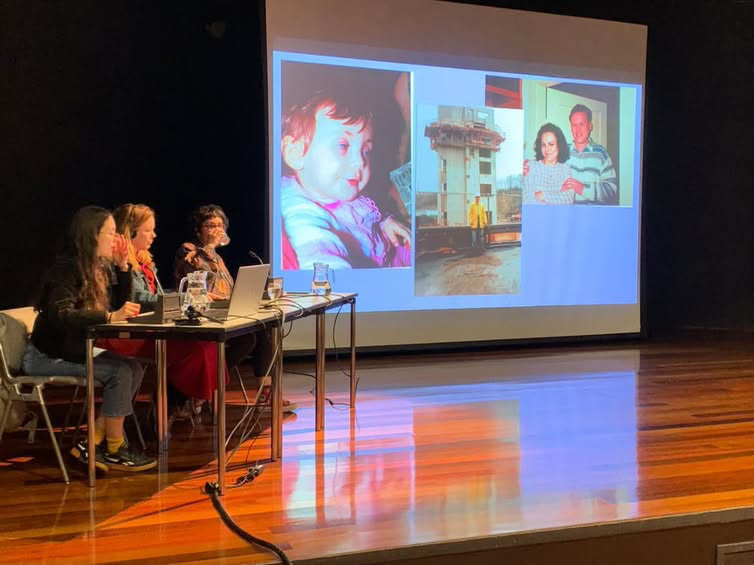
For a very long time, I learned to access cinema not only through films themselves but through written sources: articles, magazines, books I could find online or in libraries. I think this was one of the things that made me fall in love with film criticism. Looking back, I see that the logic of scarcity—the limited availability of films—created a deep yearning for cinema. It is also, interestingly, a logic that art cinema and film festivals themselves partly feed on: the idea that access to certain films is limited, that some films are difficult to see, and that their scarcity can make them feel more valuable.
I had been reading film magazines since I was around ten years old. Even while attending music school and playing the piano, I had already decided that I did not want to pursue music as a profession, but rather something related to film. I remember how difficult it was to attempt writing my first film reviews, trying to understand what a film review was supposed to look like and how it should be structured. At the time, film was still often considered something less worthy than literature, and of lesser educational value. I hope this has changed for children growing up today.

Another aspect of my early relationship with cinema was my seemingly strange interest in Chinese-language cinemas. I think this was partly connected to my lack of identification with contemporary Polish cinema. Polish cinema was struggling to adapt to the market after the 1990s, when a film industry that had previously been largely state-sponsored suddenly had to compete for audiences and box-office revenue. This happened in the context of the massive influx of Hollywood films, which had already colonised screens in many parts of the world. I found myself looking elsewhere, towards cinemas that seemed to offer different histories, different relationships to film production, and different ways of thinking about cinema.
During my bachelor’s degree in film studies, I came across a book on Asian cinemas written and edited by Polish film researchers. At the time, access to English-language books on film studies was also very limited, so this book became an important point of reference for me. One of its articles was dedicated to the films of Edward Yang, the Taiwanese filmmaker who was active from the 1980s until his premature death in 2007. In the descriptions and analyses of his films, I recognised something that closely resembled the feeling I had towards Poland: an annoyance with many aspects of national identity and national sentiment, combined with a deep care for the country and a desire to see it become more modern and more self-aware.
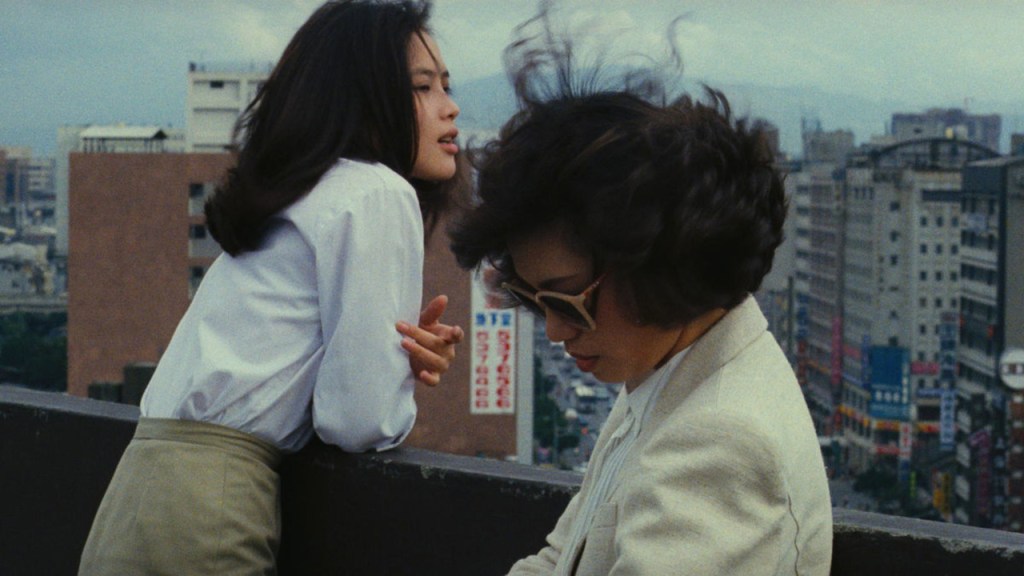
It was, in some ways, an annoyance with the very idea of nationality. Why should we identify, by default, with the country in which we happened to be born and raised? And yet, at the same time, I felt a deep sense of attachment and responsibility towards the place itself and its culture. I know this may sound abstract and contradictory, but that is precisely how it felt. In Edward Yang’s films, I could see a form of non-Western modernity—something I had been longing to encounter in contemporary Polish cinema at the time. Years later, I would recognise something similar in Polish cinema of the late 1950s and early 1960s.
At the same time, I was increasingly frustrated by the way many Polish film critics and researchers wrote about Chinese-language cinemas. Their writing often emphasised pessimism, alienation, collectivism, and other familiar stereotypes about modern East Asian societies. I wanted to understand these films differently, and I realised that I needed to acquire the means to do so myself. I decided to learn Chinese, partly to be able to approach Chinese-language cinema beyond the interpretive frameworks and stereotypes that had shaped much of what I had encountered.
Learning Chinese was also connected to a more practical ambition: I hoped that one day I would be able to interview filmmakers in Chinese, without relying on a translator, and have the freedom to communicate directly. That eventually happened—and much more followed from it.
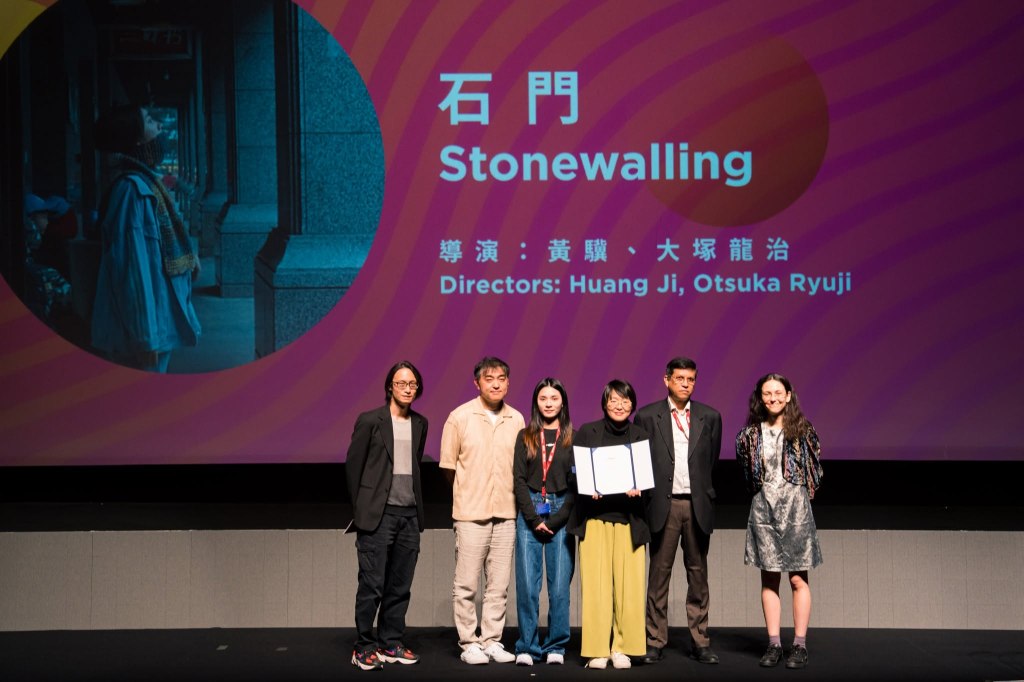
Today, I am very grateful that members of the Chinese film industry have more or less accepted me into their community. I remain, of course, a foreigner, and I am conscious of that position which comes with limitations. But I hope that I am also treated as a regular peer: someone who can participate in conversations about cinema on equal terms. This tension between being an outsider and becoming part of a community has remained important to the way I think about cinema, criticism, and my own position as a researcher and writer.
But going back to the story, two experiences in particular had a profound influence on my future. The first was attending the New Horizons Film Festival in Wrocław, Poland, between the ages of nineteen and twenty-three. The second was taking part in the People’s Jury, a film-criticism workshop at the Five Flavours Asian Film Festival in Warsaw. New Horizons introduced me to completely different kinds of cinema: non-narrative cinema, experimental cinema, slow cinema, and films that demanded a different kind of attention. It taught me patience. More importantly, it taught me how to approach cinema in a way that was not limited to dialogue, narrative, or genre, but to think about film language itself. Five Flavours was the first time I felt that I could actually voice my own opinion and decide what kinds of films I wanted to wholeheartedly share with other people—and, through that act of sharing, perhaps extend a film’s life or increase its visibility. Both experiences were deeply enlightening and empowering. Most probably, I would not have been able to participate in either of these training activities if the festivals at the time had required submission fees for their film critics’ workshops—something I will always oppose.
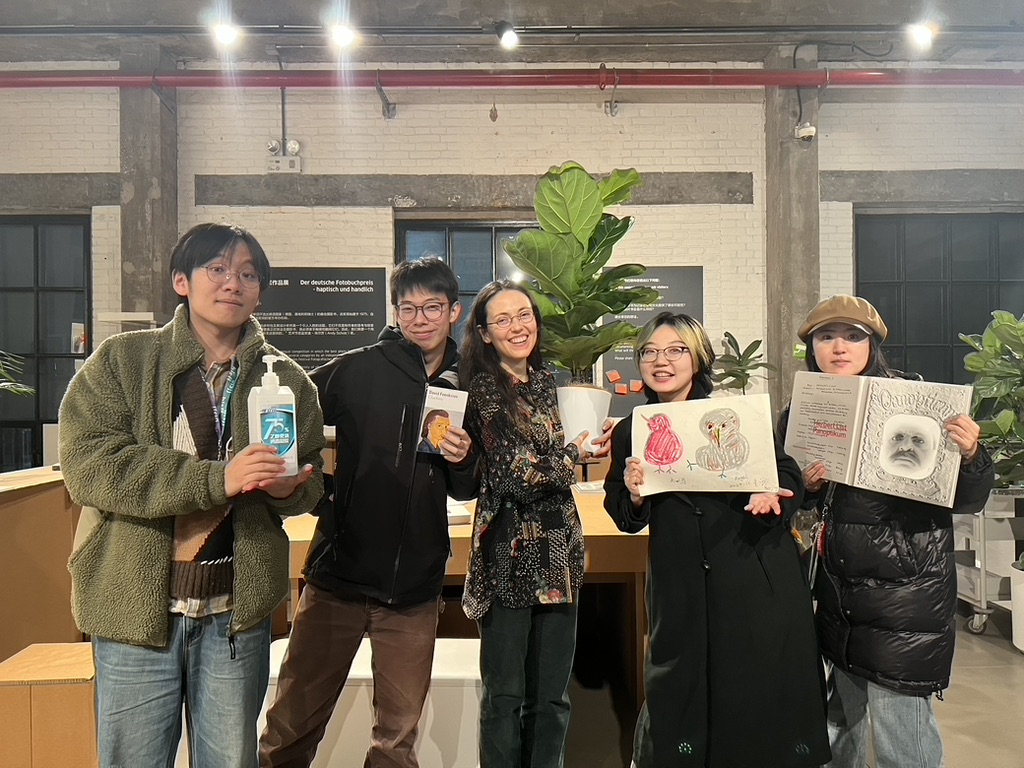
Even though I have been regularly writing essays, film festival reports, and film reviews since 2016, I was for a long time reluctant to call myself a “film critic”. The label can be perceived as pretentious, and there are many misconceptions about film critics among both the general public and the film industry. I believe that many of these barriers and misconceptions derive from a lack of dialogue: between film critics and filmmakers, between critics and audiences, and more broadly between the different groups that constitute the film world. Similar misconceptions and prejudices structure the relationships between filmmakers and audiences, film directors and producers, and many other participants in the film ecosystem.
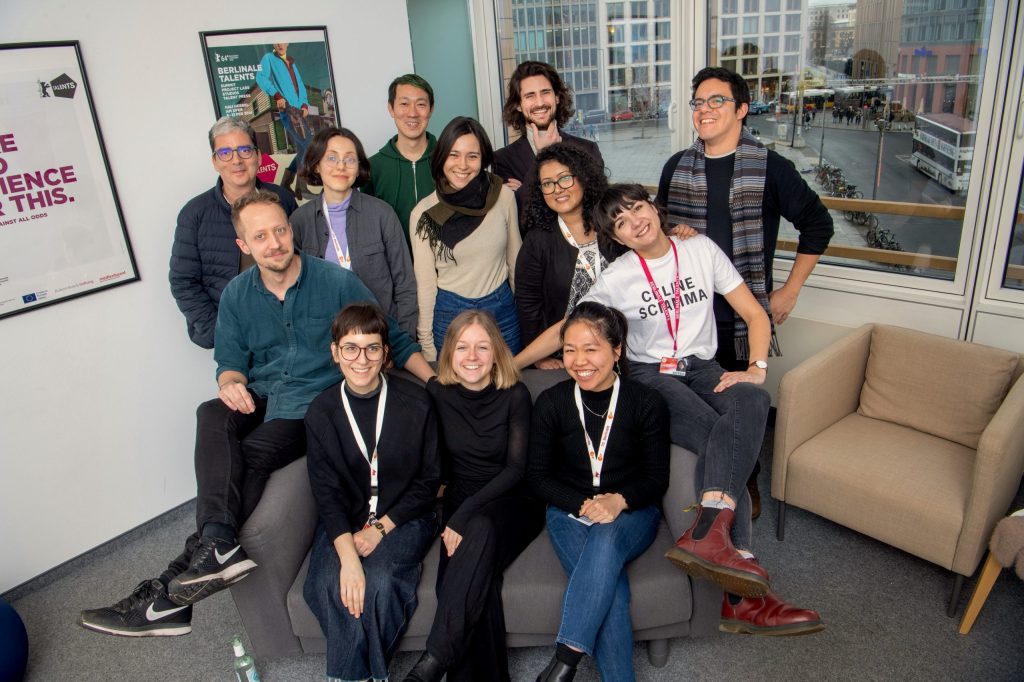
In 2020, I was selected to take part in Berlinale Talents Press. There I met and developed friendships with participants from all over the world—from Mexico, Turkey, Bulgaria, Mongolia, and many other countries. They were some of the most talented and brilliant people writing about cinema, but they were also people deeply aware of the structures that determine hierarchies within the international film festival circuit. Many were sensitive to questions of neocolonialism and to the institutional problems embedded in the global film market. These were precisely the issues that had troubled me during my first decade of working as a film journalist.
This experience changed my perception of what it meant to identify myself as a film critic. I felt that I was part of a community. That community was—and remains—diverse, fragmented, and full of different points of view, opinions, and smaller circles. But Berlinale Talents gave us an opportunity to meet one another and to recognise that, despite our differences, we were working within the same field.
There is another issue that I think is crucial to understanding film criticism today: its precariousness. None of the writers from my generation whom I know has a stable income or a permanent job at a newspaper. We are freelancers, pitching articles to newspapers and magazines, and many of us started by writing for free or for very little money. I remember receiving my first payment for an article only in 2020.
The economic precariousness of film criticism is particularly visible in the relationship between critics and film festivals. Most festivals do not provide accommodation or cover transportation costs for critics. We may also have to pay for press accreditation, from around twenty euros for Cannes to seventy euros for the Berlinale. Participation in a festival therefore becomes an investment, with the hope that it can eventually be recouped through writers’ fees from the articles we publish. Even participation in Berlinale Talents Press now comes with fees, whereas this was not the case when I participated in it in 2020.
As a result, film criticism is often only one of several jobs that we do. I was able to attend many film festivals only after receiving a DAAD scholarship to pursue my PhD in Berlin. This allowed me to combine my academic research with my work as a film critic. My doctoral research eventually resulted in a dissertation on China’s art cinema at film festivals, which I defended in July 2025. Many of my fellow writers work at universities or have several other jobs simply to make ends meet. Film criticism, for most of us, is not a profession that can be sustained economically on its own.
This precariousness also raises questions about the institutional structures of the festival circuit itself. Many film festivals act as though critics and filmmakers need festivals in order to survive, when in many ways the relationship is more reciprocal. I remember looking through the archives of the Locarno Film Festival in the 1980s and finding a piece of paper containing an article from Variety, featuring an interview with the chairman of FIAPF, the International Federation of Film Producers Associations. FIAPF was one of the organisations involved in structuring the hierarchy of the international film festival circuit through its system of festival accreditation and grading. What struck me in this interview was the statement that the grade a film festival received was not actually based on the number of world premieres, but on the participation of international film critics.
This article made me think differently about the position of critics within the festival ecosystem. Critics are often treated as peripheral participants, even though their presence, writing, and international networks have historically contributed to the legitimacy and visibility of film festivals. The same is true, in different ways, of the filmmakers whose films festivals use to construct their programmes, identities, and cultural capital.
I therefore think it is time for many of the players in the film market to rethink their positions towards global art cinema: how value is assigned to films, how cultural hierarchies are constructed, and what kinds of institutions are considered necessary to sustain cinema.

