In Chronovisor, writer-directors Jack Auen and Kevin Walker achieve something often considered impossible: they create a captivating audiovisual narrative based largely on written sources. Rather than merely illustrating archival documents, they invite the audience to read them alongside the protagonist, transforming the act of research into cinematic experience. As we follow the gradual accumulation of evidence, we also witness a process in which scholarly inquiry slowly turns into obsession and, ultimately, becoming one with the research topic.
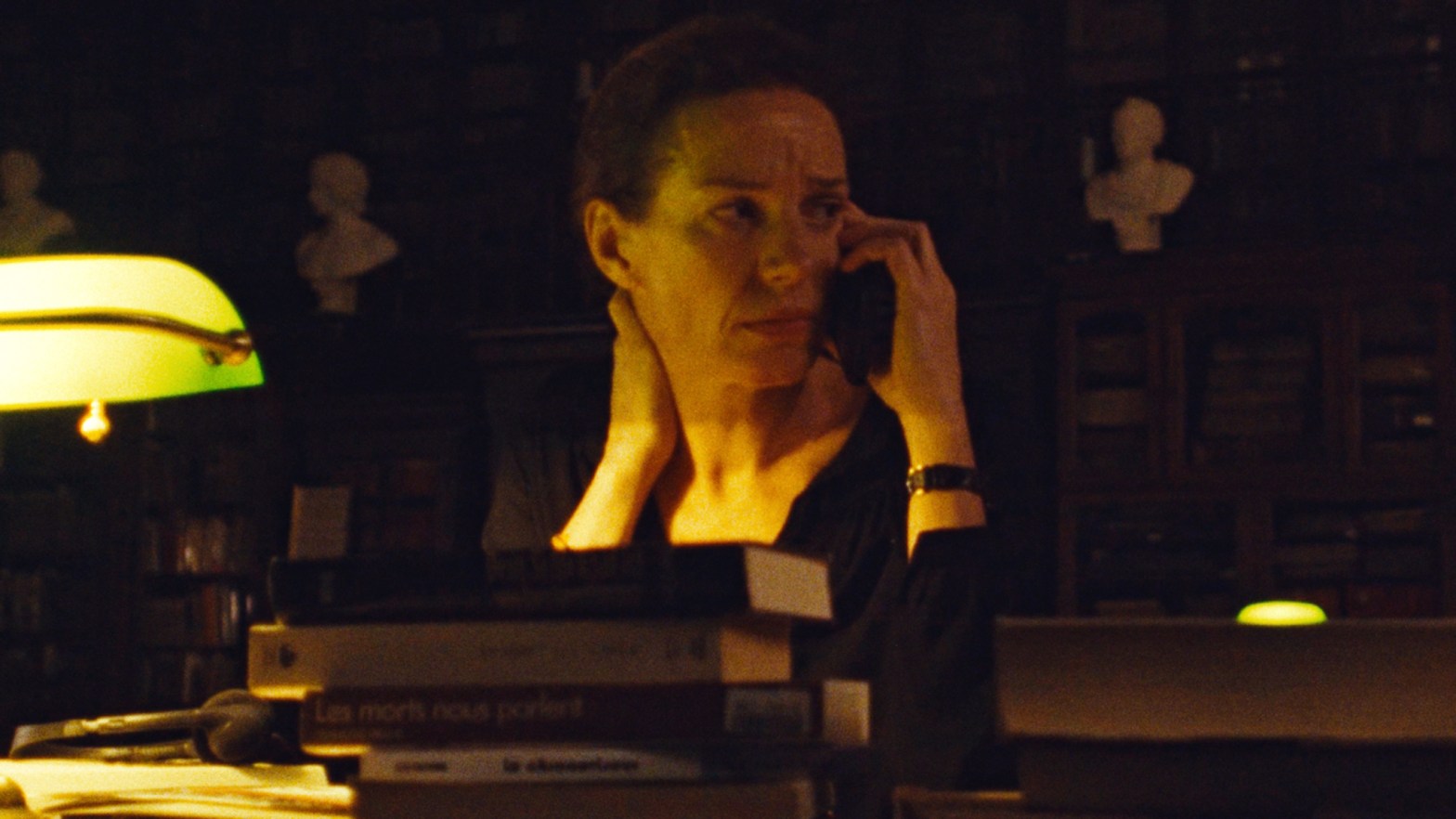
The film follows Béatrice Courte, a researcher specialising in philosophy and neuroscience. During her research, Courte stumbles upon a reference to the Chronovisor—a device allegedly invented by the Italian Catholic Benedictine priest, musicologist, and physicist Pellegrino Ernetti, who claimed that the machine allowed its users to observe past events, including the Crucifixion of Jesus Christ and a speech by Cicero. What begins as a footnote gradually becomes an obsession as Courte devotes herself to uncovering the truth behind Ernetti’s extraordinary claims, descending ever deeper into the solitary world of archival research.
Interestingly, Auen and Walker originally intended to make a documentary about Pellegrino Ernetti and the Chronovisor. Instead, they shifted towards fiction, centring the film not on Ernetti himself but on the experience of conducting research. This decision proves remarkably effective. By casting Anne Laure Sellier, the Cartier Chaired Professor of Behavioral Sciences at HEC Paris, in the lead role, they blur the line between reality and fiction. Sellier brings to the performance an unmistakable familiarity with academic life: the endless hours spent in libraries and archives, the constant exchanges of emails, phone calls, and letters, and the painstaking process of gathering fragments of evidence in pursuit of a single research question.
Auen and Walker understand that if they want audiences to read alongside Courte, they first have to make them care—not only about Ernetti’s story but also about hers. The mystery itself is therefore only one layer of the film. More importantly, Chronovisor becomes a film about the process of trying to gain knowledge: assembling scattered clues and experiencing the slow transformation that research can bring. Genuine research is never simply the accumulation of facts. It alters one’s consciousness, gradually reshaping previously held assumptions and beliefs about the world.
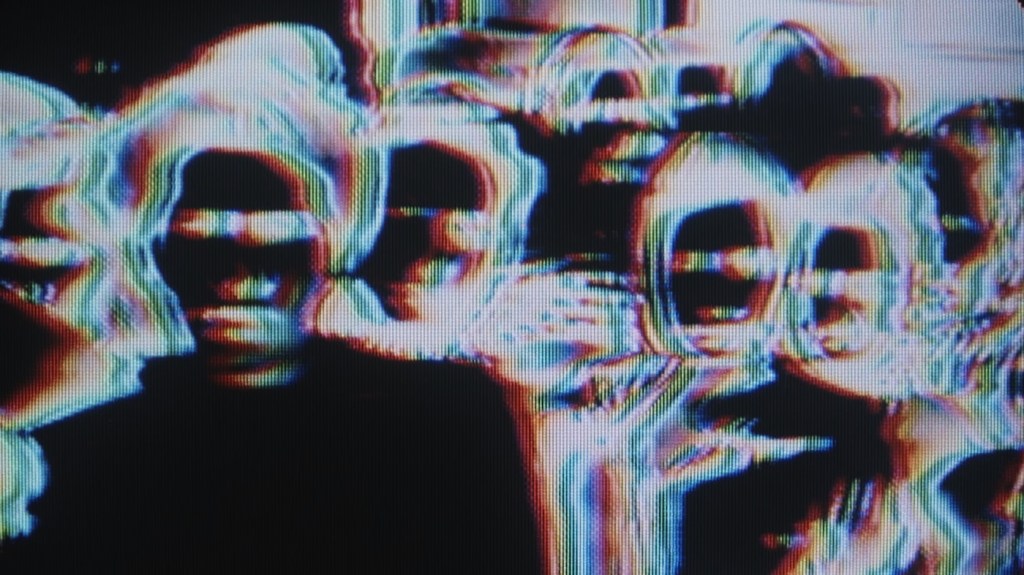
This transformation is beautifully captured by comparing the film’s opening and closing scenes. In the opening sequence, Courte is having dinner with colleagues from her university department. The conversation revolves around the routines of academic life until she begins discussing her research on philosophy and neuroscience. Almost imperceptibly, her thoughts drift further and further into theoretical speculation, signalling the beginning of an intellectual journey that will consume her. By the film’s final scene, it is difficult to say exactly what has happened. Courte seems to have become inseparable from the medium she has been investigating, completely absorbed into the world the Chronovisor promised to reveal.
Anyone who has spent days buried in archives because of a footnote, or who has become consumed by a research question that appears insignificant to everyone else, will likely find Chronovisor profoundly cathartic. It captures with remarkable precision the peculiar excitement of seeing a book and immediately thinking that it could contain answers to long-lost mysteries. Perhaps this is why Chronovisor feels so immediately recognisable to anyone who has conducted archival research. The academic gradually becomes a detective, pursuing a question that refuses to leave them. The object of investigation need not be as extraordinary as a machine capable of observing the past. More often, groundbreaking research begins by questioning something that is taken for granted. In Courte’s case, the Chronovisor promises direct access to history itself. The true subject of the film, however, is not the device but the assumptions underlying historical knowledge: the narratives of the past that have become accepted precisely because they are no longer questioned.
One of the film’s greatest achievements is the way it dramatizes written text. Rather than treating documents as static objects, Auen and Walker transform reading itself into cinematic action. Protagonist highlights passages, compares multiple sources, and translates fragments from different languages instead of relying on conventional subtitles. This strategy does more than visualise research. It reflects the profound influence that digital technologies and smartphone apps like Google Translate have on the way we operate in the world and process information. We are not locked inside of the circulation of information in our native languages or in English as the invisible international standard. Chronovisor presents knowledge circulating across multiple languages and perspectives.
Shot on warm, low-lit Super 16mm by cinematographer Leo Zhang, Chronovisor possesses a tactile visual texture that perfectly complements its themes. The pronounced film grain, composition of shots, and atmosphere of intellectual paranoia made me think about the work of David Cronenberg since like many of Cronenberg’s films, Chronovisor explores how technologies reshape human consciousness, although here the body horror is replaced by epistemological horror—the unsettling possibility that knowledge itself may fundamentally alter the person who seeks it.
Throughout the film, traditional cinematic language is constantly interwoven with different media, research methodologies, and textual practices. In doing so, Chronovisor becomes not simply a film about a mysterious invention, but one of the most convincing cinematic representations of what research actually feels like: obsessive, lonely, exhilarating as much as transgressive.
*”Chronovisor” (dir. Jack Auen and Kevin Walker) premiered at the 2026 International Film Festival Rotterdam.

