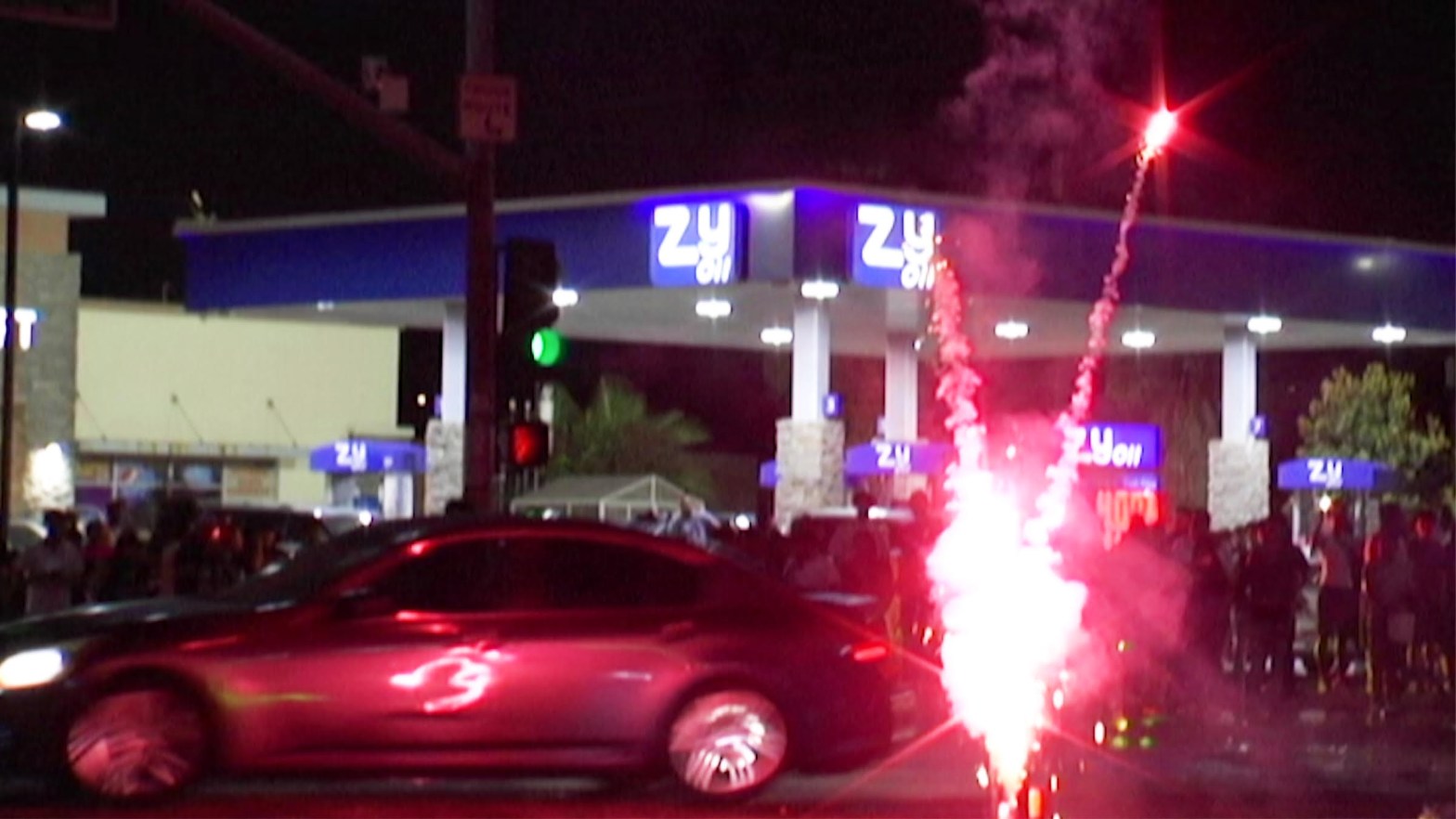
Although set in the near future, Charlotte Zhang’s Tycoon is less interested in imagining what lies ahead than in excavating the unresolved histories that continue to shape the present. The film is caught in a time warp, exemplifying how, with the evolution of audiovisual media, the past and the future increasingly coexist in the present.
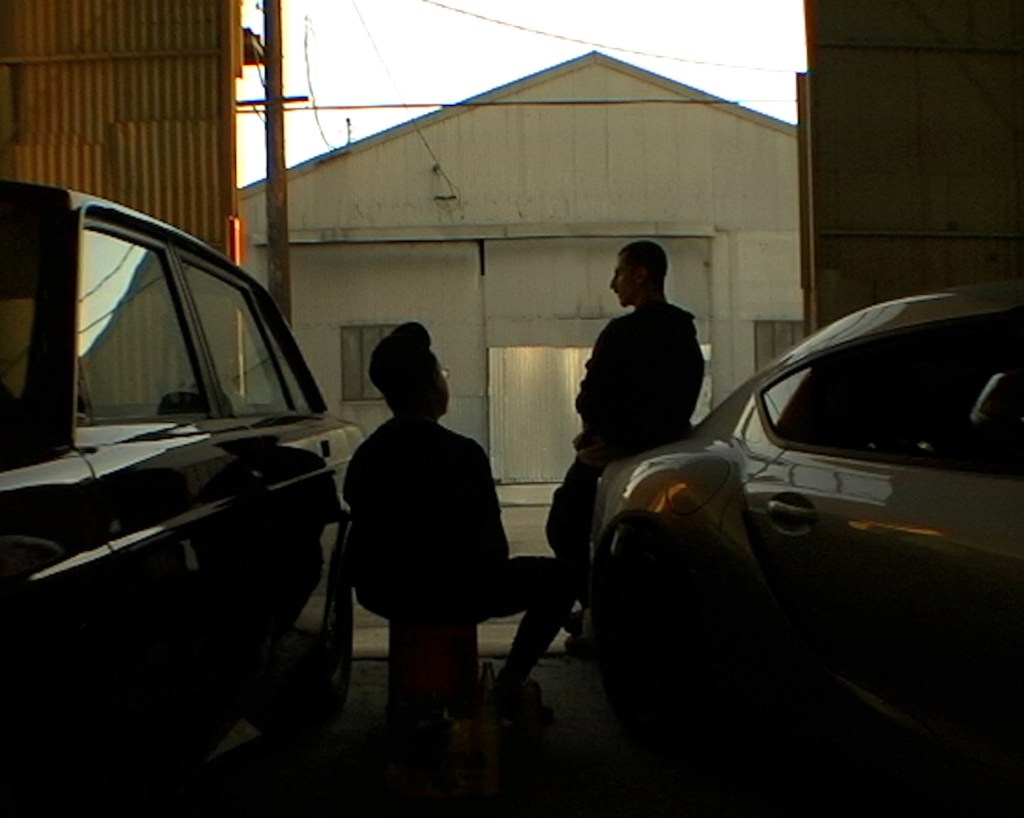
Tycoon takes place shortly before the 2028 Summer Olympics in Los Angeles. The city is suffocating under extreme heat while multiple plagues spread across its neighbourhoods. A livestock virus has rendered meat and poultry inedible, while a cockroach infestation continues to grow. Against this backdrop, two young men, Lito and Jay (Miguel Padilla-Juarez and Jon Lawrence Reyes), hustle to survive, pursuing increasingly questionable business ventures in response to society’s desperate search for alternative sources of protein.
Charlotte Zhang’s feature debut is set in the lead-up to the 2028 Los Angeles Olympics, yet visually it might as well take place in the 1990s. This is not simply because of its handheld camerawork or its focus on drifters inhabiting urban and suburban spaces. Rather, the film evokes the atmosphere of an impending apocalypse characteristic of the late twentieth century: the paranoia surrounding the millennium bug, New Age prophecies, and widespread anxieties about the end of the world. Today’s fears are less spectacular and far more fragmented. Instead of one cataclysmic event, they accumulate through countless seemingly insignificant crises—much like the petty crimes committed by the protagonists of Tycoon. Individually, these acts appear inconsequential, yet together they expose a world that has gradually fallen out of balance. The film ultimately asks whether systemic change is still possible. Can we imagine a future beyond a world that continues moving forward while insisting that its current trajectory is the only form of progress?
Despite its near-future setting, Tycoon constantly echoes the past. The Olympics have long served as defining moments in national mythmaking, projecting narratives of progress and soft power. The 1964 Tokyo Olympics became a symbol of Japan’s postwar recovery and rapid modernization. Before the 1988 Seoul Olympics, the South Korean government forcibly removed thousands of people labelled as “vagrants”—including homeless people, disabled people, children, and others considered socially undesirable—from public spaces and confined many of them to detention facilities in an effort to present a modern national image. Food shortages have likewise often become catalysts for political unrest. In Poland during the 1970s, protests against the communist government were triggered by rising meat prices and shortages before developing into broader political resistance. However, it seems like Tycoon does not depicting the eve of another revolution, but a continuation of the past.
Zhang drew inspiration from the social function of gangsterism, hence the film’s title, Tycoon (大亨). Historically, organized crime has often operated not merely outside the law but in the spaces where bureaucratic institutions fail, providing informal networks of mutual aid and economic exchange. Such systems depended upon strong communal ties—precisely the kind of social fabric gradually eroded by technological development, economic precarity, and increasing individualization.
This fragmentation is already apparent in the opening scene. Lito and Jay sift through discarded supermarket food in a parking lot, searching for meat that predates the livestock virus. The camera alternates between intimate close-ups of their faces and their hands rummaging through boxes of expired sandwiches. As public institutions collapse under the pressure of overlapping crises, people become increasingly dependent on social services that are already ineffective or financially exhausted. Within this context, seemingly ordinary gestures of care acquire unexpected political significance. A scene in which Lito and Jay cut each other’s hair becomes quietly radical, suggesting forms of mutual support that exist independently of the state. It also reveals what fundamentally distinguishes Zhang’s protagonists from the slackers populating American independent cinema of the 1990s. They are not slackers at all—they are scavengers.
This tension between past and future is reinforced through the film’s visual language. Zhang combines footage shot on iPhone, MiniDV, and Super 8 with black-and-white sequences assembled from newspapers, comic books, photographs, and Xerox-like collages. While the director has explained that these materials evoke a distinctly American visual archive, they also anchor the film within a specifically 1990s media landscape. The film’s strongest historical reference is the 1992 Los Angeles riots, which erupted after four LAPD officers were acquitted despite video evidence showing the brutal beating of Rodney King. The riots exposed profound racial and economic inequalities in Los Angeles, with Koreatown suffering disproportionate destruction amid longstanding tensions between Black and Korean American communities. By borrowing the visual vocabulary associated with this historical moment, Zhang transforms Tycoon’s speculative future into a landscape already haunted by unresolved conflicts from the past.
The result is a film suspended between temporalities. Rather than imagining a radically different future, Tycoon suggests that we continue to inhabit the unrealized futures of previous generations. The film resonates with Mark Fisher’s notion of capitalist realism, in which it becomes easier to imagine the end of the world than the end of capitalism, and with Jacques Derrida’s concept of hauntology, where the present remains haunted by futures that never came to pass. Zhang’s dystopia therefore feels strangely familiar. Its apocalypse does not arrive as a singular catastrophe but unfolds gradually through accumulated failures, deferred political possibilities, and everyday acts of survival.
Balancing documentary immediacy with speculative fiction, Tycoon captures a historical moment in which the boundaries between past, present, and future have become increasingly unstable. The film demonstrates how contemporary cinema is often finding its most original forms not through traditional narrative filmmaking but through artists whose backgrounds lie in the visual arts. In doing so, Zhang offers a vision of the future that is less about prediction than about archaeology—excavating the ghosts of histories that continue to shape the present.
*”Tycoon” (2026, dir. Charlotte Zhang) premiered at the 2026 International Film Festival Rotterdam.

