

As the programme of the 76th Berlinale was announced, there were more questions than answers about how the festival would unfold. For several years now, a perception has solidified within the film industry that the Berlinale increasingly survives on films that had been previously rejected by Cannes Film Festival and Venice Film Festival. This year press conferences attracted more attention than any film in the festival programme, which once again makes the filmmakers think twice where to premiere their new works. The atmosphere at the festival is getting colder and colder (not only due to several snowfalls) as film industry members and audiences tried to make sense of the festival programme.
Polarisation
This impression of a loss of significance of the Berlinale and being pushed to the margins has only deepened as the festival’s reputation has suffered from an unresolved tension between its self-proclaimed identity as a forum for open political debate and the position of the German government, which provides roughly 40% of its funding. Berlin’s continued support for Israel and its refusal to acknowledge the genocide of the Palestinian people in Gaza have placed the festival in an increasingly precarious position. The remaining budget, secured through private sponsorship, has proved unstable: Uber has withdrawn, and only Armani remains a committed yearly partner. To make matters worse, the lease of the Berlinale Palast is becoming increasingly expensive. Therefore, there are rumors that in the coming years the Berlinale centre might leave the symbol of unified Germany—Potsdamer Platz—especially since it has already lost two major screening venues there, CineStar and Arsenal in the Sony Centre, in previous years. This might mean a return to its Cold War-era infrastructure, with Zoo Palast in West Berlin serving as the festival centre.
The unease became palpable during the opening press conference when juries were asked if they support “selective treatment of human rights” that the journalist asking the question identified as the position of the German government which supports Ukraine in its struggle against the Russian aggression but does not acknowledge genocide of Palestinian people in Gaza by the Israeli.
Producer Ewa Puszczyńska reacted aggressively, calling the question unfair and confusing Senegal with Sudan in an attempt to cite another “war conflict.” The exchange exposed not only generational divides but also a deeper attitude within parts of the European film establishment—an art-for-art’s-sake posture that treats moral inquiry as an intrusion. If Wenders seemed entitled and bewildered, Puszczyńska projected irritation, like a parent chastised by a child for uncomfortable truths.
The journalist pressing these questions was Tilo Jung from the platform Jung & Naiv, who appeared repeatedly at press conferences, asking variations of the same question about Gaza. The strategy bordered on provocation; controversy guarantees visibility. Similar scenes have unfolded elsewhere: Michelle Yeoh deflecting questions about Donald Trump, Rupert Grint fielding inquiries about fascism in the UK. This year at Berlinale press conferences, a cascade of questions about the political standpoints of filmmakers was not limited to Iranian or Chinese filmmakers. I smiled to myself and felt that finally some justice had been done. Western artists, long accustomed to occupying a position of presumed moral superiority, found themselves under scrutiny. That reversal, however clumsy in execution, felt overdue.

What makes a competition film?
If the political climate revealed confusion, the programming exposed a deeper identity crisis. The 76th edition’s main competition was discussed by film critics as largely devoid of well-known auteurs, maybe with the exception of Kornél Mundruczó—his latest work reportedly bypassed by Cannes and Venice. Yet the issue is not simply the absence of established auteurs, because why should every new film by a well-known director automatically enter competition, regardless of its merit? Symbolic capital—reputation, networks, accumulated prestige—does not guarantee artistic value. The problem lies in the institutional mechanisms that regulate art cinema itself.
The inclusion of Josephine, a Sundance product developed over four years of workshops and premiered at Sundance Film Festival only two weeks before Berlin, raised further questions. Was its competition slot justified artistically, or did it function primarily to secure American stars on the red carpet? Those same stars appeared ill-prepared—or unwilling—to respond to inevitable questions about Palestine. Channing Tatum offered perhaps the most awkward example, pretending not to hear a question and moving on. Whether self-censorship or genuine disconnection, the effect was unsettling. These are artists who perform care on screen, often in narratives about trauma, yet retreat into silence when confronted with present realities. Keeping discourse at the level of the personal is safe. It is the cluelessness that unnerves.
Under the leadership of Tricia Tuttle, the festival has introduced structural changes, including the new Perspectives section dedicated to debut features. Some organisers argue that the most innovative works have been placed there rather than in competition. Yet this only sharpens the question: what distinguishes the main competition from Panorama, Forum, Generation, or Perspectives? Traditionally, Panorama foregrounded queer cinema, Forum experimental and essayistic works, and Generation coming-of-age stories. Now the boundaries blur without presenting a coherent curatorial thought behind the selection. The hierarchy remains, but the conceptual clarity dissolves. The festival begins to resemble a film with a messy structure, uncertain of its own thesis, yet obliged to perform coherence because funding has already been secured and the show must go on.
Even programming decisions in other sections appear arbitrary. Why is The Day She Returns – a new film by Hong Sang-soo, a story of a middle-aged actress being interviewed by three young women journalists upon her returning to the film industry after a decade of hiatus – placed in Panorama when it contains no overt queer element? Has conversation between women become sufficient to justify such categorisation? Forum, once a bastion of formal radicalism, increasingly serves as a repository for films that fit nowhere else. Indonesian comedy horror Ghost in the Cell, directed by Joko Anwar, might seem more at home at the International Film Festival Rotterdam, long known for championing Southeast Asian genre cinema. Another film of a similar nature—Sleep No More, a horror film revolving around cases of an evil spirit possessing and killing sleep-deprived factory workers who decide to take additional shifts—found a home in the amorphous Berlinale Special section, as new works by the film’s director, Edwin, usually land there if there is no better opportunity to enter an A-list film festival competition section, as was the case with Vengeance Is Mine, Others Pay Cash, which won the Golden Leopard at the Locarno FF in 2021.
Meanwhile, Palestinian cinema was indeed programmed at the Berlinale, even as the Palestinian Film Institute called for a boycott of the festival. The Q&As following screenings of Collapse, in which Israeli documentary filmmaker Anat Even returns to her completely destroyed hometown in the Gaza Strip, and Chronicles from the Siege, about the lives of Palestinian civilians trapped in a war zone during the siege of a fictitious small town, became spaces where pro-Palestinian and pro-Israeli groups argued vehemently. Therefore, it cannot be said that the festival organisers refused to provide space for discussing the situation in Gaza.
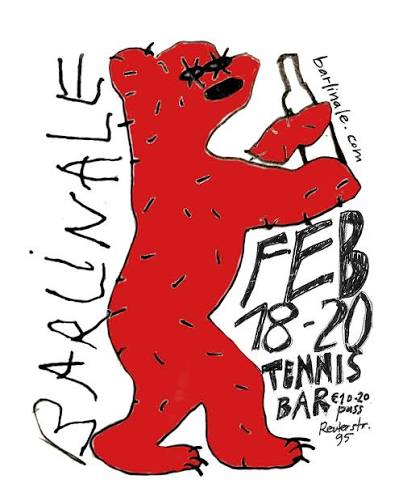
However, in Berlin, leftist circles had already passed judgment on the festival and saw the crisis as an opportunity to draw attention to events organised by grassroots initiatives. The alternative “Barlinale” mocked the official festival, yet articulated no clear artistic proposition of its own. Opposition replaced dialogue; symbolic gestures replaced structural critique.
Ultimately, the problem extends beyond Berlin. Contemporary art cinema, across festivals, increasingly relies on recognisable clichés: formulaically beautiful images, languid wanderings through landscapes and cityscapes, indulgent nostalgia, rehearsals of personal and collective trauma. Colonial histories and imperial violence remain urgent subjects, yet their aesthetic codification risks turning memory into mannerism. The Berlinale’s crisis, then, is not simply one of reputation or political discomfort. It is a symptom of a broader institutional fatigue—an art world unsure of its ethical position, its aesthetic criteria, and its capacity to imagine forms adequate to the present.
The Name of the Rose
The titles in the competition of main A-list film festivals tend to increasingly sound very similarily. At the Berlinale it was either a female name, roses or the sea. There is Rose—the story of an enigmatic soldier who, in the aftermath of the Thirty Years’ War in the seventeenth century, returns to a secluded German village and claims to be the heir to a long-abandoned farmstead, all the while pretending to be a man. Celebrating Sandra Hüller’s performance in the leading role, the film actually dazzles with its brilliantly written script. The conscious decision to narrate many of the plot’s key events through voice-over or dialogue, rather than depicting them explicitly, has a greater impact than any scene of violence or abuse.
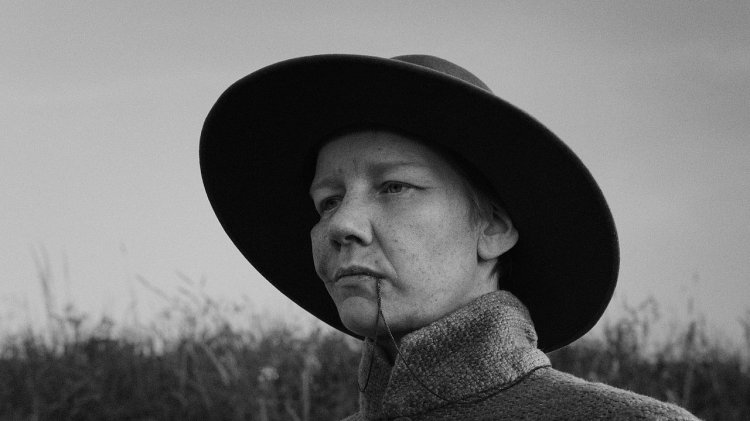
There is Nina Roza, about an art curator who travels from Canada back to Bulgaria thirty years after leaving her home country to meet Nina, a young Bulgarian girl whose paintings are “discovered” by an Italian art dealer and pushed onto the art market. Roza is the name of the main character’s daughter, who goes through a crisis seemingly grounded in her experience of migrating from Bulgaria to Canada at a very young age. The parallel between Nina and Roza is well crafted, the film offering a complex portrayal of parenthood and the consequences of migration from “backward Eastern Europe” to the “developed and prosperous West.” There is Rosebush Pruning—a MUBI-produced stylish arthouse film that has little to offer beyond an image of a privileged, bored, and demoralised American upper class and a gross misuse of film music. Filmmakers should think twice before choosing iconic songs by Pet Shop Boys to give their tasteless works a bit of character. There is Josephine—a clean-cut American indie drama in which the filmmaker attempts to deal with her own trauma by traumatising audiences with a rape scene at the very beginning of the film. Is it responsible for a filmmaker to use such tactics to manipulate the audience’s emotional reactions? Then there is the compulsory Middle Eastern entry, Yellow Letters, Salvation, In a Whisper—one of the favourite pastimes of Berlin International Film Festival juries and press being to discuss the problems of Islamic societies. There are German titles, compulsory in the Berlinale competition: Angela Schanelec’s My Wife Cries, and Yellow Letters—largely a German production disguised as Turkish, a topic I will return to when discussing the winning films. There are women-centred narratives from Latin America or Africa—this year Soumsoum, the Night of the Stars and Flies (Moscas). There are stories of sad, sad men, with Everybody Diggs Bill Evans—an American biopic trying hard to be the equivalent of last year’s brilliant Richard Linklater film Blue Moon—and The Loneliest Man of Earth. There is an odd Chinese-language family saga (We Are All Strangers), and genre flicks such as the anti-western Wolfram and the horror film Nighborn. The curious selection is rounded out by animations and films with elements of animation: Yo (Love Is a Rebellious Bird) and the Japanese anime At the Dawn.
The only film that really stood out in the competition is Dao. It marks the French-Senegalese filmmaker Alain Gomis’s third time in the Berlinale main competition—his first was with his 2012 fiction film Today, and his second with his 2017 feature film Félicité. In 2022, he premiered his mid-length film Rewind & Play in the Berlinale Forum section, a film that became one of the most discussed titles at the Berlinale and was widely recommended long after the festival ended. Rewind & Play is composed of a collection of archival footage that unveils the untold story behind the popular pianist Thelonious Monk’s 1969 TV interview in Paris.
Alain Gomis clearly shows an interest in media and performativity, and in how they blur the boundary between fiction and documentary. Dao opens with an explanation of the title, delivered in an opening shot characteristic of an essay film. It states: “DAO is a perpetual and circular movement which flows in everything and unites the world.” The film begins with a series of casting interviews, accompanied by an off-screen voice stating that “the first step is to make this family.” Many of the interviewees are middle-aged women, as the film crew searches for someone to play Gloria, the main character whose daughter is about to get married. The women share their thoughts on the script and reflect on their position in society, their life experiences, and their outlook on work and romantic relationships. It is through these conversations that the filmmaker builds a relationship between himself, the actors, and the audience.
Actors and non-actors are cast and brought together to become relatives celebrating two ceremonies taking place within the African community: a wedding in Paris and a funeral-like death ritual in Guinea-Bissau. The filmmaker seamlessly edits the scenes of the wedding and the funeral together, creating the feeling of a nearly perfect circular motion, moving between locations, cultural contexts, rituals, costumes, and meanings. In this over three-hour film, there is not a single moment that seems dull or unnecessary.
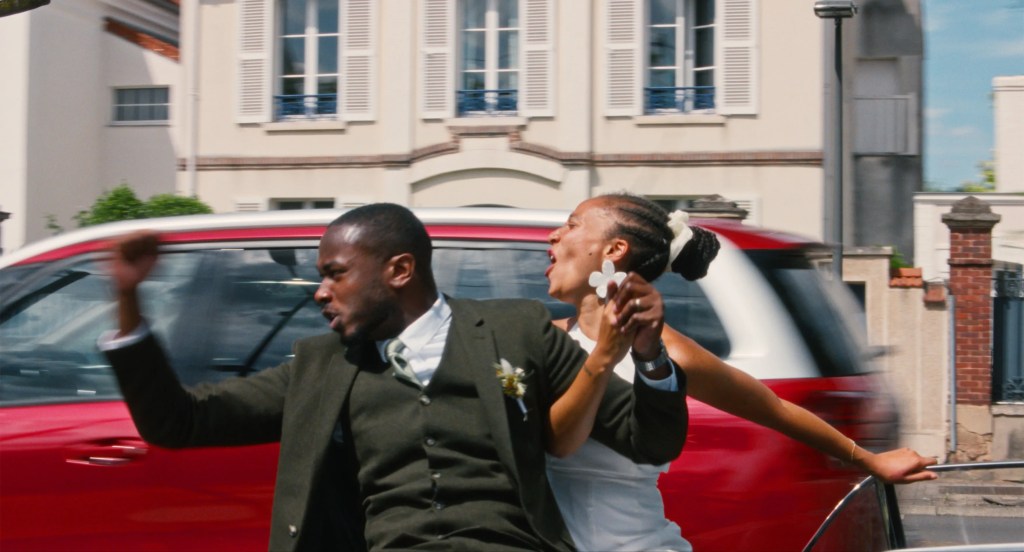
Alain Gomis is especially interested in the workings of memory and in how certain events remain in people’s minds forever, many of them involving family celebrations. Interestingly, a look at the names listed in the end credits reveals that many of the non-actors featured in the film are Gomis’ own relatives. The funeral of the family’s patriarch, as well as the wedding of the young granddaughter, becomes an opportunity for commemoration, celebration, voicing complaints, and staging the must-haves of weddings and funerals: arguments between family members and the occasional brawl. Both negative and positive emotions become cathartic. Performativity creates a healthy distance that allows the family members to move on with their lives.
Finally, Alain Gomis’ choice of a jazz soundtrack gives the film a distinct character that oscillates between sadness and joy. In Dao, the filmmaker reaches new heights of editing mastery and achieves what Fei Mu, in his 1934 essay, calls 空气— a cinematic atmosphere that makes the audience engage with the story and breathe together with the characters on screen.
Image of falling
While the film by Alain Gomis was arguably the only outstanding entry in the main competition, Perspectives, dedicated to debut fiction features, proved to be the most interesting section of the festival.
In the stylish black-and-white period drama Red Hangar, Chilean director Juan Pablo Sallato depicts the immediate aftermath of the coup d’état. He takes the audience back to September 1973 in Chile’s capital, Santiago, when the socialist president of Chile, Salvador Allende, and his Popular Unity coalition government were overthrown by a group of military officers led by General Augusto Pinochet. Allende, who has been described as the first Marxist to be democratically elected president in a Latin American liberal democracy, faced significant social unrest and political tension with the opposition-controlled National Congress of Chile. On 11 September 1973, General Augusto Pinochet seized power in a coup, ending civilian rule.
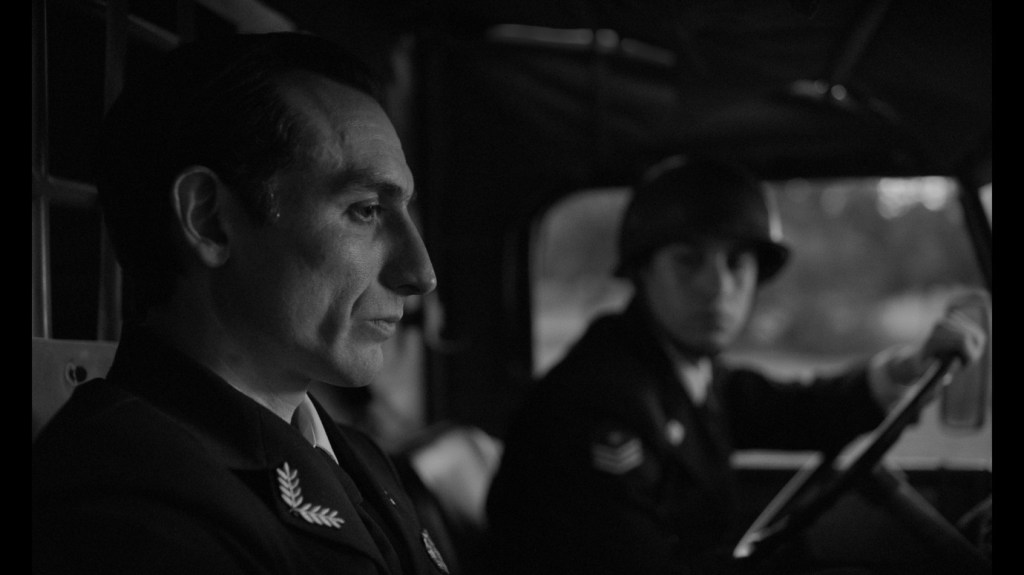
As the military coup unfolds across the country, Captain Jorge Silva—the former head of Air Force Intelligence and a legendary parachutist—receives an order to transform the Air Force Academy, where he currently trains young cadets, into a centre for the detention and torture of people accused of communist sympathies. Silva is appalled by the lack of judicial oversight and the cruelty towards the detainees; this inner conflict changes his life forever, as every military coup presents an opportunity to reshuffle the ranks.
Red Hangar is dominated by close-ups and stunning acting performances, especially from Nicolás Zárate in the main role. Sallato adopts a strategy very similar to that of László Nemes in his Holocaust drama Son of Saul: he allows us to see and hear just enough to understand what is happening, while avoiding any direct depiction of the full scale of brutality. The filmmaker skilfully builds suspense and controls the pace of the narrative, dissecting the moral dilemmas within the ranks of the army. The film conveys the rise of authoritarianism as something akin to watching an approaching avalanche, paralysing the confused protagonists who are soon trapped beneath the snow. The atmosphere of inevitability is reinforced by oneiric sequences of Captain Jorge Silva’s experience of falling through the sky while parachuting.
Oniristic scenes are also frequently evoked in Prayer for the Dying, which landed on the other end of the spectrum in the Perspectives section as one of the weakest entries of the festival. In this co-production between Sweden, Norway, the US, and Slovakia, Dara Van Dusen—a graduate of the Polish Łódź Film School—takes a close look at the small town of Friendship in 1870s Wisconsin, which is struck by an epidemic. Its sheriff, an immigrant from Sweden, tries to protect his family and the entire town from falling ill and dying, while he himself mysteriously remains healthy. The filmmaker appears to reflect on migration, otherness, and survivor’s guilt, but the editing is sloppy, and Prayer for the Dying is filled with scenes that repeat without any clear purpose. Only a solid performance by John C. Reilly, portraying the town’s doctor, saves the film from a massive mid-screening exodus of the audience.
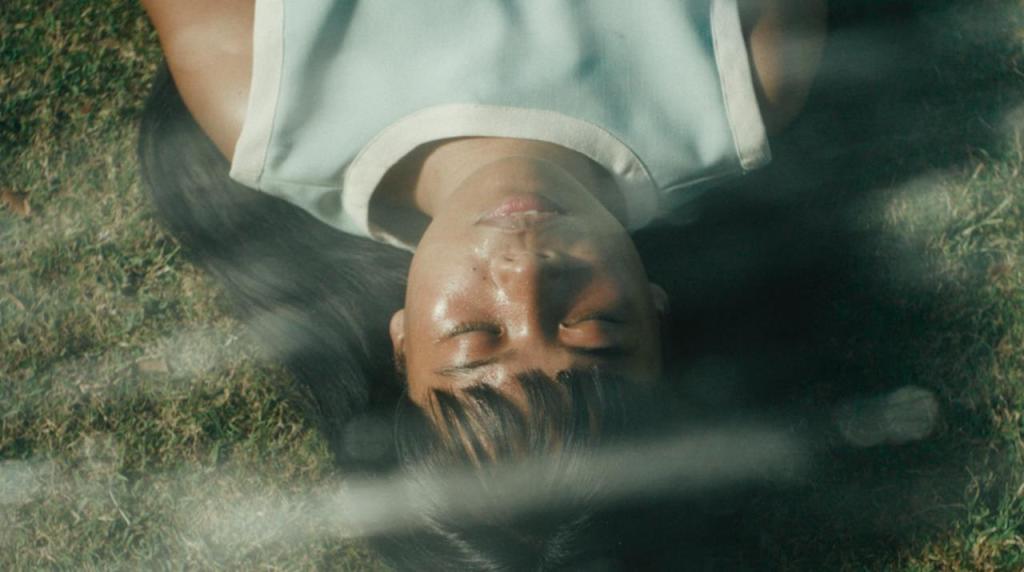
Finally, Perspectives also featured a spectre of Jia Zhangke with Filipiñana, the debut film of his protégé Rafael Manuel. The premise of the film is highly promising. Manuel sets it in the Manila Golf and Country Club, a 74-hectare compound where the mostly middle-aged upper class of Philippine society spend their time, isolated from the country’s socio-political problems. Seventeen-year-old Isabel, from the poor Ilocos region in the northern Philippines, starts working at the club, preparing balls for the golfers. She becomes interested in the club’s president, Dr. Palanca, since he also comes from Ilocos and welcomes Isabel by speaking the regional dialect. However, appearances are deceiving. Filipiñana is neither a romance nor a comprehensive critique of Filipino society. Instead, Manuel focuses on the visual language and aesthetics of the location—its slightly outdated modernist design rendered in pastel colours, rouges, and peaches. He takes pleasure in discovering new camera angles as Isabel wanders through the compound. This emphasis on visual language steers Filipiñana toward clichéd plotlines and easy answers to complex questions. Regardless of its pretence to present a metaphorical portrait of the Philippines, as suggested by the film’s title, Filipiñana ultimately exists for the love of aesthetics as many films do at this year’s Berlinale.
Survival strategy
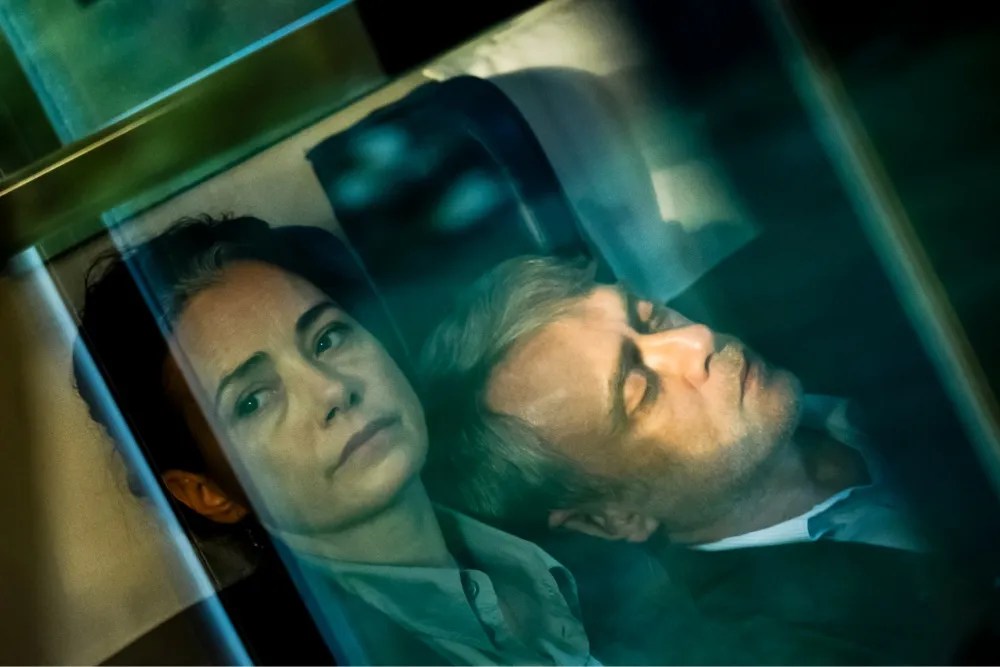
The awards of the Berlin International Film Festival in 2026 revealed juries eager to tap into the rhetoric of “shared values” and “common interests,” yet their choices felt calculated rather than artistically daring, serving a clear strategic function. The triumph of Yellow Letters foregrounded themes of authoritarianism at a moment when the festival leadership has been subjected to criticism following Wenders statements at the opening press conference. Yellow Letters was shot entirely in Germany, with Berlin standing in for Ankara and Hamburg for Istanbul; its producers insisted this was not due to fear of Turkish authorities but rather an attempt to stress the film’s “universal” themes. The production was made possible by German state arts funding, meaning the budget was spent in Germany, winning the main prize at the key German film festival is another part of the return on investment. Although the filmmaker is of Turkish origin, he grew up in Germany and has argued that shooting the film in Berlin and Hamburg shifted the paradigm of the story from regional to global. But is the German position any less regional than the Turkish one? The gesture appears to marginalise Turkey while simultaneously instrumentalising it: the filmmaker’s Turkish identity becomes a vehicle through which Germany can be addressed obliquely, in ways that might not receive state support if set explicitly in contemporary Germany. Once again, the “other” functions as scapegoat and proxy, allowing domestic demons to be confronted at a safe remove—particularly in a Western media climate that readily pejoratively labels governments in Turkey or Iran as “regimes,” while hesitating to apply the same term to EU member states.
A similar strategic and universalistic tone marked the Best Screenplay award for Nina Roza, accepted by the Canadian filmmaker Geneviève Dulude-De Celles, who framed her immigration drama as an act of resistance to a “very invasive American culture,” invoking a familiar strain of festival anti-Americanism that plays well in Berlin. Altogether, the 2026 awards suggested a festival keen to position itself on the right side of history rhetorically, yet cautious in its artistic risks, balancing political signalling with institutional self-preservation.
The festival organisers and the filmmakers stressed that they were not there to take sides; rather, the festival exists to provide a space for dialogue. This is precisely what the Berlin International Film Festival succeeded in doing this year. However, in light of this year’s programming, many press members and film critics began to question the festival’s relevance and reconsider whether they are willing to invest their own money to come to Germany and cover the festival for their respective media outlets. Hopefully, next year will bring a positive turn.
Maja Korbecka

